

It's 2:40 in the afternoon and the spreadsheet of this month's expenses has been open on the laptop since Tuesday. Fourteen rows, the receipts in a pile beside it, and you could fill every one of them from memory. You did everything the focus advice says: phone in the other room, TV off, door shut, the dishwasher finished.
Twenty-six minutes later one row is done, the parking from the 2nd. The room is no louder than it was. You pick up the second receipt and read it again.
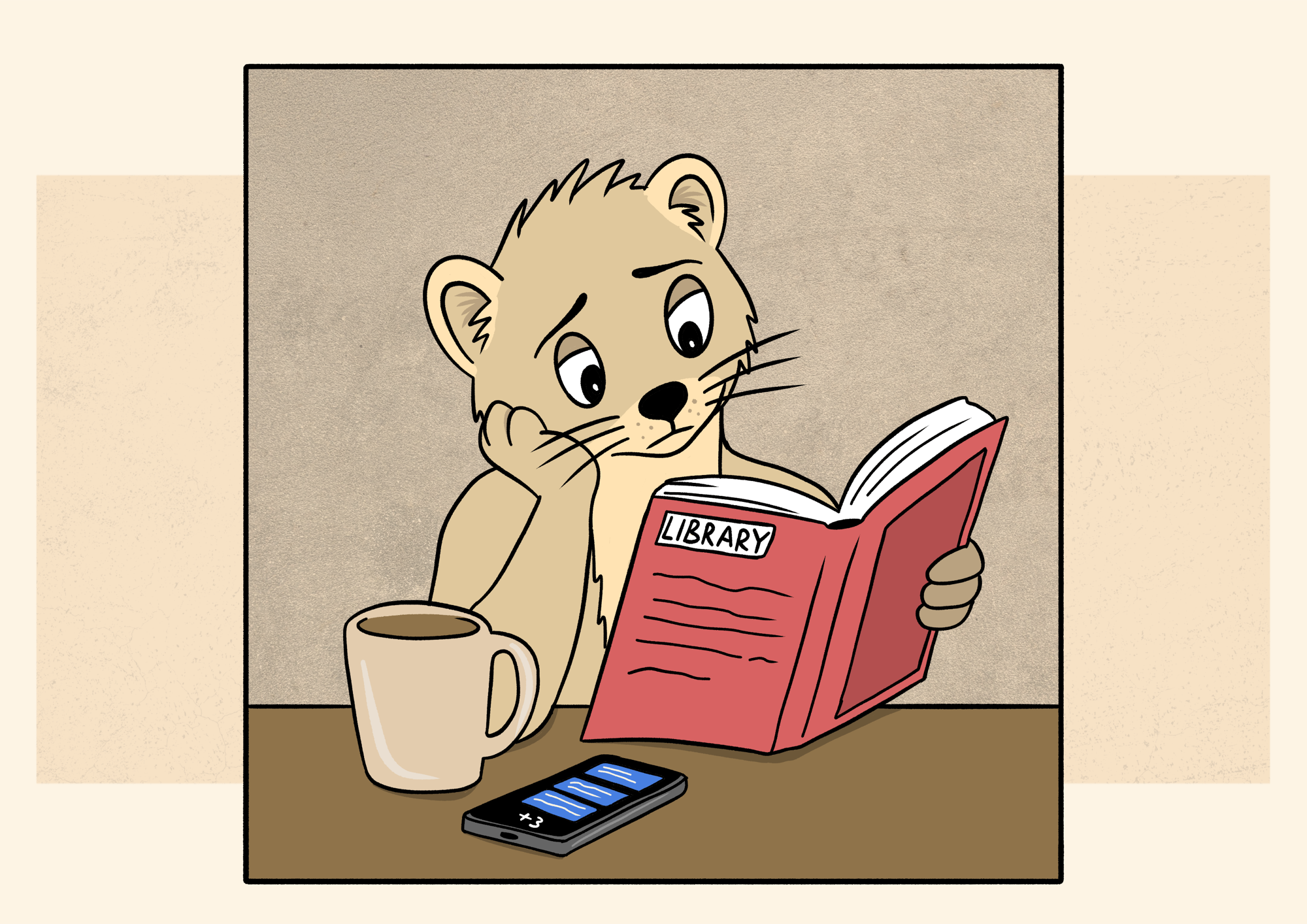
Last Saturday you read sixty-one pages of a library book in a coffee shop, with the grinder going every four minutes and your phone face up on the table, lighting up the whole time.
Awais Aftab, a psychiatrist, argued in a New York Times opinion column on September 29 that with ADHD, the useful question may be "whether the task registers in the brain as worth doing in the first place." A name like attention deficit, he wrote, "can invite confusion." For a lot of us, that confusion meant years of being told to focus.
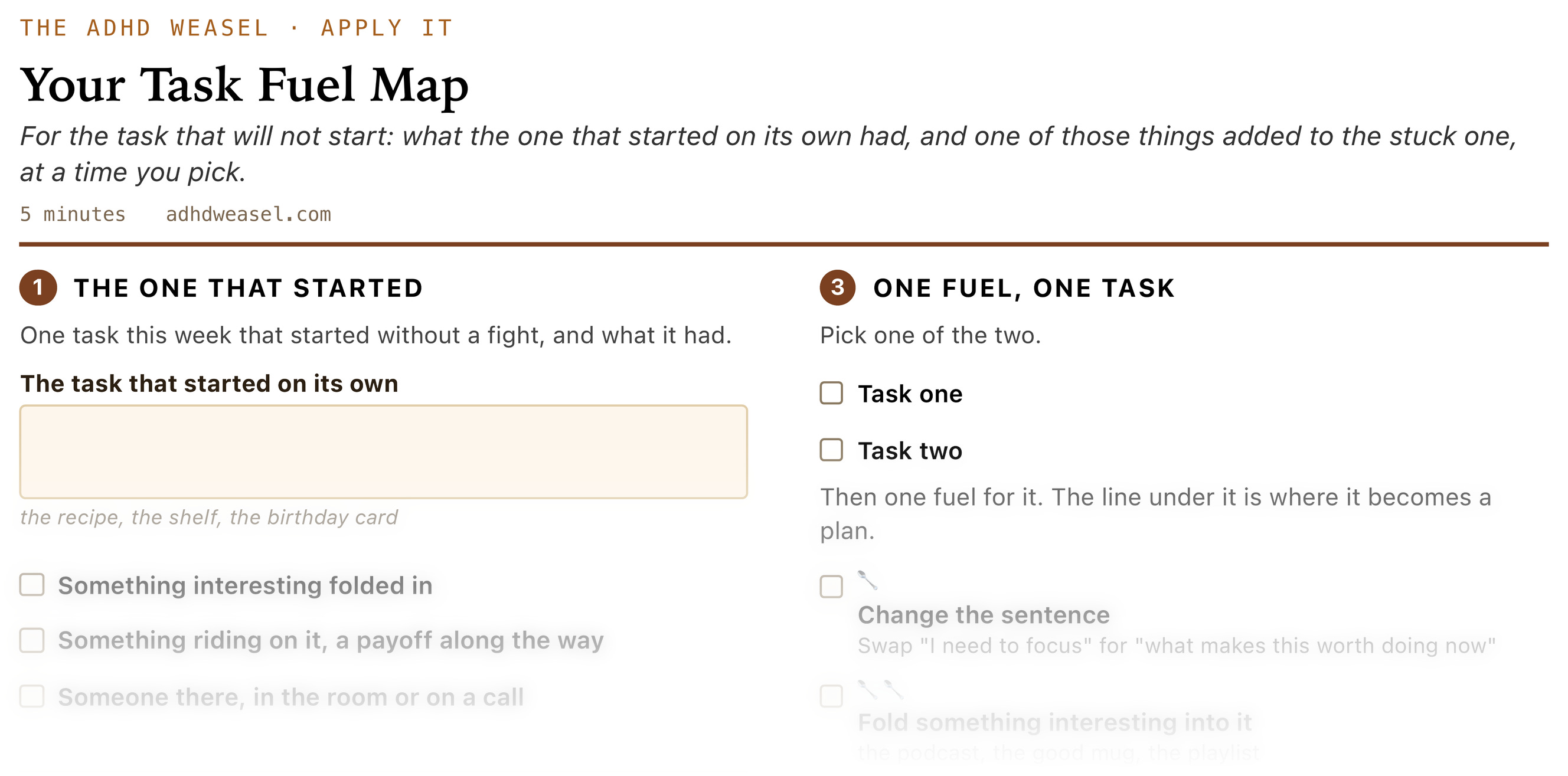
There's a 5-minute worksheet at the end of this newsletter called Your Task Fuel Map. You put three real tasks from this week side by side, one that started on its own and two that haven't, and leave with one thing added to a stuck one.
What the scan found
One study scanned adults with ADHD who had never taken medication. The dopamine markers in their reward pathway ran lower than in adults without ADHD, and the lower they ran, the worse the inattention. The researchers wrote that this could explain why attention trouble shows up most on boring, repetitive tasks. Matching a dryer load of socks is one of those.
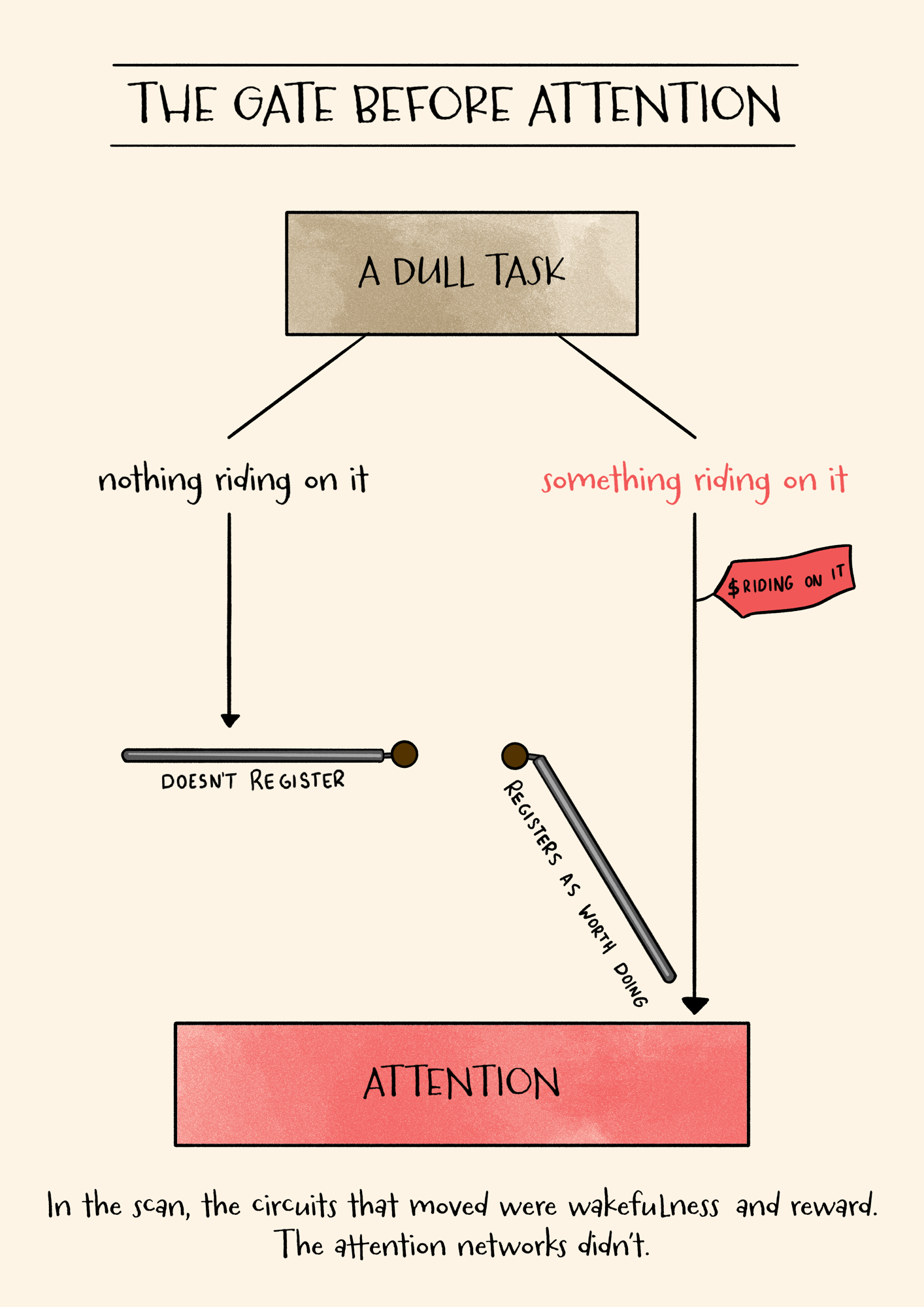
When adults with ADHD were paid for a boring vigilance task, their impulsive errors fell to the level of the adults without ADHD. The task was the kind where you watch a screen and wait. The screen stayed as dull as before, with money riding on it.
A 2025 study looked at brain scans from children aged 8 to 11. Some of them had taken a stimulant on the morning of their scan. In those children, the scans looked different in the circuits that run wakefulness and reward: how awake a brain is, and how much a task seems worth doing.
The attention networks didn't move. The children with ADHD who had taken a stimulant still did better on the thinking tests.
The researchers' own explanation is that on a stimulant, an ordinary task like math homework starts to register as worth doing. From the outside, that looks like better attention.
Reward is the circuit to work with, because what rides on a task can be added from outside. The spreadsheet had none of that yet, so it never got past the first step, whether the task registers as worth doing.
The picture below is that step twice: the same dull task, a screen to watch and wait on, first with nothing riding on it, then with money riding on it, the way the study paid. Attention only gets a turn once the gate opens.
The phone, the TV, the door and the dishwasher were all fixes to the filter, what gets through once you're already on a task. Make the Task Louder covered that two weeks ago. The step before it is whether the task registers at all.
Call what goes on a task fuel. The deadline in last week's issue was one way to supply it, and fuel comes in three kinds: something interesting folded in, something riding on it, and someone there, which we covered in September. The three are also the checkboxes on this week's worksheet.
Things to try
🥄 Change the sentence
When "I need to focus" shows up, swap it for "what would make this worth doing in the next twelve minutes." Say it out loud with the task open, the spreadsheet or the email from the 3rd, and take whichever answer arrives first, even if it's a coffee or the last cookie in the tin.
🥄🥄 Fold something interesting into it
Put something you already like next to the dull task, so it's waiting when you sit down:
The podcast you save for admin, paused the second you stand up
The good mug, the heavy one from the back of the cupboard
A playlist you'd never play with anyone else in the room
The test for picking one is that you'd be a little put out doing the task without it.
🥄🥄🥄 Pay yourself as you go
In the study where the dull task paid, the impulsive errors fell. What rides on your own dull job can be a treat, set out where you can see it from the chair: a square of dark chocolate after each piece, a crossword clue after every two, or the next episode of your show at the halfway mark.
A piece can be a row of the spreadsheet or a shelf of the hall closet. If watching something add up does more for you, drop a coin in a jar for each one.
This week's Apply It worksheet
Pick one task that got going on its own this week and two that haven't, and check what each one had. The one that started is your clue to what the others are missing. Add one thing to one of the stuck ones and write down when it happens. Takes 5 minutes.
The takeaway for the week
Next time the spreadsheet is open at 2:40, put one kind of fuel on it before you sit down, the way the library book had one from the first page.
If someone in your life has spent years telling you to focus, this is the one to send them. Forward the email and let it do the explaining.
How did you enjoy our newsletter today?
If this read helped you, pass it on: a like, comment, restack, or share helps more ADHDers feel understood and less alone :)