

The insurance claim form has been on the kitchen counter for eleven days. The pen is lying across it, there's a coffee ring on one corner, and you've moved it twice to wipe the counter, then put it back. Nothing about it is hard. Name, policy number, the date it happened, a signature, a photo, send. The letter clipped to it says claims close Friday at 4:45.
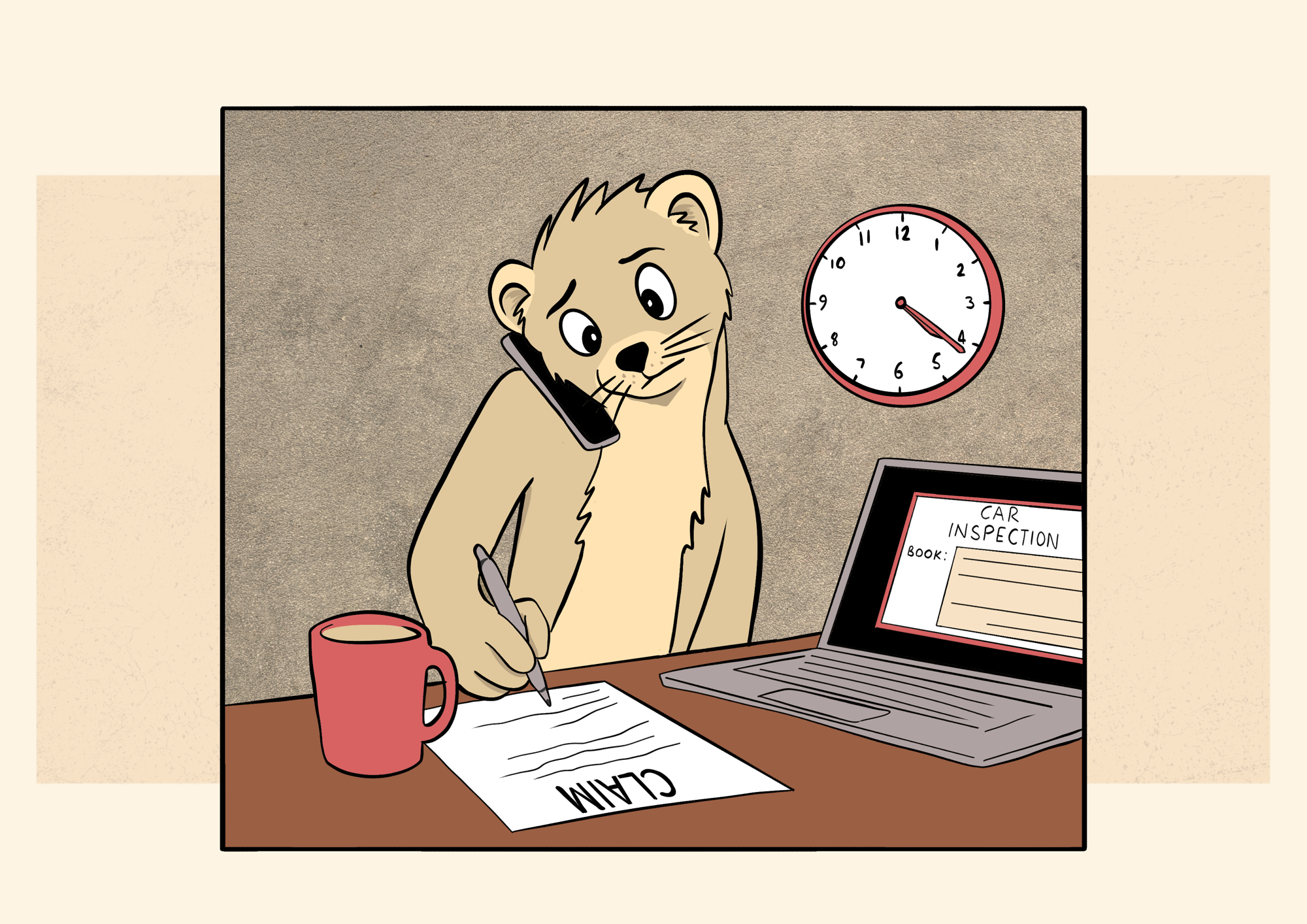
Then Friday, 4:10 in the afternoon, you pick up the pen. The form gets filled out and photographed. While the photo uploads you book the dentist, then the car's inspection, then answer the message your cousin sent on the 24th, for no reason anyone can find. The microwave clock reads 4:21. Eleven minutes.
The eleven minutes have a bigger version. The thing due Monday, the application or the slideshow for a friend's party, had a title and nothing else for eleven days, then got done in one sitting on Sunday, from 1:50 in the afternoon to 10:50 at night, nine hours, with the dog keeping its distance.
There's a 5-minute worksheet at the end of this newsletter called Your Deadline Builder. You pick one thing that has been waiting and give it what Friday at 4:10 had, including someone or something outside you holding the date. Takes 5 minutes.
What a deadline adds
There is a line a task has to cross before this brain starts it, and until it does, the task sits there, however small it is. Three things lift a task toward that line: what done is worth today, pace, and how close the cost is. Pace means how fast the next thing comes at you, like groceries sliding down the belt at a busy checkout.
Back in September, in You Can Do It for Anyone Except Yourself, we wrote about how close the cost is, and this issue adds the other two.
What a task is worth gets weighed against the effort it takes. In the lab, at some levels of effort, adults with ADHD passed on effortful work for a reward more often than people without ADHD did, even though they could do the work equally well. A bigger reward moved both groups toward the harder option.
Then there's pace. In lab tests of reaction time, people with ADHD were slower than people without it, and the gap shrank as the pace picked up. A clock running down sets a fast pace, and once one thing is done, the next one is already waiting. That is how the dentist and the car's inspection got booked in the same eleven minutes as the form.
In one large online survey of adults, much of what tied inattention to putting things off came down to a preference for what pays off soon, and to how little they enjoyed the task. A cost that lands next month feels small to us, and it starts to count only as it gets close.
So a four-minute job with a payoff three weeks out can sit on a list for a month. The refill call to the pharmacy waits like that, and so does the haircut booking. The form had a clear counter and a refund on the far side of it, and for eleven days both were too far away to count.
The picture below draws the line, and the climb across it, for the same form on the same counter.
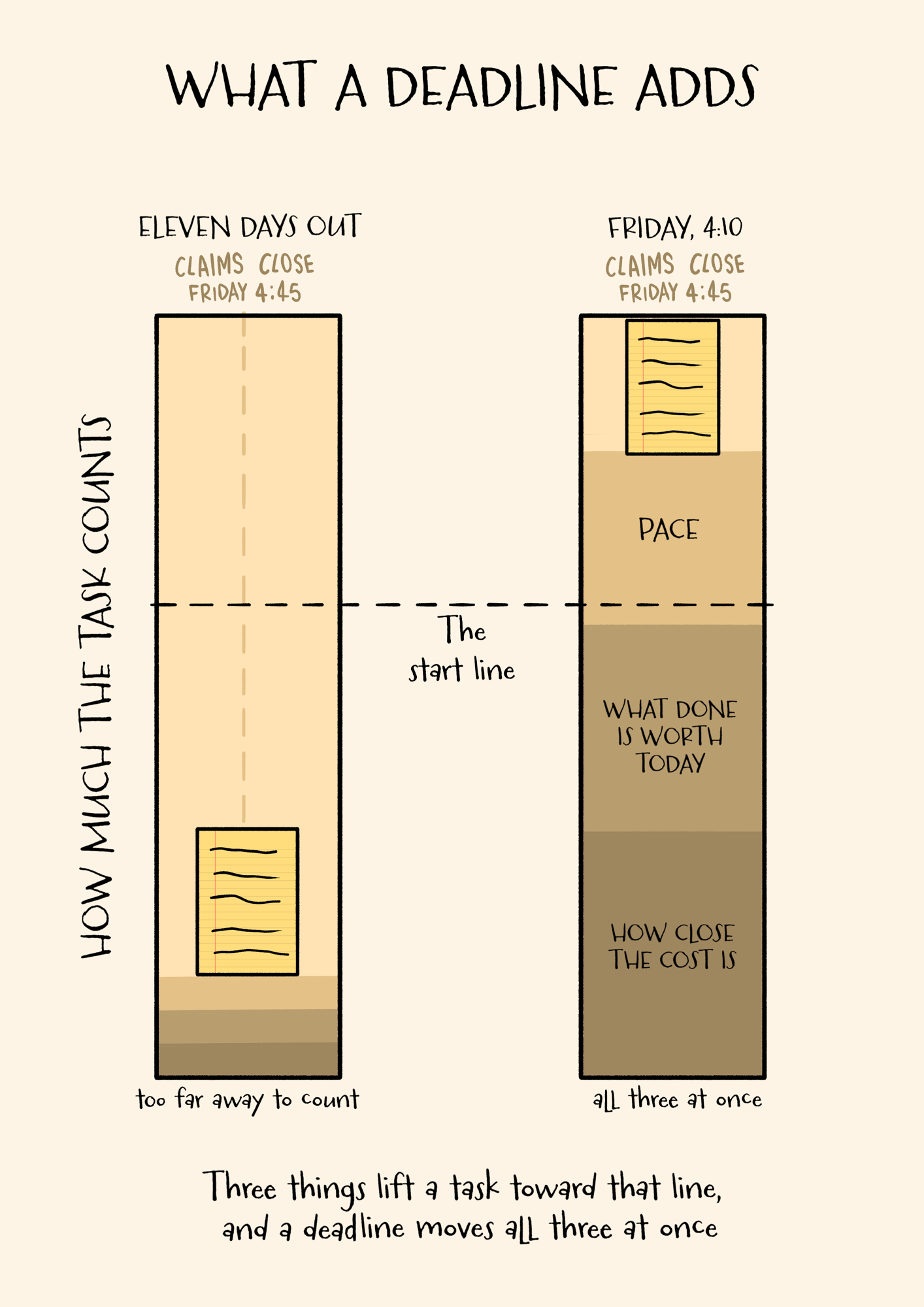
The closer a deadline gets, the more each of the three counts, and most of the climb happens in the last stretch. For eleven days the form sat below the line.
A deadline supplies all three at once. When the job is big enough, the same burst runs nine hours and the clock goes missing.
