When the Diagnosis Finally Explains Everything
Why late diagnosis brings relief and grief at the same time
You’re lying in bed at midnight, scrolling through ADHD posts, and every single one hits like a flashback. The time you forgot your best friend’s birthday. Again. The job review where your boss said you had “so much potential” and you wanted to disappear. The dozen planners in a drawer, each one abandoned by February. The parent-teacher conference where they listed your kid’s struggles and you recognized every single one as your own.
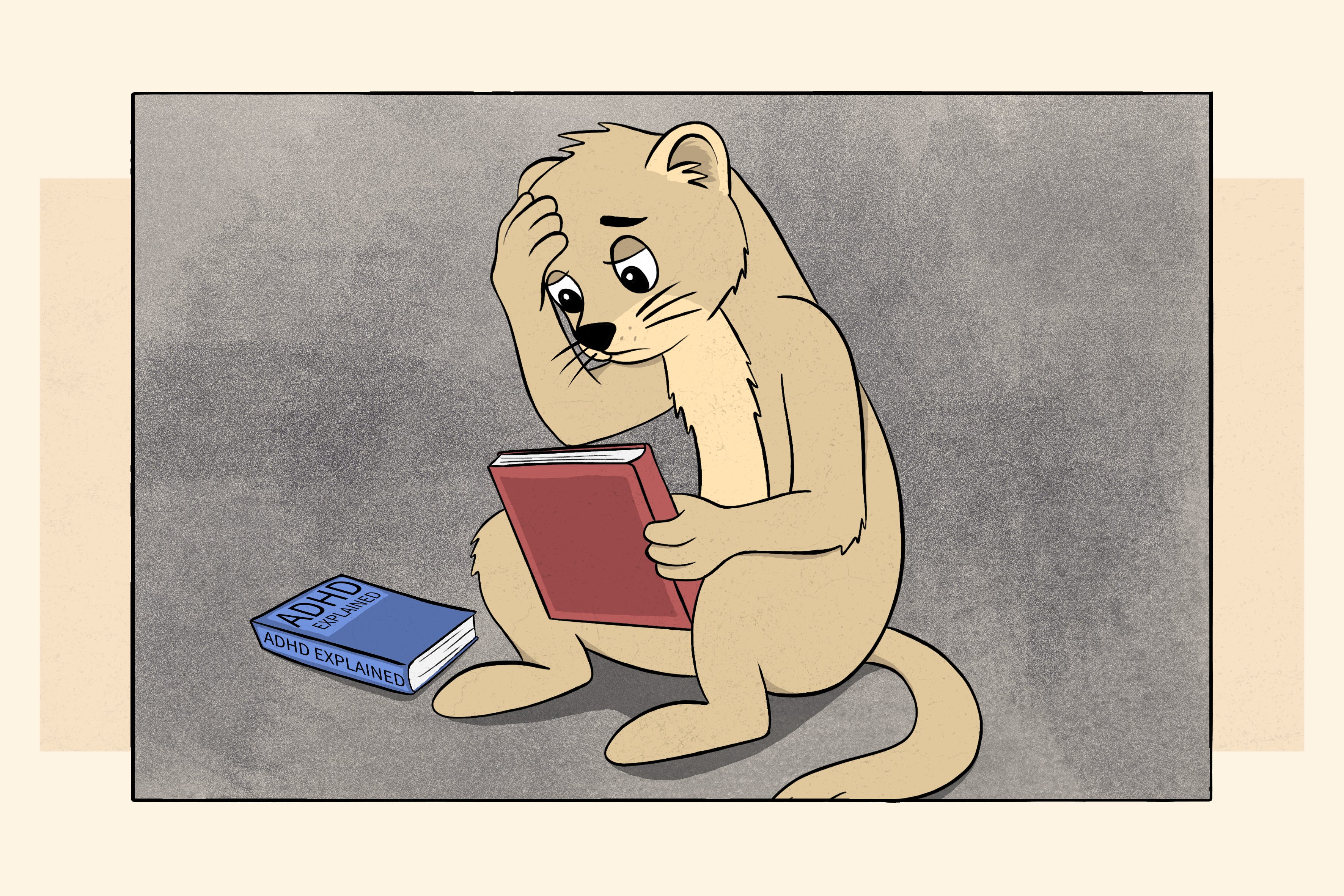
Decades believing you were the problem. Now a single word rearranges all of it. And you weren't expecting this part: the grief.
We've put together a worksheet this week that helps you turn the structure-building strategies in this newsletter into a step-by-step plan that works with your brain. You'll find it at the end of this newsletter.
Your brain had backup this whole time
You’ve had ADHD your whole life. But external structure was doing the heavy lifting.
School deadlines created urgency. A demanding job kept your focus locked in. A partner handled the calendar and the bills. Something outside your brain was managing the executive function you didn’t have enough of. And because it worked, you never needed to look deeper. You just pushed harder.
You pulled all-nighters. You overcompensated with lists and color-coded notebooks that worked for a month. You poured energy into appearing organized, holding it together, staying on top of things other people seemed to do without thinking. That effort was masking. And it was exhausting in a way nobody around you could see.
Then something shifted. The job ended. Kids arrived and you’re organizing multiple lives on top of your own. A relationship ended and you’re managing a household alone. Perimenopause or menopause tanked your estrogen, amplifying every ADHD symptom you’d been white-knuckling through. Retirement wiped out every external deadline overnight. (Read Sara Kelly’s guest post on how perimenopause affects ADHD by clicking the orange text here.)
The challenges were always there. External structure was propping them up. When it fell away, there was nothing left to hide behind.
Approximately 2.2% of adults over 50 experience ADHD symptoms, but only 0.23% have a clinical diagnosis. Diagnostic tools were built for hyperactive 8-year-old boys. Most doctors don’t screen adults, and decades of high-functioning masking can make symptoms invisible in a clinical setting. That gap means millions of people spent decades with an explanation nobody thought to give them.
ADHD is highly heritable. Many people first suspect it after watching a child or partner get diagnosed. Recognizing your own patterns in someone else’s struggles: the forgetfulness, the overwhelm, the inability to start things that matter. Others discover it through their own research. Struggles they’d attributed to anxiety, depression, or burnout turn out to be lifelong ADHD patterns that were never identified. Either way, that recognition can rewrite decades of self-understanding in a single afternoon.
And then the grief arrives. All those years of thinking the problem was effort. Willpower. Discipline. Character. The promotions you didn’t get. The friendships you lost. The guilt you carried for never being able to keep up. What life would have looked like with this knowledge at 20, at 30, at 40. The years don’t come back. But the story you tell yourself about them can change. And the years ahead are different now.
Your brain can still build new pathways. Neuroplasticity, your brain’s ability to reorganize and form new neural connections, continues well into your 60s and beyond. New routines physically strengthen these pathways with consistent practice. Building your first anchor routine at 55 is just as valid as building one at 25.
From our readers
“I can’t quite bring myself to pursue a formal diagnosis, at 55, it might just break my heart. But I am ready to try and implement strategies.”
- Sophie, paid subscriber
Things to try
1. One anchor routine, not five
Pick a single time each day to build structure around. A 9am coffee while you review your plan for the day. A 3pm walk around the block to reset. Once it feels automatic, add another.
If mornings are chaos, start there. If evenings are when you fall apart, start there. The best anchor point is the one causing you the most friction right now.
Overhauling your entire day at once overwhelms your executive function before it has a chance to adapt. One routine that sticks is worth more than five that collapse by Wednesday.
2. Visible, physical cues
Your brain needs external reminders that catch your attention in the moment. Vitamins next to the coffee maker. Keys on a hook by the door. A giant wall calendar you walk past ten times a day.
Physical objects in your path work better than digital reminders because you can’t swipe them away. If you need to remember something for tomorrow morning, put it in front of the door tonight. Your future self will not remember. Your present self can make it impossible to miss.
3. External accountability
Without built-in deadlines, your brain has no urgency cues. Join a weekly volunteer shift. Sign up for a class with set meeting times. Tell a friend you’ll send them your finished project by Friday.
Body-doubling, working alongside someone else even virtually, gives your brain the activation it needs to stay on task. A FaceTime call where you’re both doing chores in your own kitchens counts.
4. Time in visible chunks
Open-ended time is kryptonite for your brain. “I’ll work on this today” gives you nothing to push against.
Try “from 10-11am I’ll do this specific part.” Use a timer. The Pomodoro Technique (25 minutes on, 5 minutes off) creates urgency and built-in breaks. You can see the time shrinking, and that visibility helps your brain stay engaged.
For bigger projects, break them into the smallest possible next action. “Write the report” is too vague. “Write the first paragraph of section one” gives your brain something concrete to grab onto.
5. Transition rituals
ADHD brains struggle with task switching. Going straight from one activity to another leaves your brain stuck on the previous one.
Before changing activities, do something physical for 60 seconds. Stand up, stretch, walk to another room, get water. This brief interruption helps your brain release what you were doing and prepare for what comes next.
Pick one. Start there. That’s more than enough.
Dive into our ‘Apply It’ worksheet
This worksheet turns structure-building strategies into a step-by-step plan. You'll identify your first anchor routine and map it to something you already do, audit your space for where physical cues will catch your attention, connect each routine to something emotionally meaningful so your brain has a reason to care, and track patterns with a calendar that celebrates the days you showed up instead of shaming you for the ones you missed.
How did you enjoy our newsletter today?
If this read helped your brain feel a little less tangled, pass it on: a like, comment, restack, or share helps more ADHDers feel understood and less alone :)


You articulate something many people feel but struggle to name: how living in a constant state of accommodation slowly erodes trust in your own needs. The way you trace this back to everyday interactions rather than big traumas makes the point feel both ordinary and devastatingly clear.
This one really resonated with me. I was diagnosed with ADHD at 55. At first i was relieved because I finally understood that maybe I wasn’t a total f***up after all. Then the grief slowly moved in as I realized that my life could have been so different if I had only known. All the negative stuff might not have happened but on the other side, I have come to understand that lots of things I have achieved might not have happened either. I still grieve from time to time but I know that it’s a process. Life is a process.