That Feeling When You Find a New Planner
The dopamine hit of fresh starts, and why last week's plan stopped working
We’ve found it!! After months of research, we’ve identified the one system that works for every ADHD brain. It’s a planner. You just have to use it consistently!
Happy April Fools. Did we get you hehe? Here’s what’s actually happening when your brain falls in love with a new plan…
It’s Sunday night. You’ve got the planner open, the color-coded tabs ready, the new app downloaded. This time it’s going to stick. You can feel it. The energy, the clarity, the absolute certainty that this system is the one.
By Wednesday, the planner is under a stack of mail. The app has two unread notification badges. You’re already eyeing a different approach someone posted on TikTok.
What is wrong with me. I was so motivated three days ago.
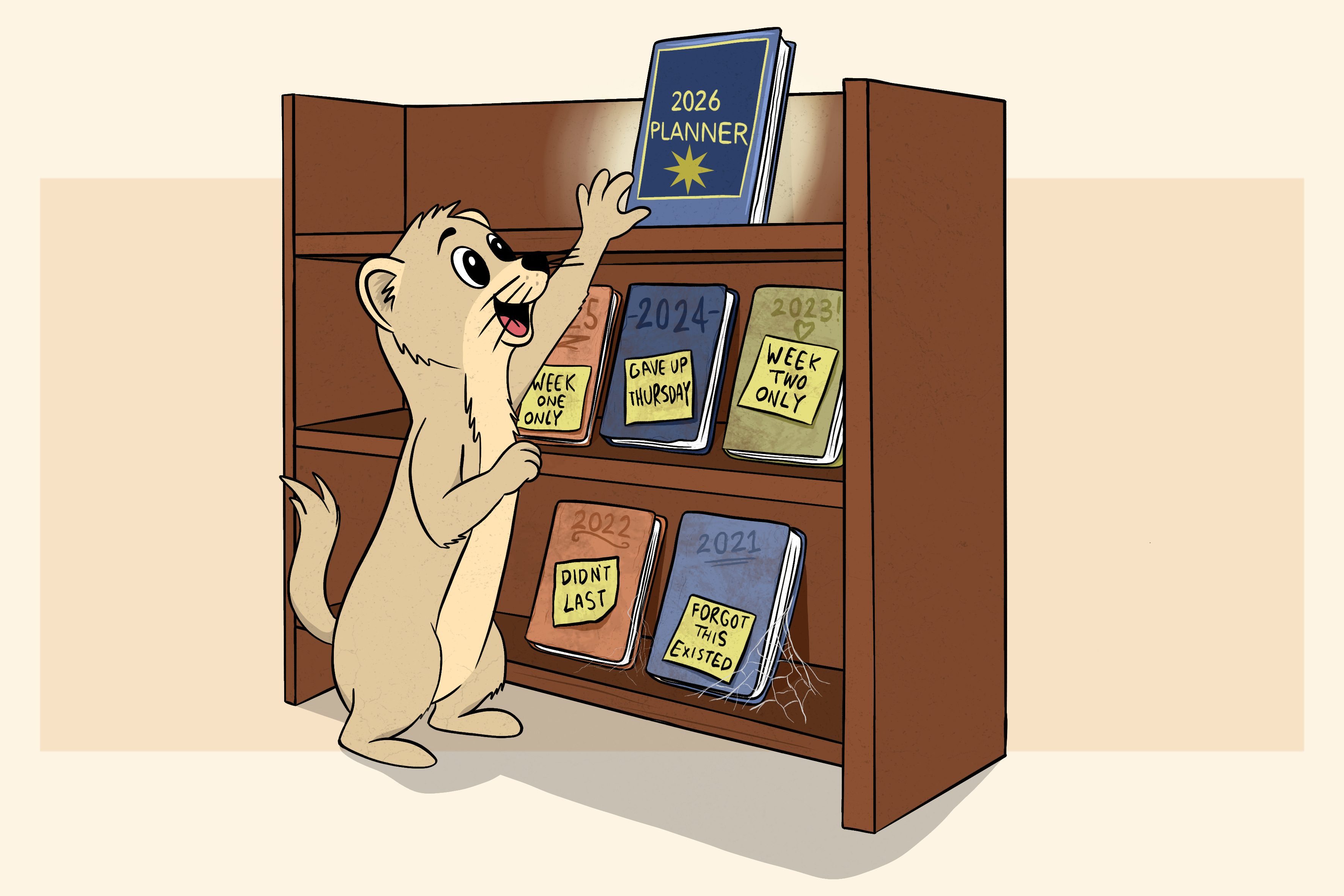
This week’s worksheet, Stop Starting Over, starts with one question: what’s the last plan you dropped? Takes 5 minutes, nothing to download. You’ll find it at the end of this newsletter.
Your brain on “new”
Our brains run on dopamine. And dopamine has a favorite flavor: novelty. Our brains’ dopamine-producing regions fire in response to new stimuli even when there’s no reward attached. The planner doesn’t have to be better. It just has to be new. Our reward system adds a novelty bonus to unfamiliar things, making them feel more valuable than they are. When that bonus wears off a few days later, the motivation disappears with it (along with the planner).
For neurotypical brains, this is a mild preference. For ours, it runs the show.
People with ADHD show a significantly greater pull toward novel options, even when the familiar option is objectively better. The reason goes deeper than preference: adults with ADHD have less dopamine activity in the areas responsible for motivation and reward. Our baseline reward signal is quieter. A familiar plan has to work harder to hold our attention, and most familiar plans don’t stand a chance against a shiny new one.
(This same dopamine cycle drives hobby-hopping too. We dug into that in Hooked on New Hobbies... Again.)
Monday's new workout plan feels incredible. By Thursday, the excitement has faded and our brain is scanning for the next hit. The deficit isn't in knowing what to do, it's in persistence: the ability to sustain effort once the initial spark burns out.
From our readers
“I’m newly diagnosed with ADHD aged 63... I feel like I’m in extended burnout and I’m losing skills & capacity, your tips and cute weasel drawings feel really relevant and helpful without being patronising or too gung-ho.”
- Lin, paid subscriber
Things to try
New this month: each strategy is tagged by energy level. 🟢 = low (couch-friendly), 🟡 = medium (small push), 🔴 = high (good brain day). Pick the one that matches where you are today. (Also reply to let us know what you think so our editor gets some dopamine).
1. Name what phase you’re in 🟢
The next time a new plan lights you up, say it out loud: This is the novelty phase. It’s going to feel less exciting in a few days, and that’s the dopamine, not the plan failing. Knowing the crash is coming doesn’t prevent it, but it stops you from interpreting it as proof that you picked wrong. You didn’t pick wrong. Your brain just finished devouring the new part.
2. Stack novelty into the old plan 🟡
Our brains don’t need a new plan. They need new inputs inside the existing one. Change the playlist. Move to a different room. Use a different pen. Try the routine in a different order. Even small novel elements increase how much the brain values an experience. You can feed the novelty craving without scrapping what’s already working.
3. Build a “still working” list 🔴
Before you chase a new system, write down everything from the current one that’s still functional. The alarm time that works. The grocery list app you use. The way you prep coffee the night before. Most of what you need likely isn’t broken, but your brain just stopped noticing it because it’s familiar. New plans cannibalize the parts that were working in the background. Protect those parts first.
This Week’s Apply It worksheet
What’s the last plan you dropped? The planner under the mail. The app you used twice. Name it, figure out what was actually working before the novelty wore off, and pick one small swap to make it feel new again. Takes 5 minutes.
This, not that
What you’ll hear: “You just need more discipline and consistency.”
What’s actually happening: Your brain’s dopamine system gives new plans a chemical bonus that old plans don’t get. When that bonus wears off (around 3-5 days), the motivation disappears.
💬 Discussion prompt
What’s the plan or system your brain abandoned most recently, even though part of it was working. Drop the one thing from it that was actually good.
Each week, one comment wins a $25 USD Amazon gift card.
How did you enjoy our newsletter today?
If this read helped you, pass it on: a like, comment, restack, or share helps more ADHDers feel understood and less alone :)


A new notebook is my go to! It feels like anything is possible with a new notebook. But then I get overwhelmed & don’t want to ruin it with writing the wrong thing 😅
the worksheet today was helpful of pausing and looking at what is actually working.
The only thing about this system that was confusing is the colors (green, yellow, red) for what to do based on energy. In my brain red means lower energy not green.
Keeping the shelf in my closet clear. Worked for a little while and the good thing was it made me feel less stressed, fewer negative thoughts about me (re: being lazy), and I could find stuff. Maybe straightening just a corner is a way to start back and get some of that dopamine.