

11:08 on a Saturday morning, and the first food question of the day is already open. Breakfast was coffee, and your stomach has been complaining since 9:30. The spinach from Tuesday, bought for a dinner you've since forgotten, has been on the counter since 10:50, when you took it out to figure out what to do with it.
Tonight somebody at home needs an ordinary dinner, even if that somebody is you, and at 7:40 it will be cereal again. You're still looking at the spinach when your mind drifts to the bigger one, the way it does once a single food worry is open.
Twelve days from now there's a meal at your place, US Thanksgiving for some of us and a dinner with friends for the rest, and the date is circled on the wall calendar. Nine people are coming, one of them doesn't eat dairy, and the one bringing a salad hasn't answered your text about it.
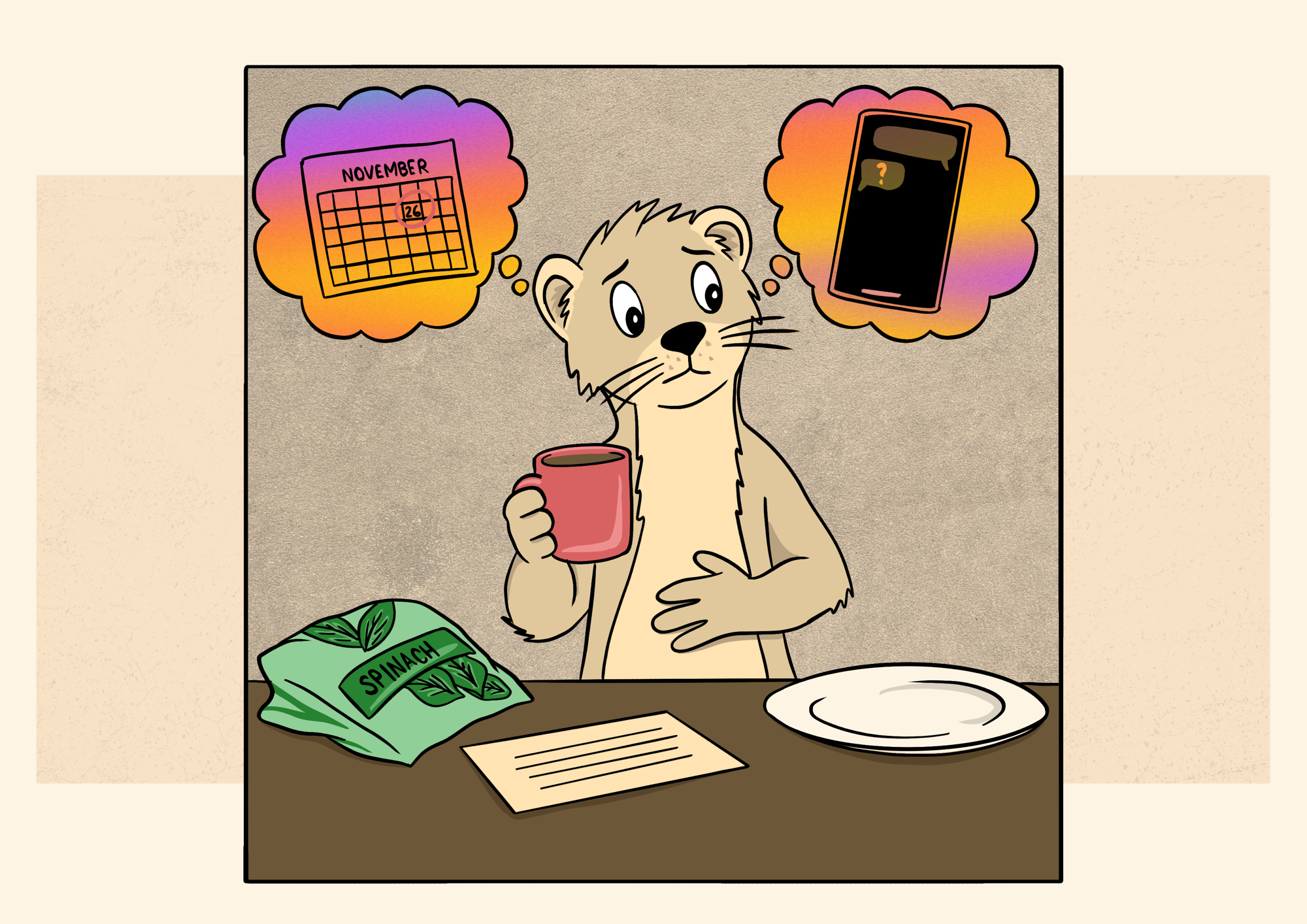
On the back of an envelope, in pencil since Tuesday: the main dish, the one thing that has to be ordered ahead, the side everyone expects, and the roasting pan you lent your neighbor in July. Four lines, none of them checked off. Every line is a food decision, and this week they share the counter with all the ordinary ones.
Where we came in
Before this newsletter, our team built a food app, because a lot of what we bought at university ended up in the trash. You photographed the receipt, and the app kept track of what was in the house and what was about to go bad. Almost nobody downloaded it except people with ADHD. When our mentors asked why, we had no answer.
So we got on the phone. Over six months we talked with more than 250 ADHDers, and with the people who work on this for a living: a nutritionist who specializes in ADHD, university professors, experts at ADHD organizations. We built an ADHD meal planner from what we heard, and the writing we did about those calls did better than the planner. That's how this newsletter started.
The calls kept landing on the same four places it goes wrong: deciding what to make, the store, food that stops existing once it's behind something else on the shelf, and starting, with the bags unpacked and the stove still off. A meal for nine runs into all four at once, and the bag on your counter is the third one.
The shopper and the cook
One caller gave us the line we still use: the person who buys the food and the person who has to cook it are different people. You shop for the week you mean to have. Days later someone more tired, in a different mood, has to figure out what it was all for.
Whoever does the shopping, the produce goes first, because the cook can't see what the shopper bought once it's behind the milk. So the shopper leaves the cook a note. When the bags come in, every perishable gets a night written on it, spinach, Thursday, and the ones with no night go at the front of the shelf. The spinach on your counter came home without one.
What the cooking waits for
Plenty of the people we talked to could cook. What stopped them came before the stove: knowing what to make, and having everything for it in the house. Some blamed themselves anyway. One parent, describing a late dinner after the kids' sports with no idea what to feed anyone, used the word inadequate.
When adults with ADHD rated their own cooking, they scored their skill about the same as people without ADHD and still felt less sure of it, a difference that trouble with executive function helped explain.
The cooking is the part you can already do, so move the deciding away from the stove. Decide tonight's dinner before lunch, while the question is small, and write it where the cook will see it at 6:40. For the side everyone expects, the only decision left is the dairy one. Ask the guest today, and that line on the envelope is done.
And your own lunch
Two callers, five months apart, told us the same thing: they loved cooking for other people and struggled to feed themselves. If it were healthy, one of them said, they'd probably eat cereal for every meal, because it's so much work to keep feeding yourself.
Your own lunch comes back every day, and nothing calls you to it except hunger. At 3:25 on a weekday afternoon you stand up from something you sat down to at noon, with no lunch in between.
People with more inattentive symptoms report relying less on their own hunger and fullness signals. The researchers repeat an older explanation for it: a brain absorbed in something else can lose track of eating.
Under one of our August issues, which had nothing to do with food, a reader came back to their own comment with this:

Since hunger won't reliably call you, let the plate do it. Tonight, before the leftovers go in the fridge, put tomorrow's lunch on a plate and leave it at the front of the shelf, where it exists. At 12:40 the only step left is eating it.
Back to the envelope
Tonight, write a day next to the one thing on the envelope that has to be ordered ahead, or thawed. Tomorrow, after lunch, one text to the salad person with the headcount. The other lines can stay in pencil until those two are done. The roasting pan is a walk next door, and the spinach goes into tonight's dinner, whatever that turns out to be.
If someone else you know is hosting this month, send this to them.
Discussion prompt
What's the one food you keep buying for the week you mean to have?
How did you enjoy our newsletter today?
If this read helped you, pass it on: a like, comment, restack, or share helps more ADHDers feel understood and less alone :)
The ADHD Weasel is free, twice a week, for adults who found out late that they have ADHD.
What is the food app you mentioned? I am interested.
Can I add options like food from my own country?
This is the best time of year to put the ONE food hack I have that keeps me fed...it is soup/stew time. I cook for only me and I find I can make a pot of something on Saturday or Sunday and have lunch and dinner for most of the week. Bonus if I remember to portion it out for faster lunch packing. Also, if I get tired of it, which is fairly rare (IYKYK) I will freeze it to show my future self some love. Works for other meals like spaghetti and jambalaya too.