Your Brain's Already at the 3 PM Appointment: Why morning hours vanish when you have plans later
Why a future appointment can freeze your entire day
It’s 9AM. You have a dentist appointment at 3PM. Six hours. You could pay the electric bill, answer those three emails, start the closet reorganization you’ve been thinking about for two weeks.
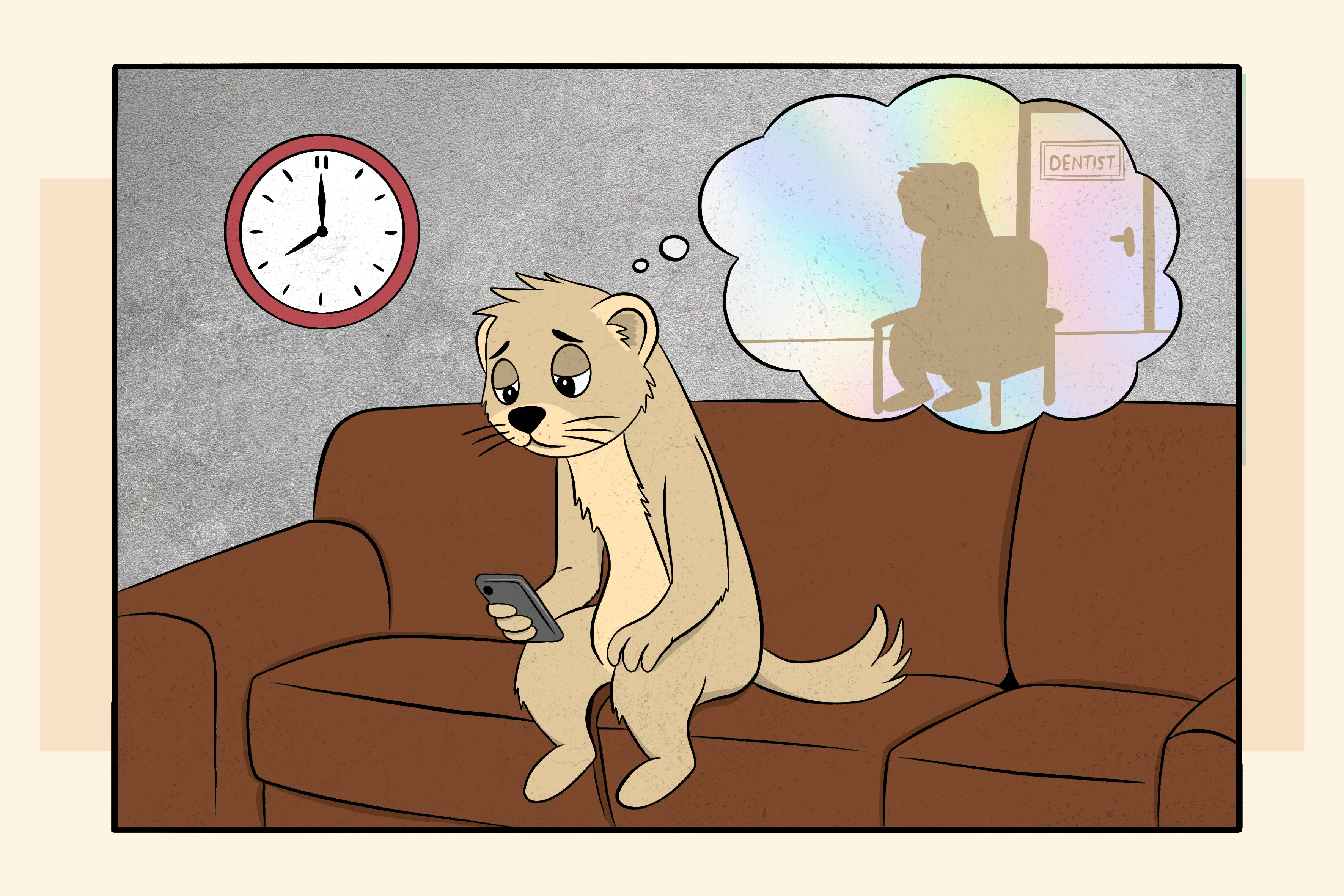
Instead you’re on the couch. Not scrolling, not resting, not doing anything. Your brain has fast-forwarded to the waiting room. It’s sitting in that chair, rehearsing what you’ll say, running through how long it’ll take, calculating when you need to leave. Have I confirmed the time. Do I need to bring anything. What if they find something.
The morning dissolves into nothing.
We’ve put together a worksheet this week called Reclaim Hours Lost to Waiting Mode that helps you build a pre-appointment protocol, create task menus sorted by how much time you have, and track your waiting mode patterns. You’ll find it at the end of this newsletter (PDF and digital versions).
Your brain before the appointment
Your ADHD brain divides time into two categories: now and not now. Psychologist Russell Barkley calls this temporal myopia, a near-sightedness about the future. You can deal with what’s right in front of you. But the future, even five minutes from now, feels abstract and unreachable.
The dentist appointment sits in “not now.” But it’s close enough that your brain can feel its pull. So it does the only thing it knows how to do: lock onto the appointment and refuse to let go.
Three things compound the freeze.
Your internal clock is unreliable. Time perception deficits are a central feature of adult ADHD. Your brain experiences time as moving faster than it does, which makes estimating how long tasks take or how much time remains before you need to leave feel impossible. You know intellectually that you have six hours. Your brain registers it as “barely enough.” So instead of starting something, you sit and wait.
Your working memory is already full. Prospective memory, the ability to remember to do something in the future, is impaired in adults with ADHD. When you have an upcoming appointment, your brain dedicates working memory resources to holding onto that information. It’s running a background process that consumes the exact cognitive bandwidth you’d need to start something else. The appointment hasn’t happened yet, but it’s already using your brain’s limited memory.
Your nervous system treats waiting as a threat. The dual pathway model of ADHD identifies delay aversion as a core motivational feature, separate from executive dysfunction. Your brain doesn’t just dislike waiting. It experiences waiting as something to escape from. The upcoming event triggers a low-grade alert state that burns energy on something that hasn’t happened yet.
This is why entire Saturdays dissolve into a single evening dinner plan. Why a 4PM meeting erases an afternoon. Your brain is running a countdown that drowns out everything else, and the working memory resources consumed by that countdown leave almost nothing available for the tasks you want to do.
From our readers
“It hit home in so many ways and I am tired of being held hostage by my ADHD. I am hoping the worksheets et al will help tone down my reactions.”
- Stacey, paid subscriber
Things to try
1. Schedule the thing before the thing
External commitments override internal paralysis. If your appointment is at 3PM, schedule coffee with a friend at 10AM, a gym session at 11, or a focused work block from 9 to noon. Give your brain a concrete “now” that fills the empty space waiting mode thrives in. The key is that it needs to be a real commitment, something with a start time and ideally another person involved.
2. Match tasks to your available energy
Waiting mode doesn’t eliminate all function. It eliminates the capacity to start demanding tasks. Keep a list of low-activation options on your phone: sort mail, wipe down a counter, respond to easy texts, water plants, prep tomorrow’s outfit. When the freeze hits, pick from the list instead of trying to decide what to do in the moment. The decision is already made.
3. Use short timer blocks
Your brain can’t process “work until the appointment.” It can process one 23-minute block. Set a timer, commit to one task, stop when it rings. The odd number feels less intimidating than a round 25 or 30. If you finish one block and have capacity for another, reset the timer. If not, you still accomplished something instead of nothing.
4. Create artificial urgency
Your brain responds to deadlines, even manufactured ones. If your appointment is at 3PM, pick one specific task and commit to finishing it by noon. Tell someone about the deadline. External accountability closes the gap between intention and action. The deadline has to feel real, which is why telling another person matters.
5. Body double through the freeze
Work alongside someone else, in person or on a video call. The presence of another person provides enough external structure to override the paralysis. You don’t need to talk about what you’re doing. You just need another human nearby. Some people find that even working at a coffee shop or library is enough to break the freeze.
6. Batch appointments early in the day
When possible, schedule appointments first thing in the morning. A 9AM dentist visit gives waiting mode no room to expand. You wake up, you go, the rest of your day is free. Afternoon appointments hand your brain an open invitation to freeze all morning.
Dive into our ‘Reclaim Hours Lost to Waiting Mode’ worksheet
This worksheet helps you build a pre-appointment protocol you can customize once and reuse every time waiting mode hits. You’ll create a “thing before the thing” task menu sorted by how much time you actually have (15 minutes, 30 minutes, 1-2 hours), pick a timer interval that matches your brain, set up artificial deadlines with built-in accountability, and start a waiting mode trigger tracker to spot your personal patterns over time.
How did you enjoy our newsletter today?
If this read helped you, pass it on: a like, comment, restack, or share helps more ADHDers feel understood and less alone :)


