

It’s 3pm on a Tuesday. You’re sitting at your desk with insurance bills spread out in front of you. You know you need to focus. You want to focus. But your hand reaches for your phone before you even realize it’s happening.
You put the phone down. Pick up the pen. Read the same line again. Thirty seconds later, the phone is back in your hand.
Did I respond to that email. What do I need at the store. I wonder if that package shipped.
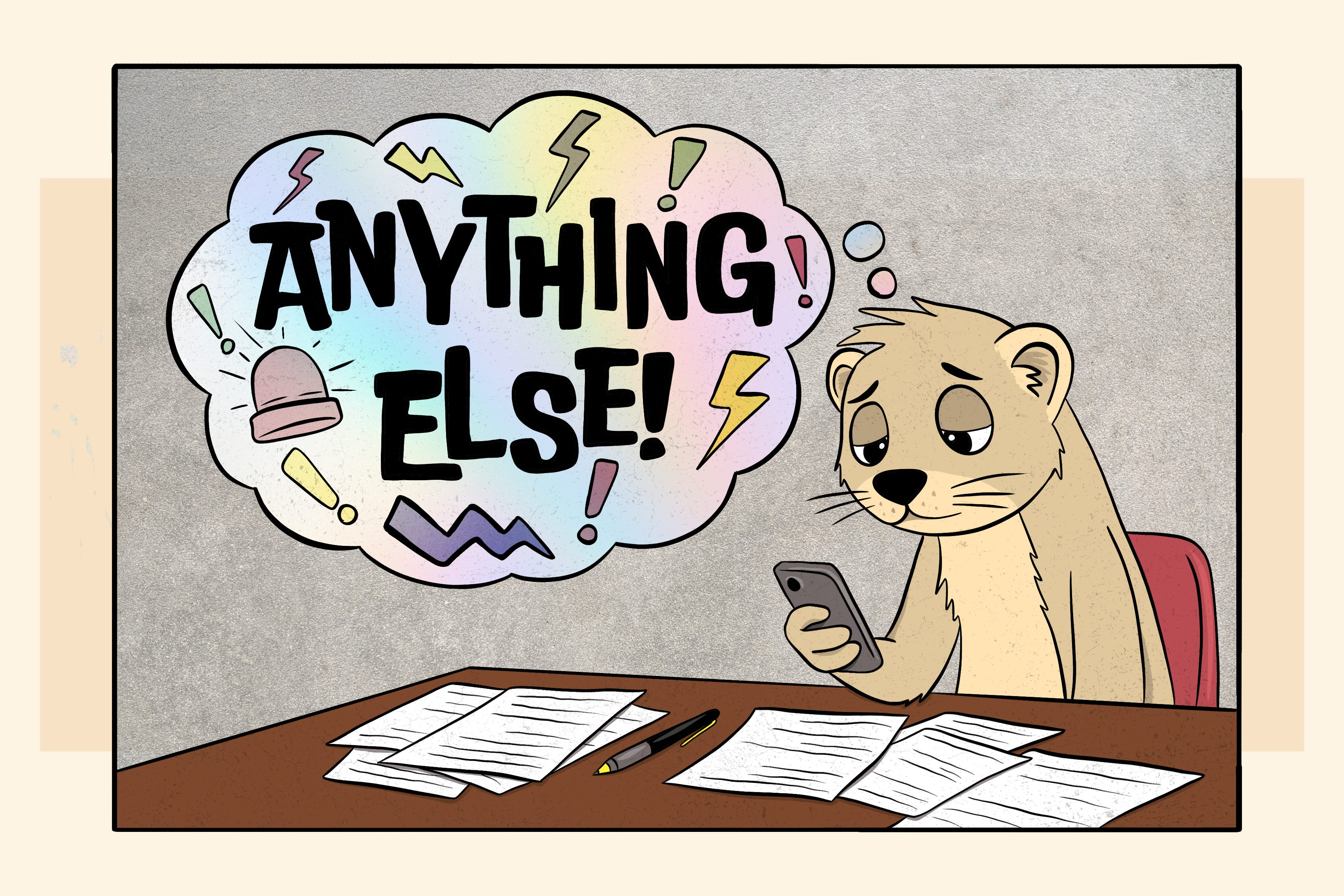
You’ve tried locking the phone in another room. Website blockers. Productivity apps. The phone keeps coming back because your brain is looking for something the insurance bills can’t provide.
This week’s Making Boring Tasks Bearable worksheet is at the end of this newsletter. Try it right in your browser or download the PDF.
NEW: We're also hosting a 30-minute call this Sunday to do it together with our paid community. Details at the bottom!
ADHD brains on a boring task
Our brains run on dopamine, the chemical that makes things feel interesting enough to pay attention to. In ADHD, the dopamine system works differently. Studies show that adults with ADHD have less dopamine activity in the brain’s reward pathway compared to neurotypical brains. That means a boring task has to work harder to hold our attention, and most boring tasks don’t stand a chance.
Insurance bills don’t clear that bar. Your phone does. So your hand moves.
The boredom gap between ADHD and neurotypical brains is massive. One study measuring boredom proneness found the difference between ADHD and neurotypical adults was more than twice what researchers consider a large effect. Boredom hits our brains earlier, harder, and with more urgency.
Research confirms what we already feel: adults with ADHD have lower and less stable brain activation than neurotypical adults. The restlessness, the phone-grabbing, the urge to reorganize your entire kitchen at 10pm, all of it is our brains trying to reach a baseline level of activation that other brains reach without effort.
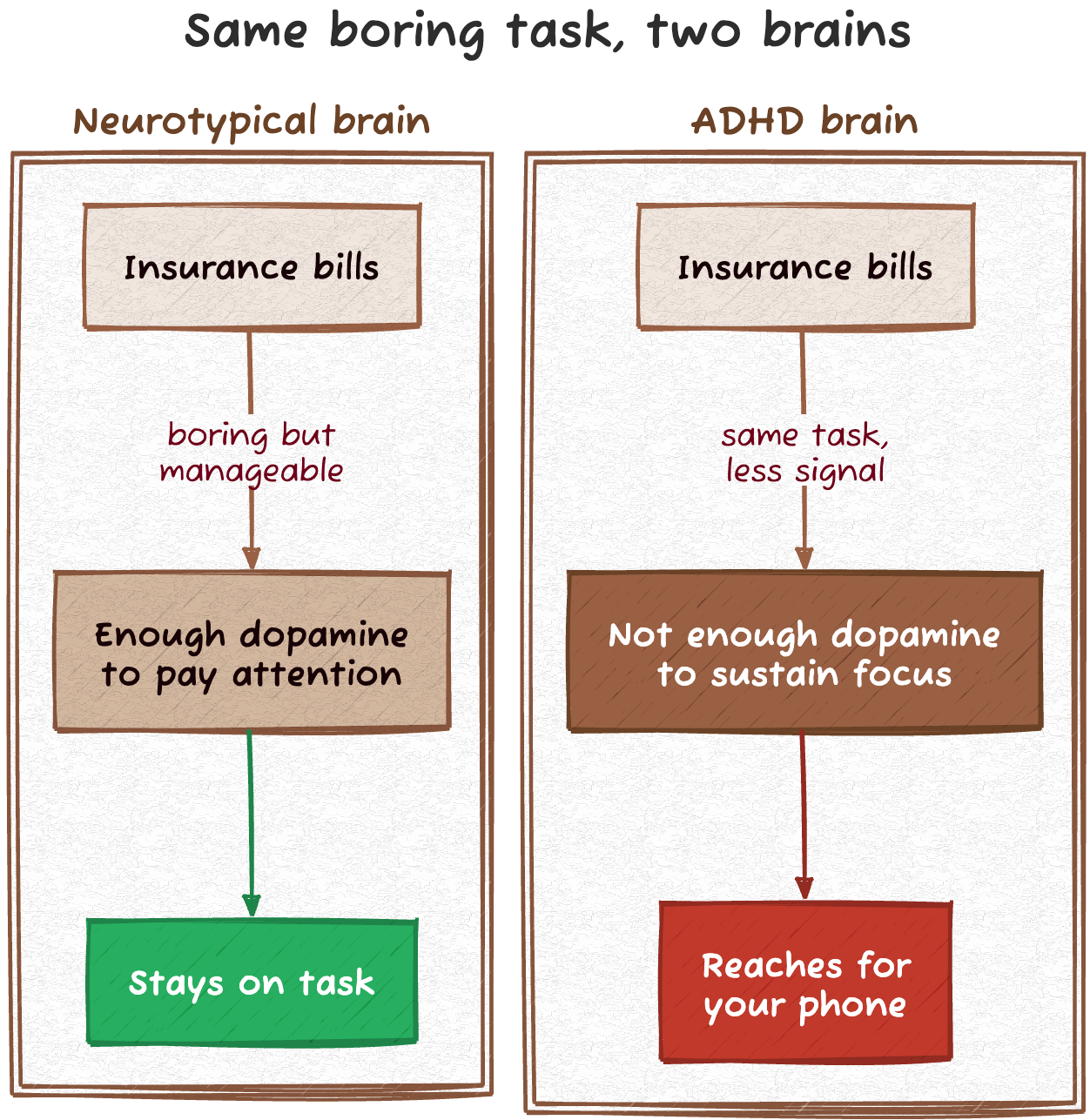
This plays out in two patterns. External seekers become restless and agitated when understimulated: picking up the phone, starting three projects, creating drama just to feel something. Internal seekers go the other direction: lethargic, foggy, paralyzed on the couch, retreating into scrolling or sleep. Most people shift between both depending on the day and their stress level. Both are our brains reaching for the same thing.
From our readers
"I have ADHD, late diagnosed, and it's a daily struggle. I love the insight and knowledge that I'm not alone. What works for you, may also work for me. I'm always open to others success stories. I'm still learning exactly who I am, and this newsletter has contributed to my growth. I appreciate it tremendously."
- Ali, paid subscriber
