

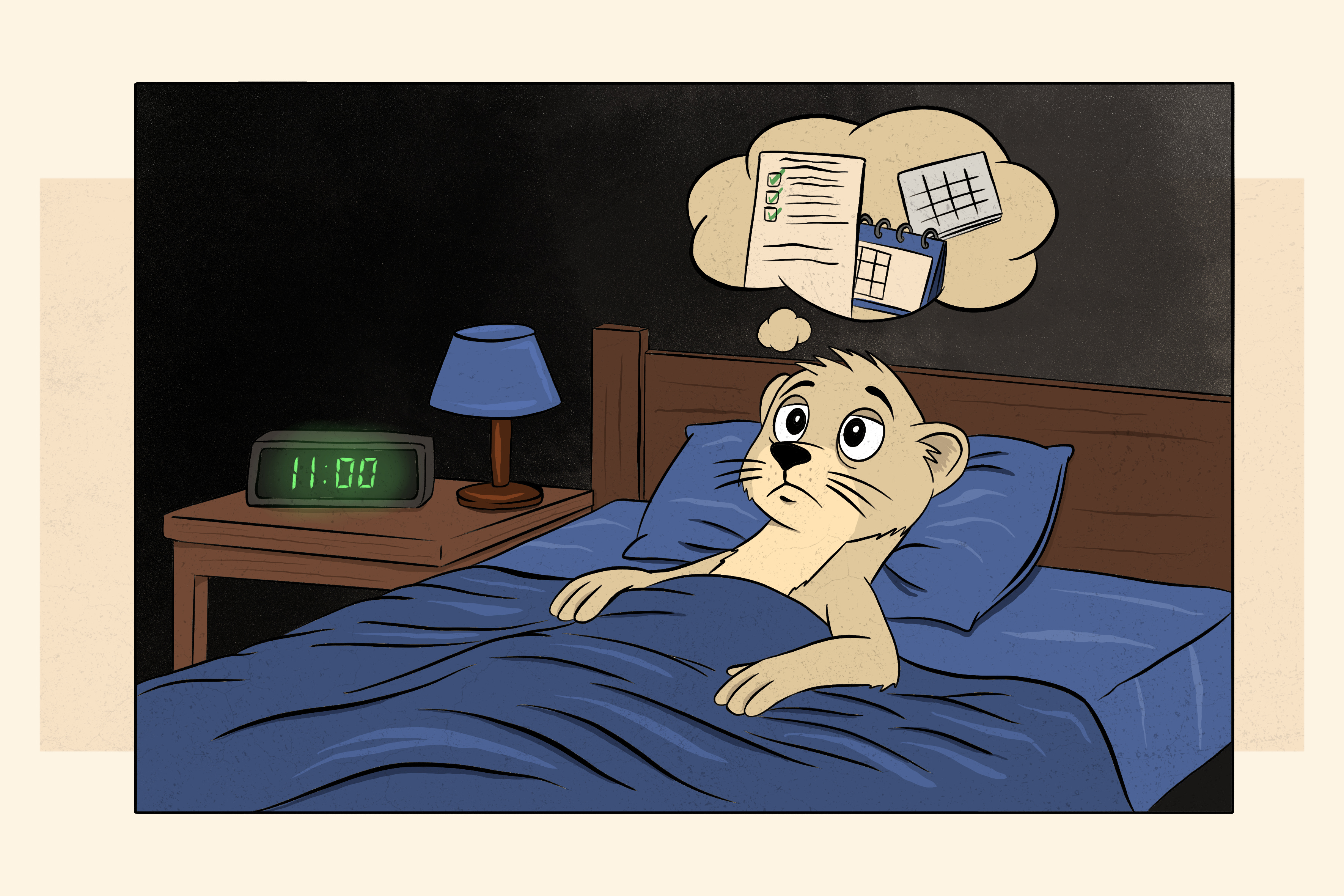
It’s 11:43pm. You’re exhausted. You need to be up at 6:30am. Your body feels heavy with fatigue, but your brain just woke up. Thoughts racing through tomorrow’s to-do list, replaying today’s conversations, planning next week’s schedule, scrolling through your phone because this is the ONE moment all day that’s been truly yours.
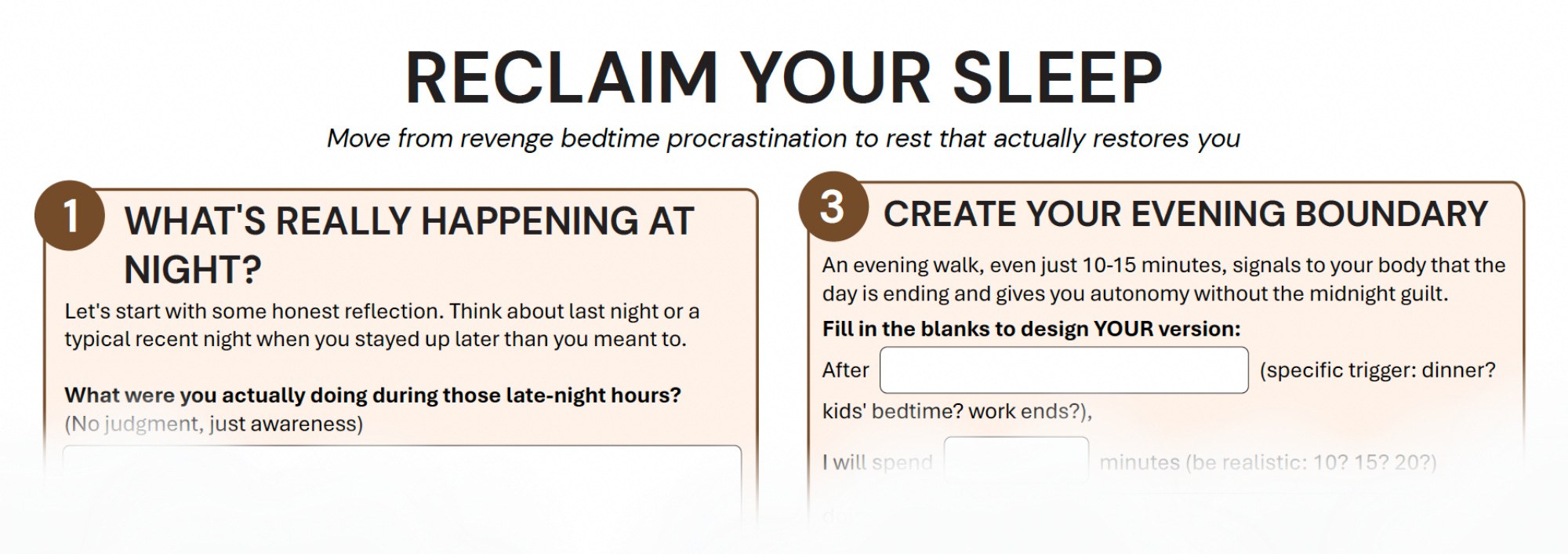
We've put together a worksheet this week called Reclaim Your Sleep that helps you move from revenge bedtime procrastination to rest that actually restores you. You'll find it in the middle of this newsletter (check out the new digital version!).
Your brain at 11pm
Your ADHD brain’s melatonin, the hormone that tells your body it's time to sleep, releases roughly 90 minutes later than neurotypical brains. For most adults, melatonin onset happens around 9:30pm. For adults with ADHD, it occurs around 11:00pm or later.
And it gets worse. After melatonin onset, it normally takes about 2 hours to fall asleep. In adults with ADHD, it takes at least 3 hours. This means that even when your body chemistry finally starts preparing for sleep around 11:00pm, you might not actually fall asleep until 2:00am or later. Insomnia and sleep disturbances affect up to 80% of adults with ADHD.
Even when you’re physically exhausted, your ADHD brain struggles with transition. While hyperactivity in childhood often looks like physical restlessness, in adults it frequently manifests as mental restlessness. Clinicians call this internal restlessness. Your thoughts race: Did I respond to that email. What do I need to get at the store. How am I going to handle that difficult conversation tomorrow.
This is your brain’s difficulty shifting from “awake mode” to “sleep mode.” The same neurological differences that make it hard to switch between tasks during the day make it nearly impossible to transition from consciousness to sleep. And when you finally do find something that captures your attention, hyperfocus can lock you in, making it even harder to pull away.
Then there’s revenge bedtime procrastination. Your days are so full with work and obligations that there’s no time for you to relax. So you “reclaim” a few hours at night for personal time, even though you know you’ll pay for it tomorrow.
The demands are relentless. You may be managing your own career while supporting adult children, caring for aging parents, maintaining a household, navigating relationships. By the time everyone is settled, going to sleep feels like giving up the only moment of freedom you have.
This creates a vicious cycle. You’re exhausted the next day, less able to create space for yourself during daylight hours, even more desperate to claim time at night.
From our readers
“It hit home in so many ways and I am tired of being held hostage by my ADHD. I am hoping the worksheets et al will help tone down my reactions.”
- Stacey, paid subscriber
Dive into our ‘Reclaim Your Sleep’ worksheet (Paid subscriber perk)
This worksheet helps you move from revenge bedtime procrastination to rest that actually restores you. You’ll get honest about what’s really happening at night, plan your morning light exposure, design your evening boundary ritual, identify three micro-moments of daytime autonomy, and set yourself up for follow-through.
Things to try
1. Light therapy to reset your internal clock
Bright light therapy has been shown to advance circadian rhythm, your body's internal sleep-wake clock, in adults with ADHD, with studies showing decreased ADHD symptoms at levels comparable to non-stimulant FDA-approved medications.
Get 20-30 minutes of bright light exposure within two hours of waking. Ideally natural sunlight, even on cloudy days. This signals to your brain that it’s daytime, helping to gradually shift your internal clock earlier. Melatonin combined with bright light therapy can advance circadian rhythm by 1.5-2 hours.
This might mean morning coffee on the porch, parking farther from your workplace entrance, or a brief walk before starting your workday. If you’re a caregiver who can’t easily get outside, consider a light therapy box (10,000 lux) positioned near where you have your morning routine.
