

The last day of school, the year you were twelve. Before the bus pulled out, you had the window seat, the brown envelope open in your lap and the report card in both hands.
Under the grade were two lines in blue pen. The first said the work came in. The title above is one version of the second, which took the rest of the ride.
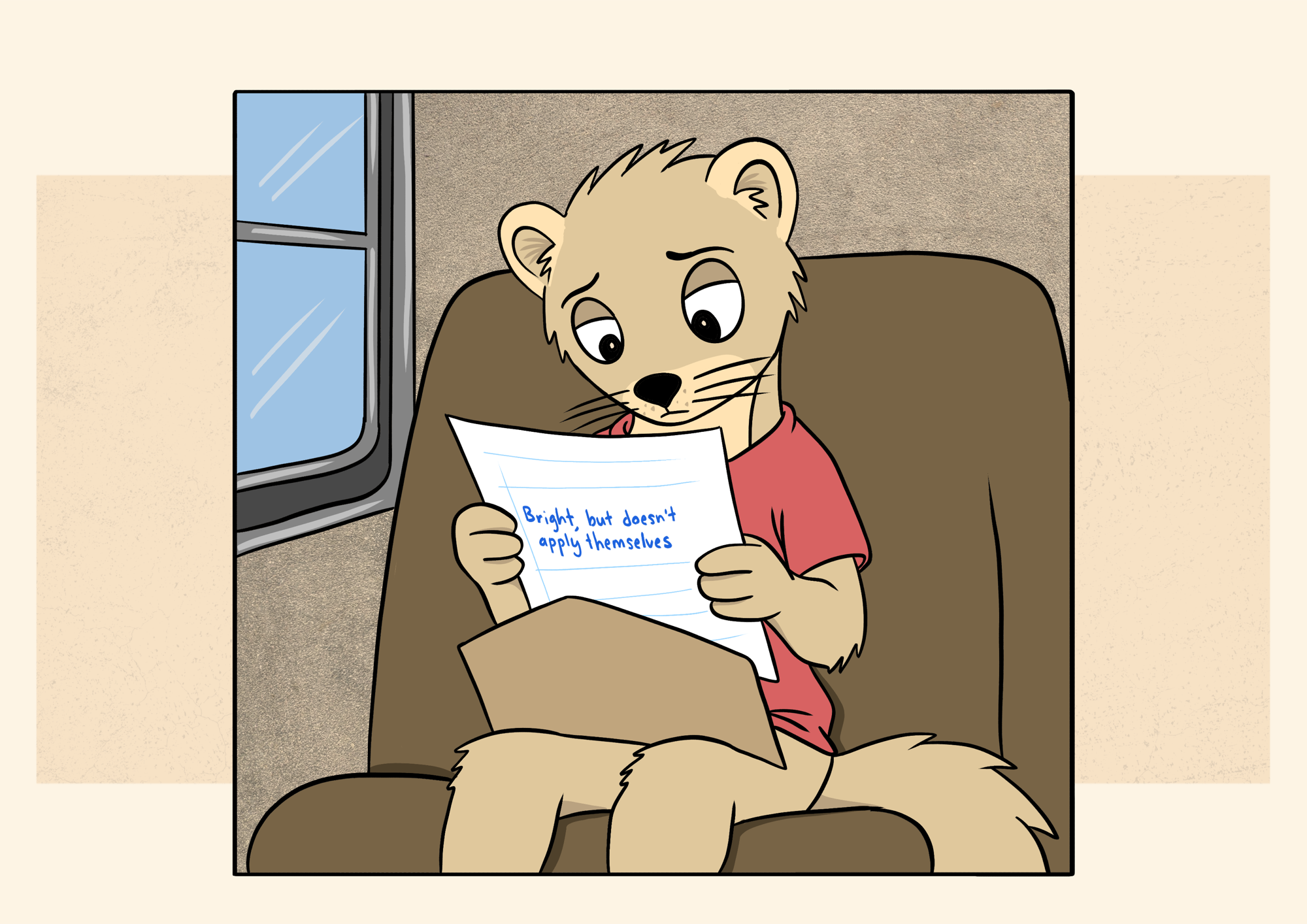
The teacher wrote those lines from the front of the class, where two things showed: whether the work came in, and whether the lesson got interrupted. One of the Sundays that year, you were at the kitchen counter at 9:50pm, redoing a lost sheet from a guess at what the questions were.
That sheet came in at 8:30 Monday and interrupted nothing. What it took stayed at the counter. The comment box under the grade had one word for whatever was missing, and the word was effort.
Teachers had a handful of versions of that second line. If one of them was on yours, pick it, and see how many of us got the same one.
Who was up on Sunday
Among bright children between ten and twelve, the parents saw more attention trouble than the teachers did. The trouble the teachers did see still cost those children at school.
Whoever was up on those Sundays saw the work as it got done, and some Sundays that was only the kid at the counter. If a child in your house is bringing home the same two lines now, you're the one who sees their Sundays.
Before the next parent-teacher meeting, write down three school nights as they went: the hour the work got started, what had gone missing, and what it took to get it in. One page is enough, and it puts those nights in front of whoever writes the next card.
The loud part
Among the children who did get a diagnosis, girls and boys were about as severe as each other. For girls, the loud part mattered more: hyperactivity and getting in trouble for behavior predicted the diagnosis more strongly than they did for boys. A child whose trouble is attention, with nothing disruptive attached, can get read as less impaired.
Nothing about the sheet you redid at the counter that Sunday was loud.
Your second line, with Sunday in it
"But" turns the line in the title into a verdict. It says the brightness should have covered everything else, so whatever was left over must have been a choice.
That verdict can outlast the card by decades. Under our July issue on self-talk, a reader quoted the version their own voice still uses:

Adults with ADHD and a high IQ carry the same pattern of day-to-day trouble as everyone else with ADHD.
So the line can keep "bright," and the rest of it can say what happened. Written from the counter, it reads:
Bright, and gets the work in, even when that means redoing a lost sheet from a guess at 9:50 on a Sunday.
Yours would have a different Sunday in it. Take the sentence from your card, or the closest one in the poll, keep whatever was true, and finish it with the hour and what it took.
If you know who else got that second line, send them this.
Discussion prompt
Tell us the second line your card could have had.
If this read helped you, pass it on: a like, comment, restack, or share helps more ADHDers feel understood and less alone :)