

It’s Tuesday afternoon. You coordinated your mother’s doctor appointments, finished a work presentation early, remembered to text your friend for her birthday, and got dinner started before 6pm. Then you opened your email and realized you forgot to RSVP to a colleague’s retirement party. Three days ago.
She probably thinks I don’t care. Classic me.
Your brain skipped right past the four things you handled. The one thing you missed got filed under permanent evidence. This investigation has been running for decades, and it only collects proof of failure.
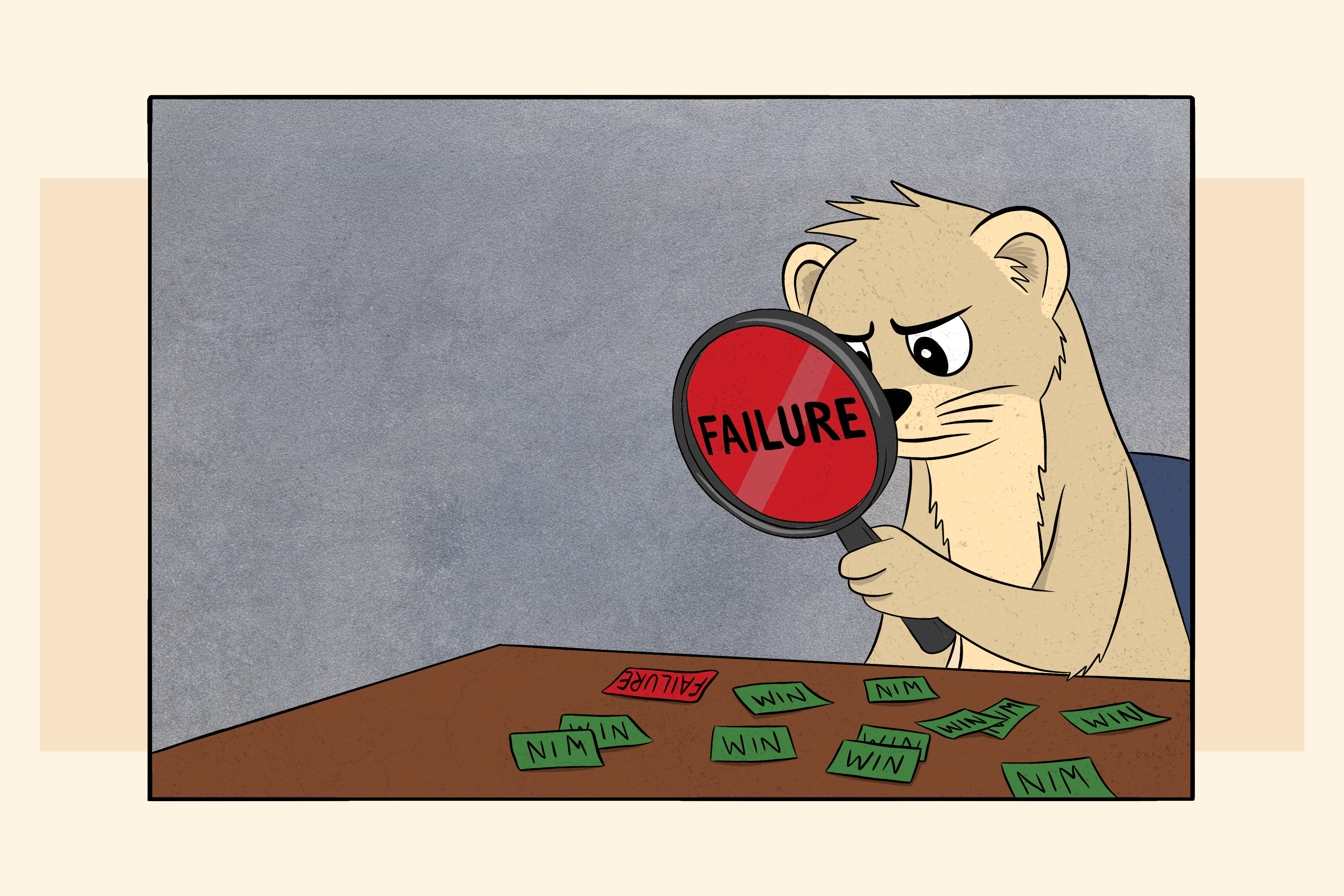
This week’s worksheet, Stop The Evidence Search, helps you catch the moment your brain starts building its case, challenge how fair the investigation actually is, and rewrite the verdict with accuracy instead of shame. Takes 5 minutes, nothing to download. You’ll find it at the end of this newsletter.
Our brain’s evidence collector
Every human brain pays more attention to negative information than positive. The neural response to bad news is faster and stronger than to good news. But most brains let it pass. Ours built a case file around it.
Years of undiagnosed ADHD gave our brains mountains of raw material: missed deadlines, forgotten tasks, “why can’t you just...” conversations, report cards that said smart but needs to apply herself. Every one got filed as a character flaw, not a neurological difference. That’s why one forgotten RSVP can erase an entire day of wins. Your brain has been practicing this collection for decades.
Once that belief is locked in, our brains amplify anything that confirms it and filter out anything that contradicts it. You could handle four things perfectly and your brain will file the one you missed. Years of failure experiences and negative feedback build deep-grooved negative beliefs that run on autopilot, the same voice that used to come from a teacher or a parent now comes from inside your own head. The investigation doesn’t need external input anymore.
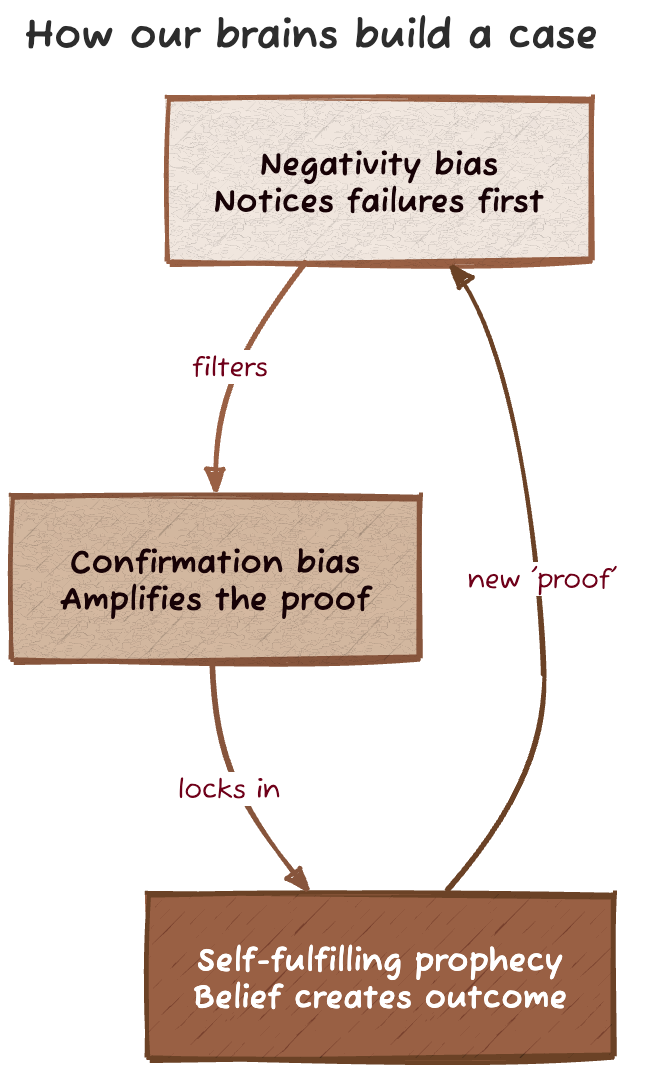
Then the whole thing starts feeding itself. A self-fulfilling prophecy is a false belief that changes behavior in ways that make the belief come true. If you believe you’re “bad at friendships,” you might stop reaching out, cancel plans when you’re overwhelmed, interpret a late text reply as proof they’re pulling away. Friendships drift. And your brain files it: See. Bad at friendships. Just like I said.
The belief didn’t predict the outcome. It produced it.
From our readers
“I want to be kinder to myself...in my thoughts and internal dialogue. As a 40-something lifelong ADHD sufferer, learning more about this diagnosis with concrete tips and strategies helps me treat the way I move through the world with deep compassion.”
- Samara, paid subscriber
This Week’s Apply It Worksheet
Run your brain’s investigation through a fair trial. Catch the harsh verdict, challenge the evidence, find what it left out, and rewrite the story with accuracy instead of shame.
Things to try
1. Name the evidence collector out loud
When you catch your brain cataloging failures, call it what it is. There’s the evidence collector again. Naming the pattern creates distance from it. You’re watching a very old, very practiced neural pathway fire. Noticing it is the first step toward weakening it.
