
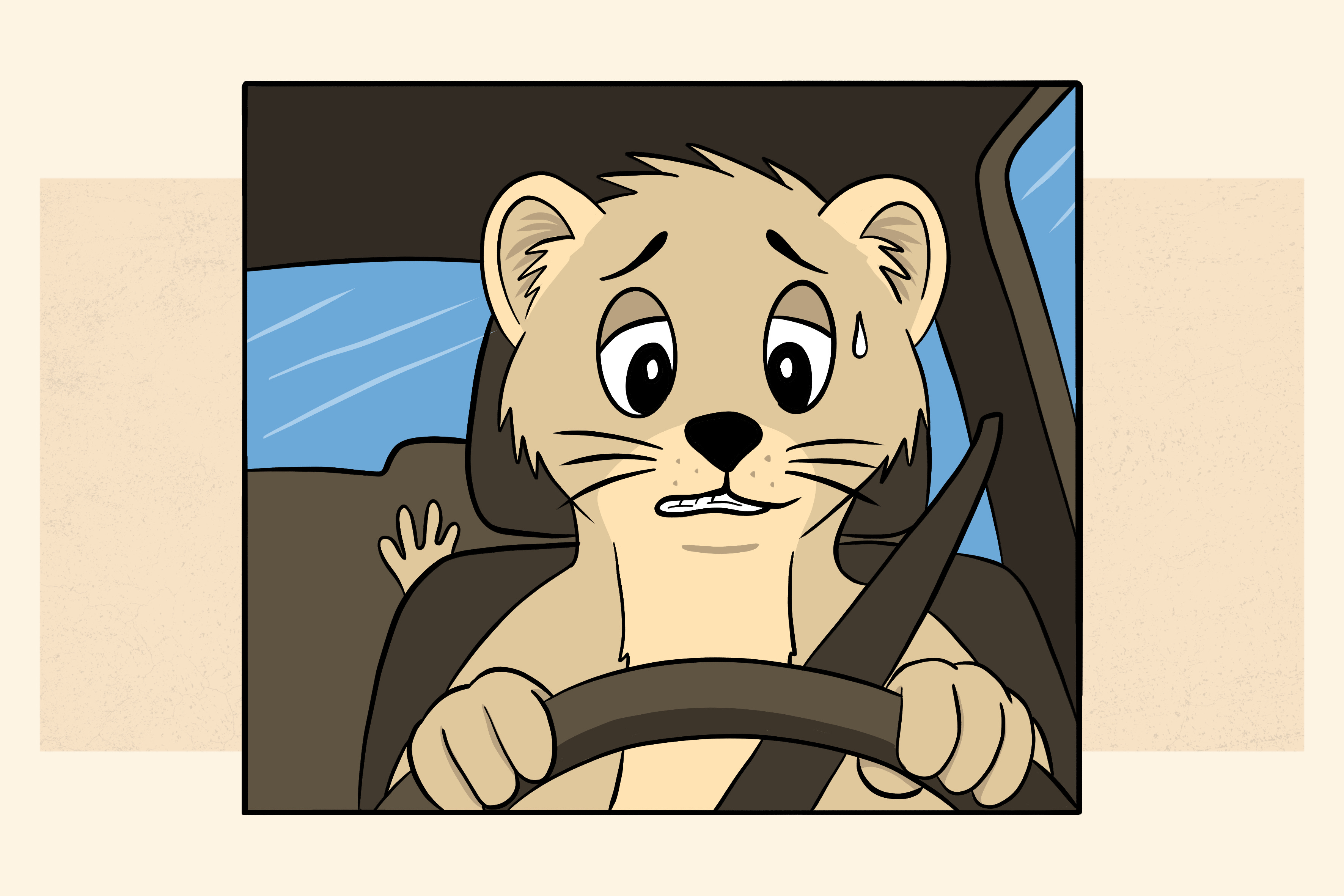
You are already running late when you catch the back seat in the rear-view mirror. The bedhead. The shirt they outgrew in the spring. The shower that did not happen last night either. It is picture day, and there is no time to turn around.
By the time you reach the gate the thought has gone somewhere much bigger than a photograph.
Patricia Sung is an ADHD Coach for Moms With ADHD, like a professional organizer for your head. As an Adult ADHD coach, podcaster, author and speaker, she helps the mom carrying everything rise above overwhelm and burnout, take control of their day, and build a life they love, in a way that works with their ADHD brain.
Inside this guest post, Patricia breaks down what to do in the hour after you realize you dropped something, and why guilt is the wrong word for having ADHD in the first place.
Maybe my kids would be better off with a different parent.
On the days that you lose the permission slip, forget to pack their lunch, or finally notice that your kid has been wearing the same shirt for three consecutive days… the frustration and disappointment stack up. When your bad habits, questionable choices, or poor memory affect your kids, the guilt and shame pile on. You may worry that they’ll hate you one day or need decades of therapy for your mistakes. You may be embarrassed by what others think, because if this is how you talk about yourself, what are others saying!? This stress prevents you from moving forward and your self-esteem dips more.
When you continually make mistakes that hurt your children, it’s easy to think they’d be better off with someone else. Even though you may know deep down it’s not true, how do you let go of the guilt and shame that weighs you down?
Let go of guilt and shame from ADHD
First off, ADHD in and of itself, is not a reason for guilt or shame. Guilt means you are culpable of or responsible for a specific wrongdoing. Seeing as you didn’t “do” anything to have (or not have) ADHD, you didn’t do anything wrong, therefore there is no cause for guilt just by having ADHD.
Shame is a painful feeling of humiliation or distress caused by the consciousness of wrong or foolish behavior. Having ADHD doesn’t make you inherently wrong or foolish. Have I made my fair share of bone-headed decisions? Sure. But having ADHD isn’t one of them. One more time for those who doubt: You do not own guilt nor shame simply for having ADHD.
When you make your next mistake, here’s what you can do to work through the wave of guilt and shame that follows.
1. Humans make mistakes, including parents with ADHD
You’re not a robot. You are human.
You are not meant to be perfect. Remind yourself that you are going to make mistakes because you’re not a robot – you are human. Everyone makes mistakes, ADHD or not. It’s okay to make mistakes. In fact, mistakes are part of learning and growing. Yes, mistakes are uncomfortable. Discomfort is also part of being human. Congratulations, you’re still alive; you’re still growing and learning.
2. Admit you made a mistake
Let that uncomfortable feeling exist and fizzle out.
Next, admit you messed up. Ugh, yes, it’s another uncomfortable feeling! Let that uncomfortable feeling exist and fizzle out. Most feelings last about 90 seconds when we let the feeling take its course. Feelings linger when you ruminate or replay the feelings. You can make it through the 90 seconds with practice, by changing your reaction to mistakes. In therapy or neuroplasticity coaching, you can teach your brain to choose a different way of coping. You may want to have a catch phrase ready, like “It’s okay to make mistakes; it’s how I learn and grow” or “I’m a human, not a robot.” Be an Elsa and let those feelings go!
Side note: When you have made a lot of mistakes or when you were punished a lot for making them, you may have learned that making mistakes is bad, wrong, or unsafe. That is a coping mechanism that served you in the past. In fact, it may have served you well in an abusive relationship. I’m sorry that person treated you poorly. It is not okay for someone to treat you poorly, regardless of the situation. Please ask for help if you are still dealing with this. You are lovable and valuable no matter how many times you’ve messed up.
3. Find your calm
Find your peaceful spot.
Then, find your calm. Often when you’ve made a long list of mistakes, your autopilot goes to beating yourself up or feeling defeated. That doesn’t help anything, of course, but when you’ve always played that narration of how much you suck, you may not be aware that you can play a different soundtrack.
What would make you feel more peaceful and less stressed?
Would you like to hit pause on the soundtrack of suckiness and replace it with something better?
If you had a magic fairy wand, what would feel peaceful?
I have clients who imagine themselves sitting on the beach, walking through a lavender farm, or floating in a peaceful lake. Some feel a ball of golden light glowing in their chest or imagine their heartbeat slowing to a steady pace along with their breathing. Some listen to their favorite song or pretend they are breathing in the smell of crayons. There is no wrong answer. The goal is to find your peaceful spot so that you can lower your stress enough to access your critical thinking skills. The more imagination or weirdness you can incorporate, the better. ADHD brains love novelty.
4. Assess the damage and problem solve
Look at the mistake as objectively as you can.
Now that you’re calm and aware of the situation, let’s look at the mistake as objectively as you can. Consider:
What is the gravity of the situation?
Is it a major or minor problem?
How important or urgent is the issue?
Does anything need to be addressed immediately?
Accurate perspective on what damage has occurred allows you to choose the best next step.
Once any emergencies have been dealt with, ask yourself: Is there anything that is not permanently damaged that I could do something about? This is problem solving mode. Do your best to repair the damage. You may find it helpful to ask someone you trust for advice. You may want to ask the person affected what would help. Don’t guess when you could ask for the actual answer.
5. Admit your mistake and apologize
Ask for their forgiveness.
Lastly, admit your mistake and apologize to the person who was affected. When your child gets caught in the crosshairs of your mistake, ask for their forgiveness. They may not be ready to hear an apology, and that is okay. Their feelings are their business. Give them the time and space they need. It may be helpful to remind your child that they have every right to feel hurt, angry, sad, disappointed, etc., but hurting back (hitting, being mean, etc.) is not okay, nor will it solve the problem.
Admitting mistakes and apologizing are both muscles you can strengthen. You will benefit from this practice, even when the other person needs more time to deal with their hurt. Admitting mistakes and sincerely apologizing will strengthen any good relationship, certainly not damage it beyond the hurt that already exists.
Your child doesn’t need a perfect parent
Life isn’t perfect and when things don’t go your or their way, you are both building the skills to deal with life’s obstacles: persistence, perseverance, frustration tolerance, forgiveness, and grit. Teaching your child (and yourself) these skills is a tough part of parenting. Thankfully, when you want the best for your child, you’re willing to do the hard work of learning new skills. You are your child’s parent for a reason and they are lucky to have someone who loves them as much as you do, imperfections and all.
Curious if you have Adult ADHD? Patricia made a free checklist for Weasel readers of what ADHD really looks like in women and inattentive types.
How did you enjoy our newsletter today?
If this read helped you, pass it on: a like, comment, restack, or share helps more ADHDers feel understood and less alone :)