"So you'll send the revised numbers, I'll talk to the client, we'll push everything to the fourteenth, and can you check whether the old quote still stands."
You said yes. It did sound reasonable and you understood every part of it.
Five minutes after the call ends you send the revised numbers, because that’s the one you were still holding. The client is theirs. The fourteenth is gone. And the fourth thing is gone so completely that all you have left is a vague sense that there was a fourth thing.
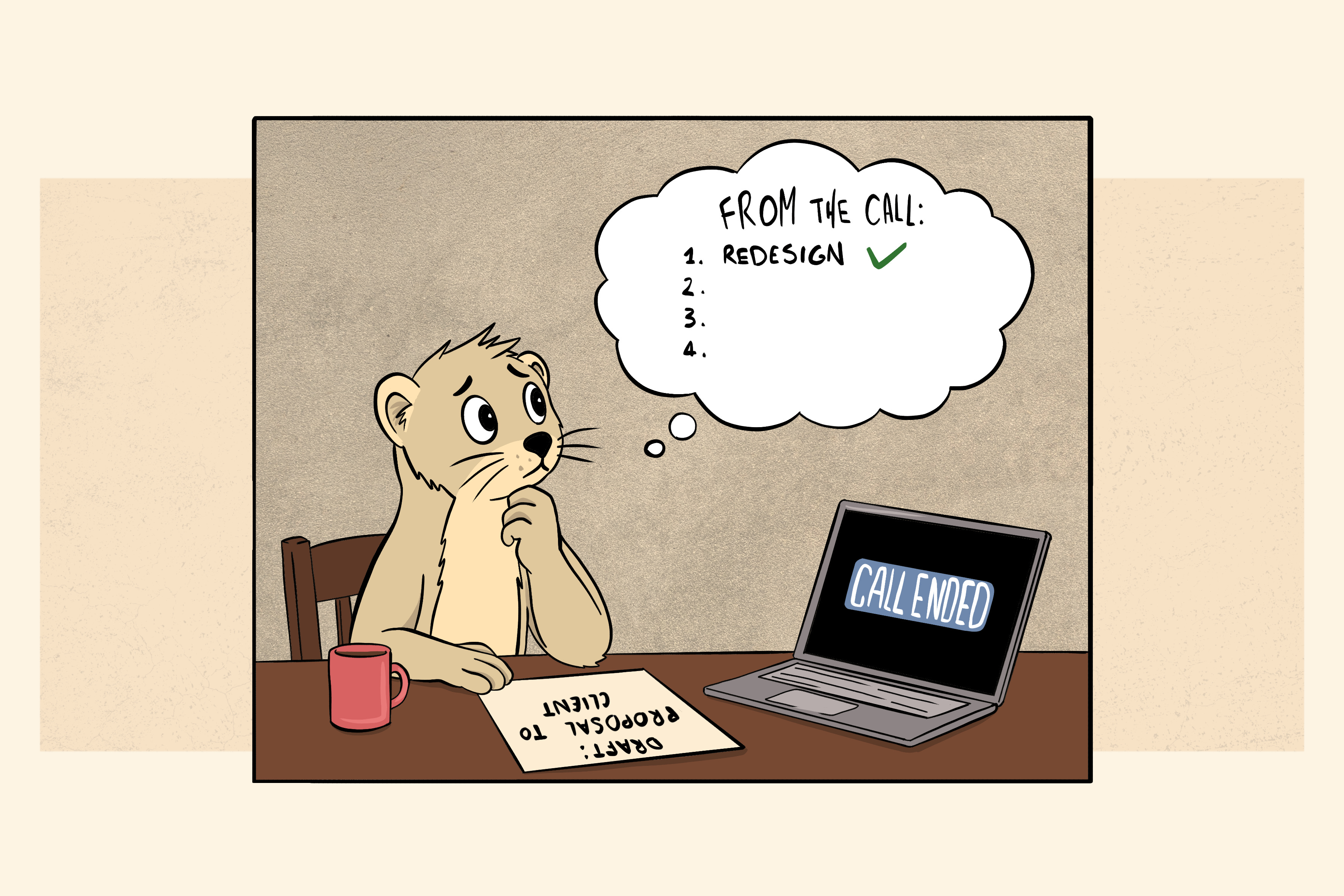
There’s a 5-minute worksheet at the end of this newsletter called Your Setup for Remembering What People Tell You. It goes in before the next call, so the list survives without you having to hold on to it.
Where the other three went
You weren’t being careless on that call. A spoken list sits in the most fragile place our brains have, and acting on the first item clears the rest.
The thing holding those three items has a name and a known size. Working memory is the small amount of information any of us can keep live at once without writing it down, and it’s smaller for us. A review pulling together thirty-eight studies of adults found the deficit holds into adulthood, across both the part that keeps hold of words and the part that keeps hold of what things look like. Not a childhood problem anybody grows out of.
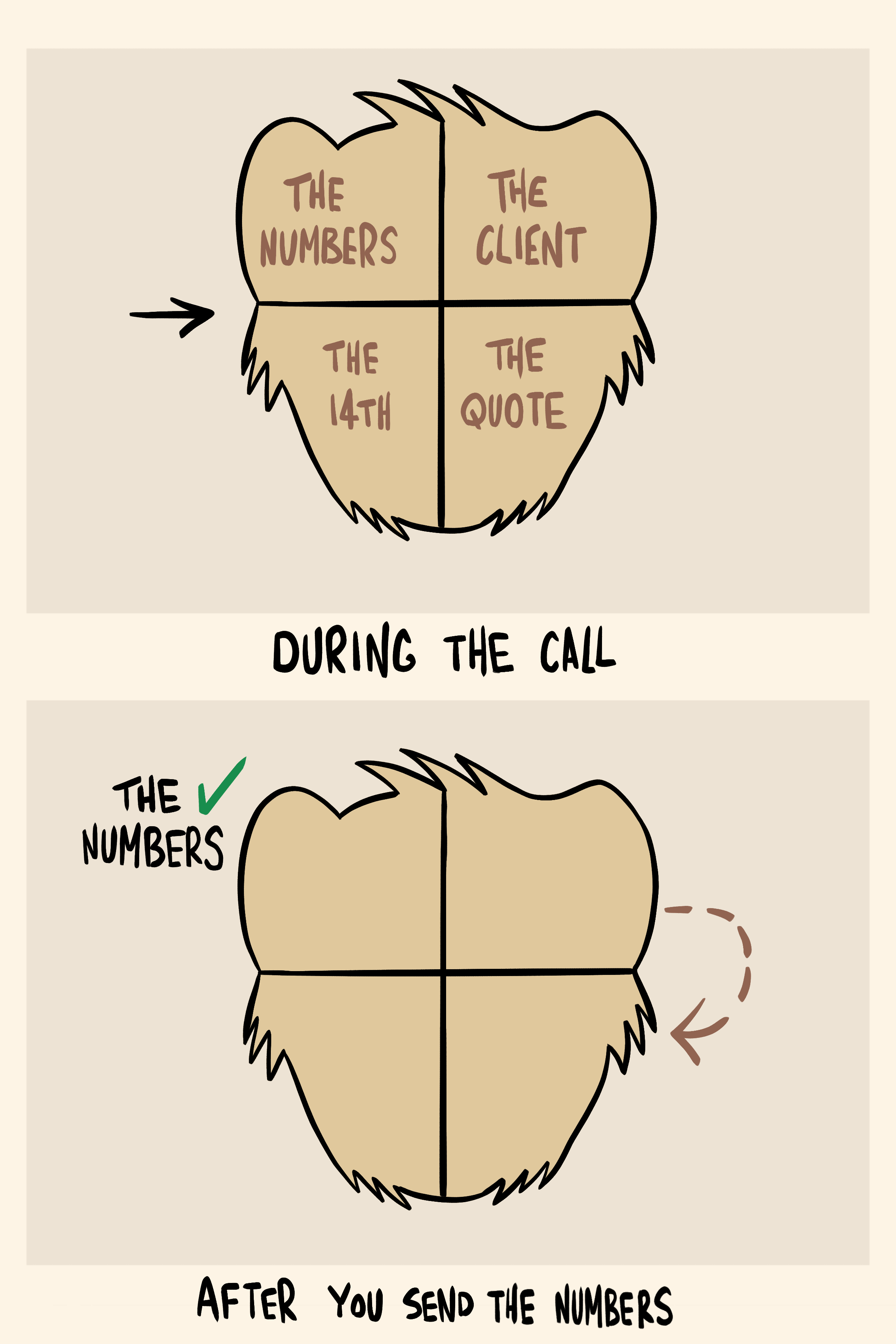
A spoken list is the worst case for that store. Nothing is written down, nothing is in front of you, and the only thing keeping it there’s you holding on to it, going over it quietly while they carry on talking. Let go for a couple of seconds and it’s gone. Meanwhile the person talking has moved on to the next sentence, which arrives and takes up room. Below is the same head twice, once while the call is running and once a minute after you act on the first thing.