

Somewhere in your house there's a thing you're supposed to book. The dentist you last saw fifteen toothbrushes ago. The eye exam that lapsed. The therapist you ghosted in March and think about every time someone says the word boundaries. You know exactly where the card from Ridgeline Dental is. You always know where the things you're avoiding are.
You also know the moment it resurfaces, because it arrives in your stomach before it arrives in your head. A small drop, then something hot that’s mostly shame, then the verdict: a real adult would have handled this months ago. Why am I like this.
So you push it somewhere quieter, and it goes. The pushing works every time, and the price is that the next time it surfaces it lands a little harder, and you’re a little less likely to book it than you were before. The thing itself stays the same size while the feeling grows.
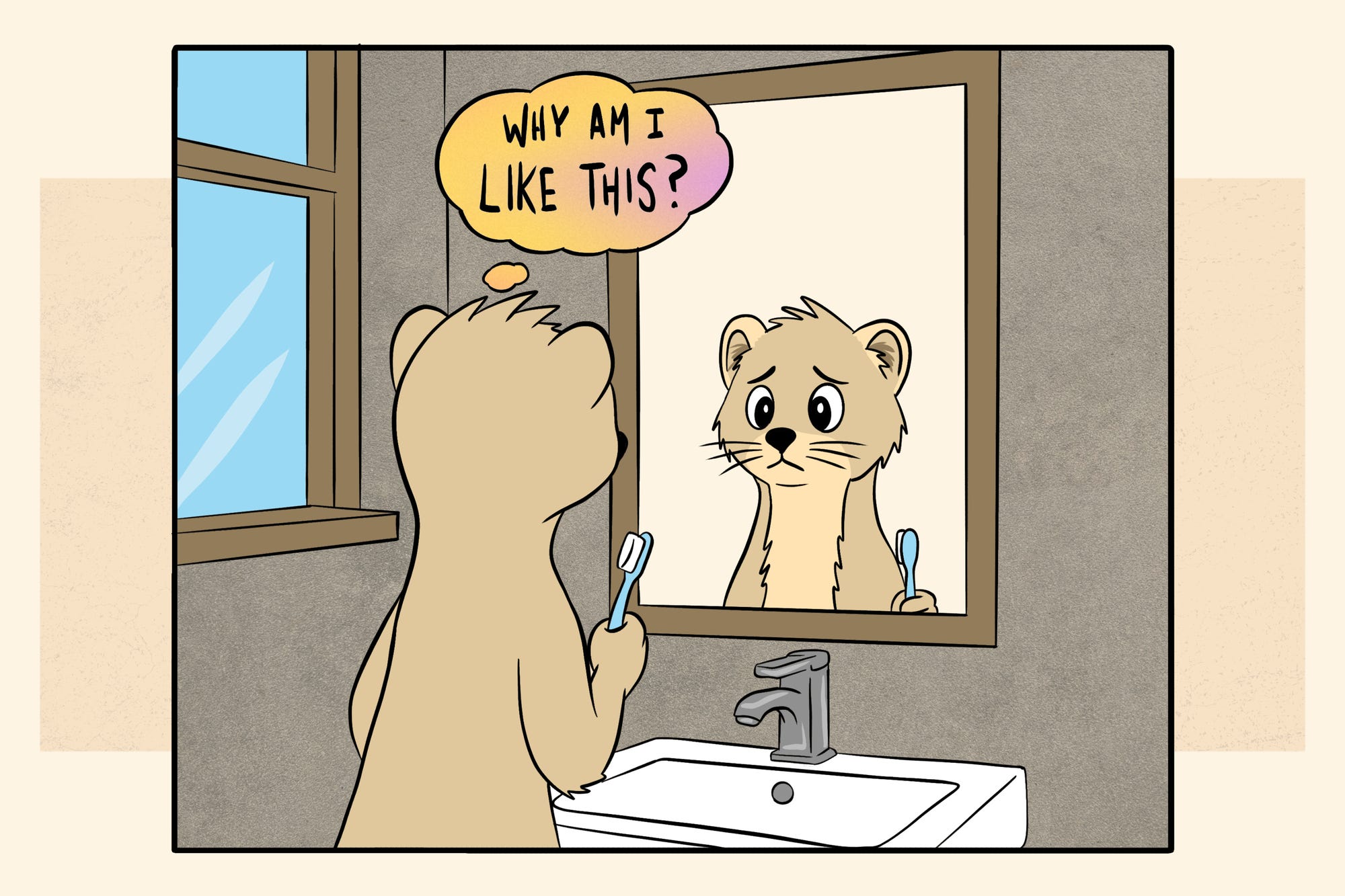
So before anything else, one true sentence: nobody is keeping tabs on you. There's no inspector and no adult report card. The bar you keep failing is one you built yourself, and you're the only person who can see it.
There's a 5-minute worksheet at the end of this newsletter called Your Adulting Ledger. One list holds the things you've been avoiding. The other holds the adult things you already handle that never get counted, and that list is longer than you think.
The spiral has a mechanism
Look at what happens each time the dentist surfaces. You feel the drop, you push the thought away, and the moment it's gone you feel better. That relief is the problem. Relief is a reward, and a brain repeats whatever gets rewarded, so every push-away teaches it that avoiding this thing pays out, immediately, in a currency it loves.
The booking pays out too, eventually, weeks from now, in a currency this brain feels less. That part has been measured. Across twenty-one studies, a delayed reward lost its value faster for people with ADHD than for people without it, in children and adults alike. Avoidance keeps winning because the scale was tilted from the start.
Then the shame arrives to help, and makes everything worse. The verdict, the "real adult" line, the mental list of everyone who books their appointments on time. To any brain, punishing yourself registers as a threat, the threat attaches to the task, and the task gets heavier to approach. You've been adding weight to the thing you most need to be light.
The research here points away from the whip. The people who procrastinate the most are also the least kind to themselves and carry the most stress.
And in a study that followed 119 students across two midterms, the ones who forgave themselves for putting off studying for the first exam procrastinated less before the second one. The self-critics repeated the pattern. Being kind to yourself about the unbooked dentist makes booking it likelier. Beating yourself up has never once gotten the thing booked.
That is the whole loop, and it breaks in three places. Start at the top and follow it around. Each way out is written under the step it breaks, and any one of them is enough.
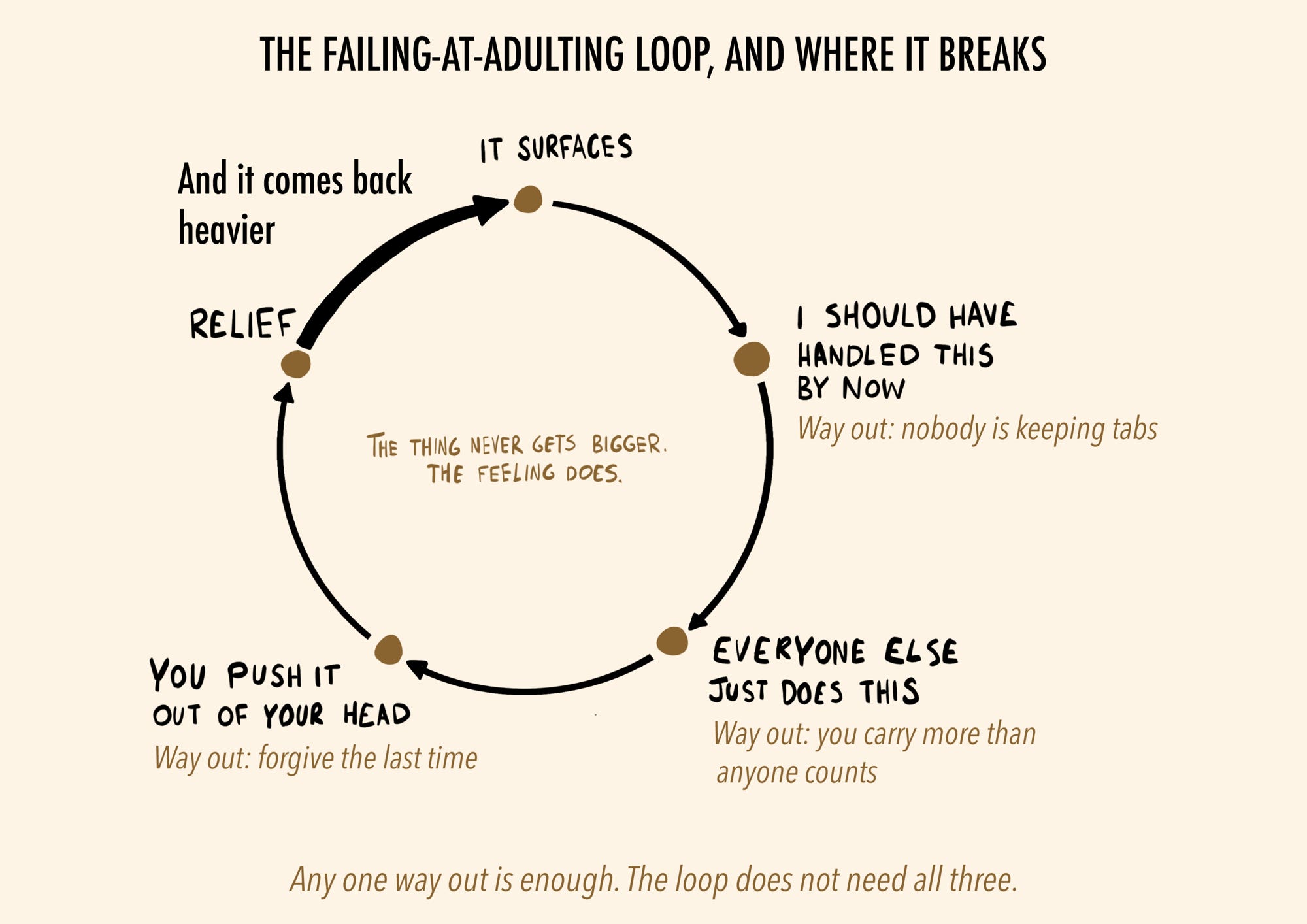
One break is enough, and it reorders the whole job. Booking the dentist takes nine minutes, and you've done far harder things this week without noticing. The hard part is the approach, through years of accumulated flinch, and the way in is to stop paying the entry fee of shame before you start.
