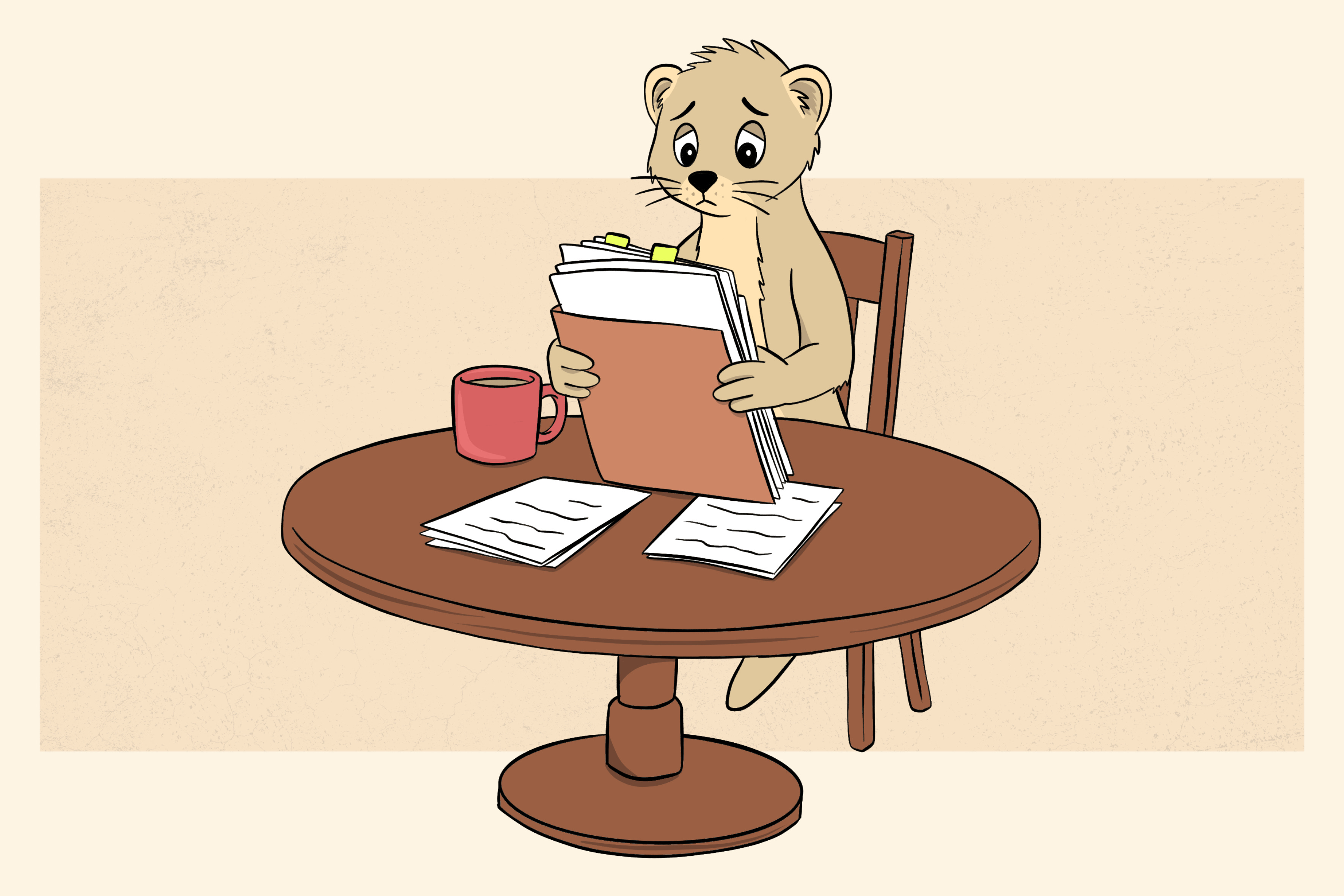
You practiced the sentence in the car before you went in. I think the way my brain works might be ADHD. You had the folder on your lap to back it up, the articles you’d printed and highlighted at the kitchen table, a list of the things you’d struggled with for as long as you could remember.
He listened for a minute. Then he told you that you’d raised a family and held down a career, that everyone gets forgetful, and that what you were describing sounded like stress.
You folded the folder back up and thanked him. The part that stung came later, on the drive home, when his doubt slid over into yours: maybe you’d gone looking for a label, maybe you’d made the whole thing up.
There’s a 5-minute worksheet at the end of this newsletter called The Proof You’ve Been Carrying. It helps you write down everything you’ve struggled with since childhood, all in one place, so the next time you wonder if you made it up, you can look at it and see that you didn’t.
Why nobody saw it
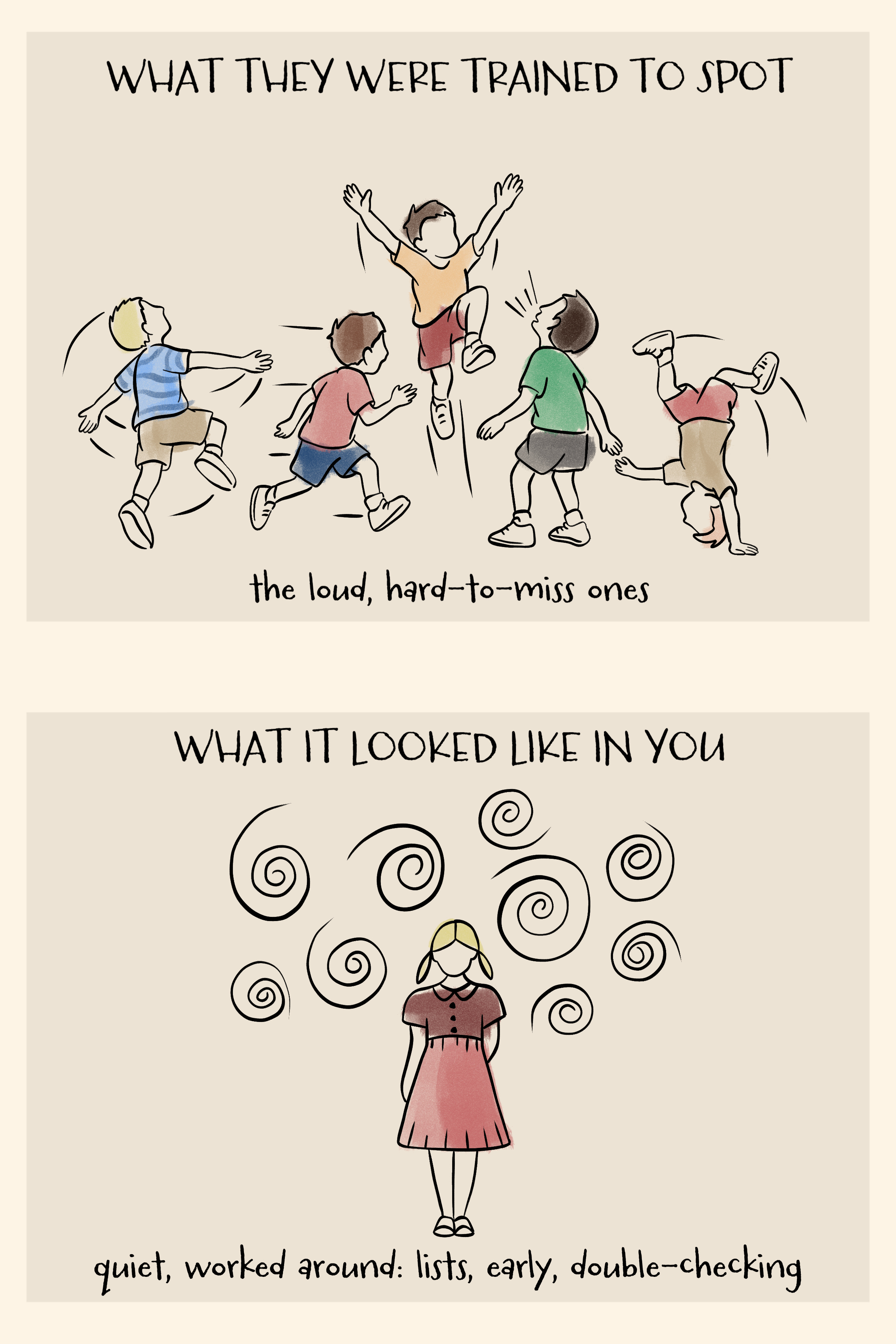
His doubt was not proof that you were wrong. He was trained to spot ADHD in one kind of person, a hyperactive little boy, and you look nothing like that boy.
For a long time, ADHD was studied in the kids who caused trouble, the boys bouncing off the walls in class, so the research was built on them. The quiet version, the one that never disrupts anyone, barely got looked at. So a doctor pictures that loud boy, sees a calm woman in front of him, and decides there is nothing there.
There is a second reason too: you spent your life working around it, with lists and arriving early and double-checking everything. Women with ADHD often cope better than the boys ever did, well enough that no one saw the struggle. And the better you managed, the more it looked like nothing was wrong.