Why Spring Cleaning Turns Into Spring Quitting
Your brain runs out of decisions before the first shelf is done.
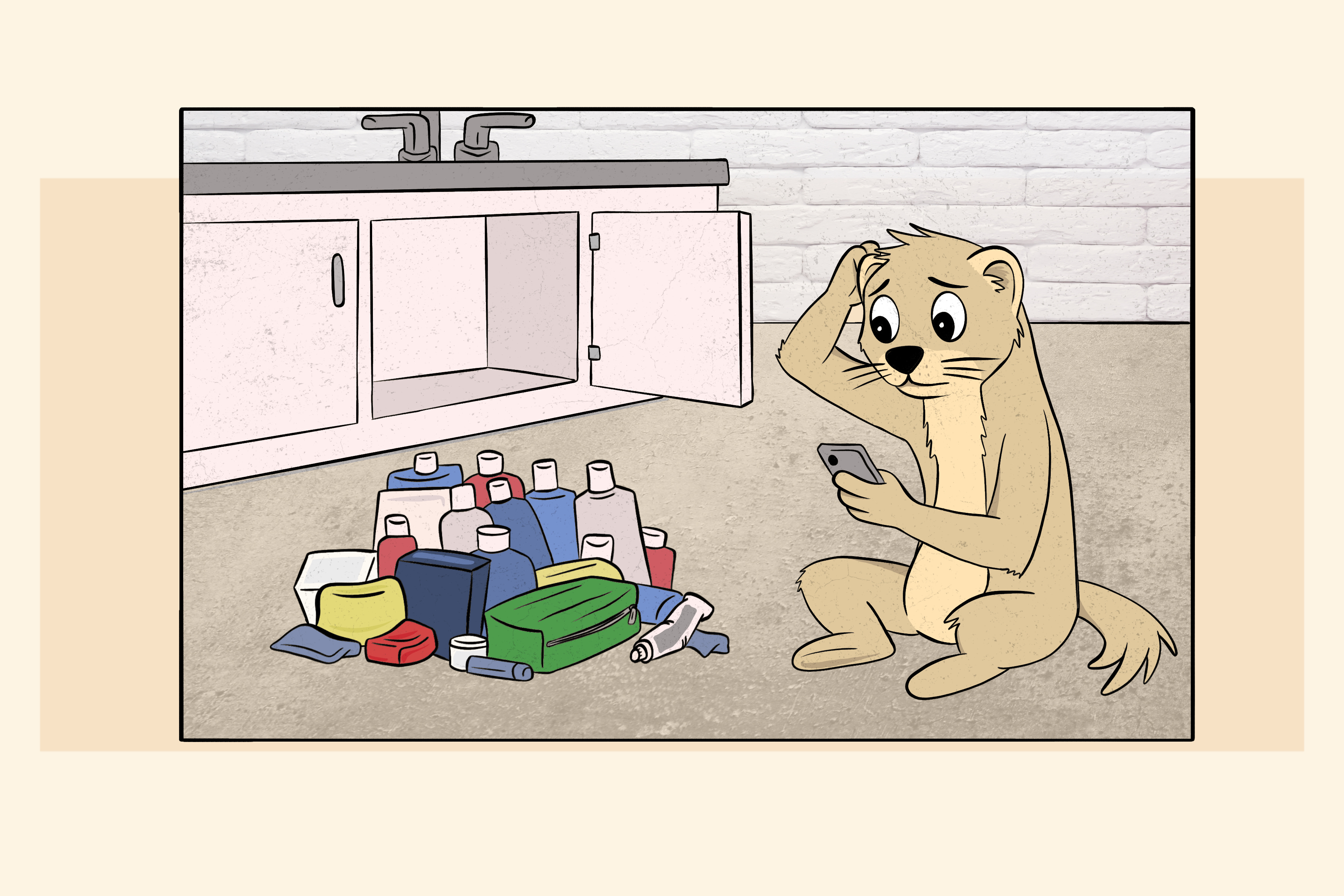
You pulled everything out of the hall closet on Saturday morning. Winter coats, scarves in a tangled ball, three umbrellas (you kept buying new ones because you forgot you owned any), a gift bag you’ve been meaning to reuse since 2022.
You made three piles on the floor. Keep. Donate. Maybe.
Fifteen minutes later, you’re sitting in the middle of all of it. Which pile was which. Did the gift bag move. Was the blue scarf “keep” or “maybe.”
Everything goes back in the closet. At least it was chaos you recognized.
We’ve put together a worksheet this week called Spring Clean Without Losing Track of What You Own that gives you a room-by-room visibility audit, photo inventory setup, and an exit strategy so donations leave your house instead of living in bags by your door for three months. You’ll find it at the end of this newsletter (PDF and digital versions).
Why you quit before the first shelf is done
Spring cleaning looks like one task. It’s three at once: a sustained attention test, a decision-making marathon, and an emotional gauntlet. Our brains struggle with each one on its own. Combined, they explain why the closet ends up looking the same every April.
Every item in that closet requires a judgment call. Keep, donate, toss, relocate. The prefrontal cortex, the part of our brains that weighs options, runs on less fuel in ADHD than in a neurotypical brain. Fifty keep-or-toss decisions in, it’s on fumes. A hundred decisions in (about one shelf of a full closet), it’s stalled. A neurotypical brain can power through an afternoon of sorting. Ours hits a wall before the first shelf is done.
Then sustained attention gives out. When researchers measured how long people could stay focused, adults with ADHD showed a measurable drop in accuracy after just 20 minutes while neurotypical brains stayed stable. Decluttering a room takes hours. Our reliable window is about 20 minutes before accuracy falls off a cliff. That’s why you start Saturday morning with energy and end up scrolling your phone next to a half-sorted pile by noon.
And every object with a history becomes a speed bump. The concert ticket from a trip you’ll never take again. The mug from the job you left. The sweater your mom gave you that stopped fitting years ago. Research on why discarding possessions feels impossible identified three patterns: treating objects as comfort anchors, anthropomorphizing them (feeling guilty about throwing something away, as if the object has feelings), and using them as memory storage. If the thing goes, it feels like the memory goes with it.
Emotional dysregulation, the difficulty controlling how hard feelings hit and how long they linger, affects 34 to 70 percent of adults with ADHD. Each sentimental item costs our brains more energy to process than it would a neurotypical one. Multiply that across a closet full of memories, and the emotional toll alone is enough to shut the whole project down.
ADHD has a tighter link to hoarding than OCD does. The driving factor is inattention. The same inattention that makes us forget what’s buried in the back of the closet also makes it impossible to sustain the sorting long enough to finish.
From our readers
“The more I read, the more I began to see that what I always thought was procrastination, disorganized thinking, even laziness, has a name. Just knowing that is helping me to work on structure in my thinking and tackling projects in short, specified time limits.”
- Kathy, paid subscriber
Things to try
You can’t expand your attention window or upgrade your decision-making engine. But you can redesign the process so it stops burning through both in the first fifteen minutes.
1. Schedule the exit before the sort
Book a donation drop-off or pickup before you touch anything. Set a specific date and time. The appointment creates urgency and prevents donation bags from sitting in your hallway for months. If there’s nowhere for items to go, you’re rearranging clutter, not reducing it.
2. Work in 15-minute rounds
Your sustained attention drops after 20 minutes. Set a timer for 15. Sort one drawer, one shelf, one small section. When the timer goes off, stop and take a real break (not a phone break, a leave-the-room break). Come back for another round later or tomorrow. One finished shelf beats one abandoned room.
3. Photograph before you store
Before putting seasonal items away, take a photo of what goes into each bin. Save the photos in a phone album labeled “Storage.” When you can’t remember what you own next fall, check the album instead of digging through bins or buying duplicates you already have.
4. Label with quantities, not categories
“Winter clothes” tells your brain nothing. “3 sweaters, 2 coats, 5 scarves” does. When you can’t see inside a container, the number confirms what exists and short-circuits the “I must not own that anymore” spiral.
5. The goodbye basket
Place a basket by your front door. When you come across something you don’t need (during your normal day, not a dedicated sorting session), drop it in. When the basket is full, it goes out. No sorting marathon. No “I’ll deal with this pile later.” Decluttering becomes a continuous low-effort habit instead of one overwhelming event you keep postponing.
Dive into our ‘Apply It’ worksheet (Paid Subscriber Perk)
When you’re standing in a room surrounded by piles, your brain won’t recall these strategies on its own.
This week’s worksheet walks you through a room-by-room visibility assessment (what must stay visible vs. what can be stored with a photo or label), a photo inventory template, clear bin labeling with quantities, and a strategy setup with a scheduled pickup date and a goodbye basket location. Fill it out before you start your first 15-minute round. Reference it during each session.
How did you enjoy our newsletter today?
If this read helped you, pass it on: a like, comment, restack, or share helps more ADHDers feel understood and less alone :)


I would suggest Dana K White aka A Slob Comes Clean's "5-Step No-Mess Decluttering Method". It works so well for ADHD brains! The three things you mentioned are avoided (if not completely, then at least at first, so you can make a lot of progress before it gets hard).