Why Resting Feels Like the Hardest Part of Your Day
Why your brain won't let you stop even when your body already did
It’s 7:30pm on a Tuesday. You made it through the day. Dinner is done (or close enough).
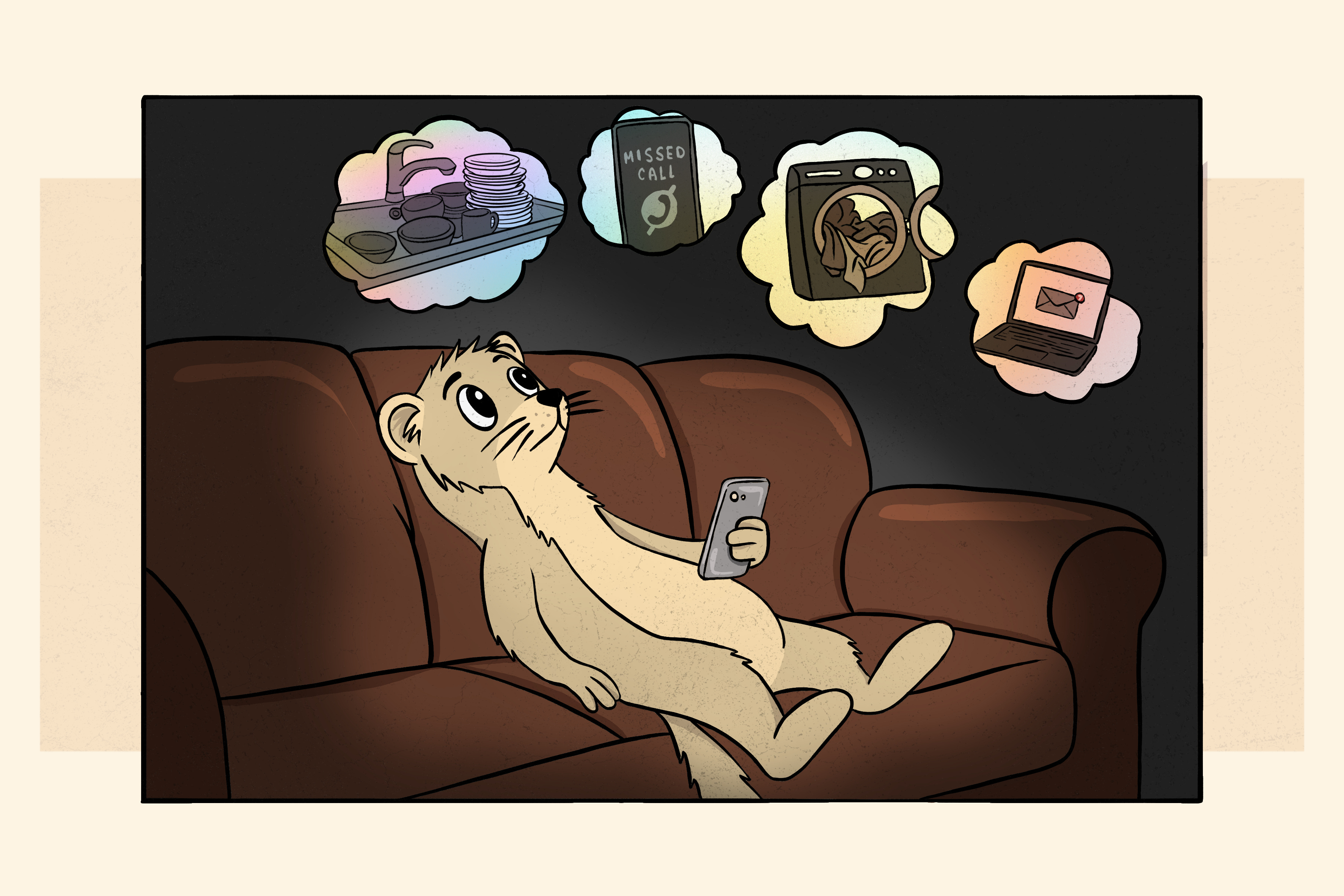
You’re on the couch with your phone, and your body sank into the cushions twenty minutes ago.
Your brain didn’t.
The dishes. That email from this morning. The laundry sitting in the dryer since yesterday. The dentist you never called back. The thing for your kid’s school.
None of it is getting done. And you’re not resting. You’re scrolling with your thumb and running a mental inventory of every undone thing in your life.
We’ve put together a worksheet this week called When Your Brain Won’t Let You Rest that helps you map what your brain does on the couch and find one thing to offload so the rest actually feels like rest. Takes 5 minutes, nothing to download. You’ll find it at the end of this newsletter.
Your brain on the couch
Two networks in our brains are supposed to take turns. The task-positive network handles focus, planning, and getting things done. The default mode network handles recovery, mind-wandering, and the quiet processing that happens when you’re not working on something.
In neurotypical brains, when one activates, the other dials down. In ADHD brains, the two networks don’t deactivate properly. They bleed into each other instead of taking turns. When you sit on the couch, your task network keeps firing. The dishes, the email, the appointment you forgot to make, the thing you said in a meeting last week. Our default mode network produces excessive thought-jumping the executive system can’t rein in. None of it is restful. All of it is pointed at what you haven’t finished.
Our reward pathway runs on lower dopamine, so stillness doesn’t produce the brain signal that says this is good, keep doing this. Neurotypical brains get a small reward from winding down. Ours get quiet, and quiet feels like something is wrong. Rest registers as absence, not recovery.
(We covered what’s happening on the other side of this, when exhaustion and avoidance look identical, in When You Can’t Tell If You’re Tired or Just Avoiding Something.)
From our readers
“I am 100% all of this even though never formally diagnosed. Thanks for framing this as something other than a fatal character flaw!”
- Patricia, paid subscriber
Things to try
🥄 = one spoon (couch-friendly), 🥄🥄 = two spoons (small push), 🥄🥄🥄 = three spoons (good brain day). Pick the one that matches where you are today.
1. The three-item offload 🥄
Grab your phone and type the three things your brain keeps circling. Not to do them, just to get them out of the loop.
The mental inventory runs because your brain doesn’t trust it will remember. Writing the items down gives the loop somewhere to land. Once the list exists outside your head, the circling slows down. You don’t have to act on anything. You just have to convince your brain the information is stored somewhere safe.
2. The two-minute bridge 🥄🥄
Build a short ritual between your day and your rest. Change into different clothes. Wash your face. Make tea. Walk to the end of the driveway and back.
The ritual doesn’t need to be productive. What matters is that it draws a line. Your brain’s networks switch better with a clear signal that one mode is ending and another is beginning. Without that signal, task mode leaks into couch mode and doesn’t let go. The ritual is the off switch your brain doesn’t have built in.
3. The guilt audit 🥄🥄🥄
Next time the inventory starts, open your notes app and write down every single item. Then sort each one: needs to happen tonight, or just on the list because it exists.
Most of the inventory is “someday” tasks dressed up as emergencies. The email can wait until morning. The laundry is not decomposing. You don’t need to call the dentist at 8pm. Separating the real from the inherited shrinks twenty items down to two or three. And two or three is a list you can look at without your chest tightening.
This Week’s Apply It Worksheet
This week’s worksheet, When Your Brain Won’t Let You Rest, walks you through mapping what your brain does on the couch, sorting real tasks from guilt-driven ones, and picking an off switch for tonight. Takes five minutes, nothing to download.
💬 Discussion prompt
Name the one item on your mental inventory that shows up every single evening, even though you never do anything about it. The thing your brain refuses to drop.
Thanks Marian for last week’s comment. Each week, one comment wins a $25 USD Amazon gift card.
How did you enjoy our newsletter today?
If this read helped you, pass it on: a like, comment, restack, or share helps more ADHDers feel understood and less alone :)


