

Sunday night, around 10:40, you remembered the garage. So you opened your notes app, typed “Clean the garage” at the top, and started listing what it would take, mostly to get it out of your head before bed.
Sort the shelves. Gather donations, which ones. Sweep. Return Dave's ladder. New shelves, measure first. Paint the floor, maybe. Book the dump run. By the time you put the phone down, the list ran twelve lines, and every one of them was a real thing a person could do about a garage.
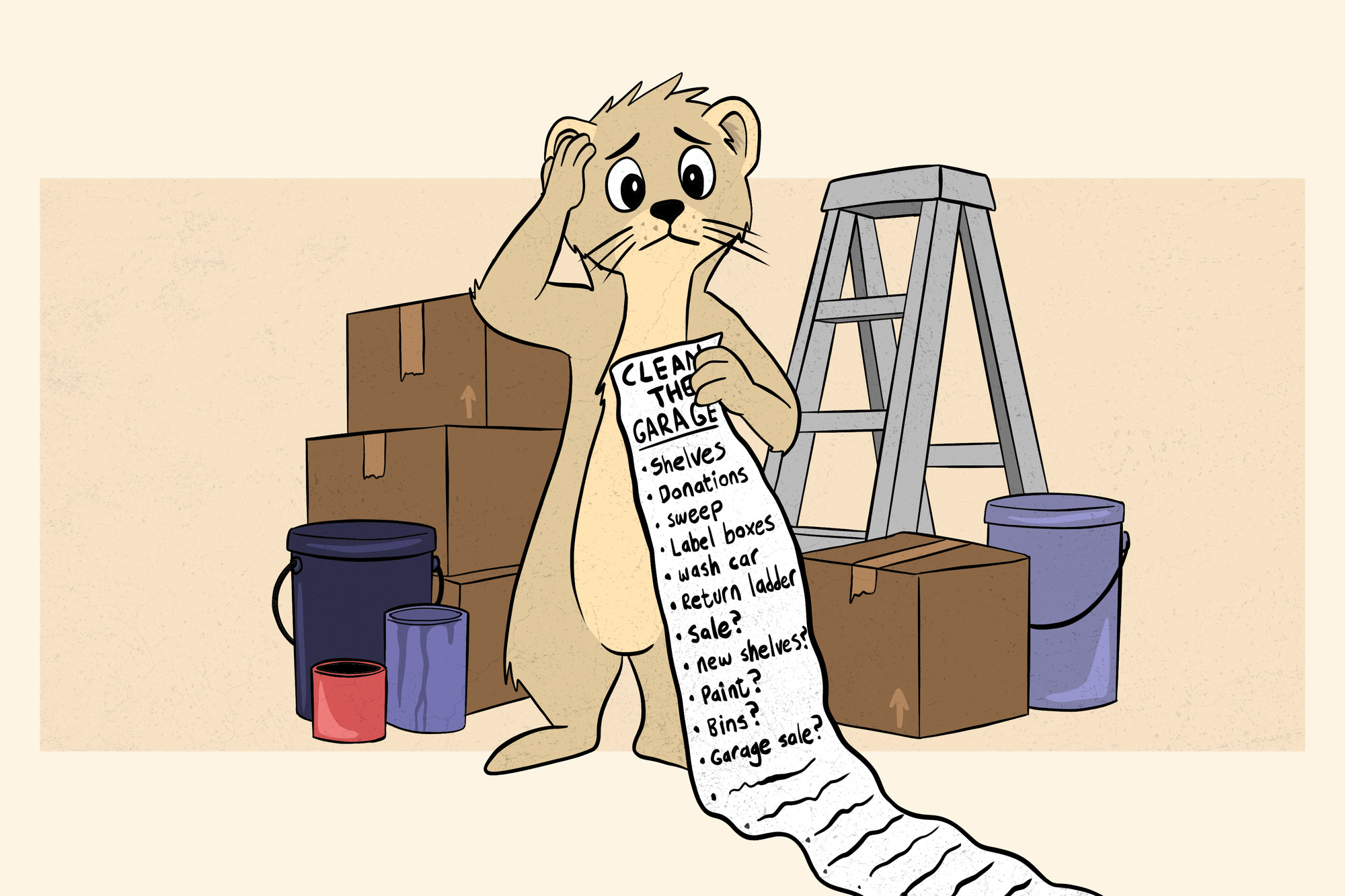
On Monday you opened the note again, scrolled to the bottom, closed it, and opened the fridge instead. The garage felt heavier than it did before you broke it down.
In March 2025, one of our issues suggested breaking big tasks into smaller steps. One reader left a comment under it that dozens of you agreed with:

This issue takes that comment seriously and checks it against the research.
There's a 5-minute worksheet at the end of this newsletter called Your First Bite Plan. It breaks one task down in a way this brain can use, and most of the page stays empty on purpose. It'll make sense by the end.
Twelve lines is twelve doors
Breaking a task down does help once you're moving. One step done, the next one sitting right there, and the list works like a handrail. The trouble is the moment the advice usually gets handed out, which is before you've started.
A list you haven't started costs you while you hold it. Every step you're still thinking about takes up working memory, and a meta-analysis of thirty-eight studies found working memory measures lower in adults with ADHD than in adults without it. Twelve unchecked steps crowd that space all at once.
The second cost is the bigger one. Starting is this brain's bottleneck, and starting runs on momentum. From a standstill, every step needs its own start, so a list written before any momentum turns one hard start into twelve.
That's the left side of the picture below: everything, in no order, with no way in.
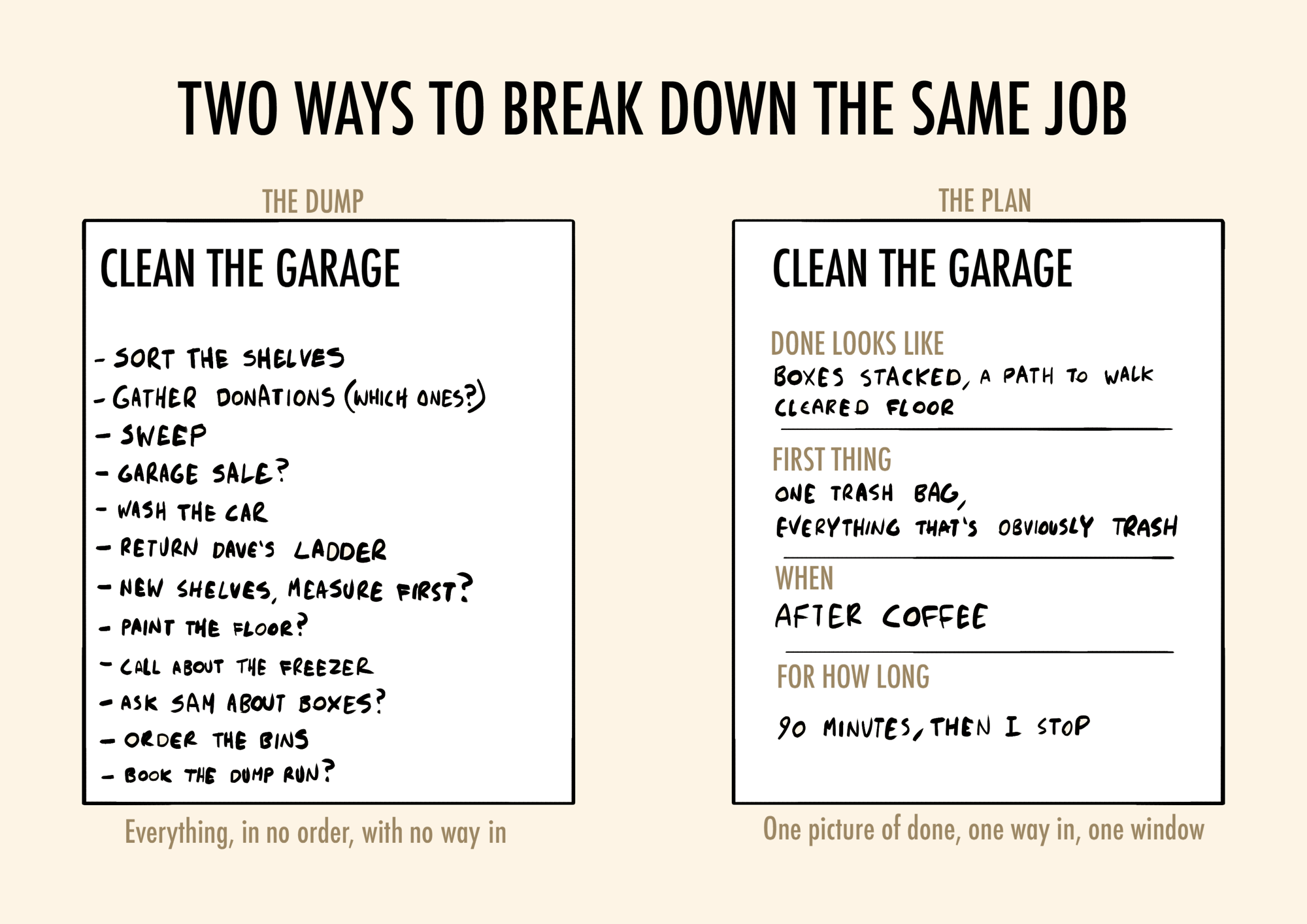
The right side is the same job, broken down another way. It skips the steps and holds four things: what done looks like, the first thing your hands do, when you start, and how long you go before you stop.
