

You need to leave for an appointment in 45 minutes. Plenty of time.
You’ll just check your email real quick. Then you remember you need to find that document. Which reminds you that you should probably organize your files. Oh, and you should respond to that text. And maybe make coffee first.
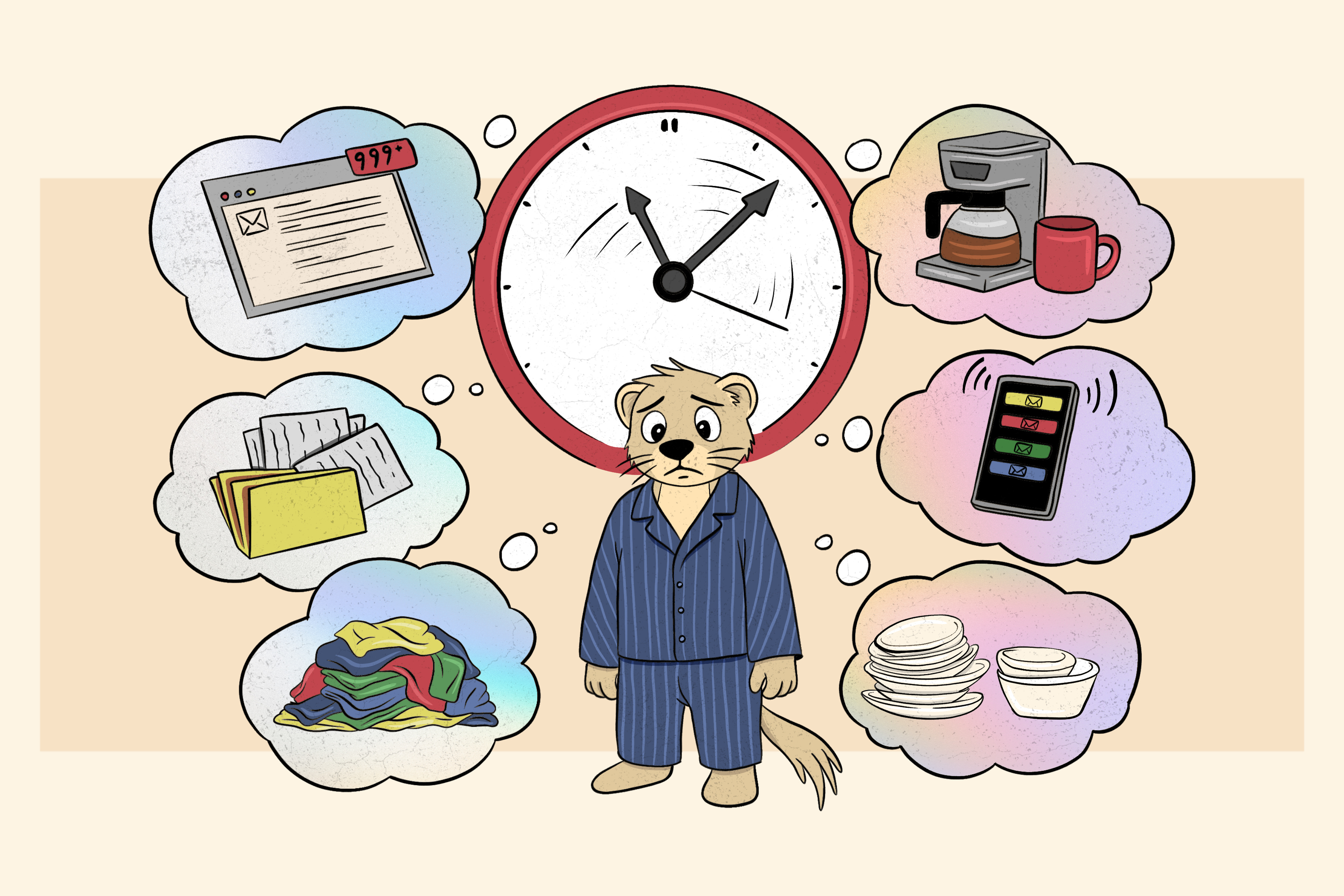
You look up and you have 5 minutes to get dressed, grab your stuff, and get out the door.
You’re going to be late. Again.
Time doesn’t work the same way for us.
45 minutes sounds like forever until it evaporates. Five minutes can feel like an hour when you’re stuck in a boring meeting, but somehow disappear in 30 seconds when you’re trying to leave the house. You believe “this will take two minutes” and then surface an hour later like someone coming out of a time warp.
Our brain doesn’t have an internal clock that tells you how much time has passed.
Neurotypical brains have this constant background awareness of time moving, an internal metronome that keeps them oriented. Our brain doesn’t. It just keeps going until something external interrupts it, like realizing you’re about to be catastrophically late or someone physically coming to find you.
Which is why timers aren’t a productivity hack for ADHD brains. They create the external time markers ours brains can’t generate on its own.
I’ve started relying on timers for many things in the past months. Not as deadlines but as reality checks.
When I need to get ready to leave, I set a 15-minute timer. When it goes off, I do a quick audit: Am I dressed? Or am I still scrolling Instagram in my pajamas? Did getting dressed take 2 minutes like I thought, or have I been standing in front of my closet having an existential crisis about whether this sweater still fits?
