

I remember sitting on the bathroom floor at 4am, baby finally asleep on my chest, thinking: I used to be good at hard things. I’d spent years building a quiet system for coping. Lists, routines, hyperfocus when I needed it. And then I had a baby, and every single one of those strategies stopped working. At the same time. Overnight.
Laura Spence is a midwife with an MSc in Perinatal Mental Health and the founder of NeuroNatal Academy, where she trains and campaigns for systemic change in how the NHS (the UK’s public healthcare system) supports neurodivergent parents. She co-hosts the ADHDivas podcast and has a book on ADHD in pregnancy and the postnatal period forthcoming from Jessica Kingsley Publishers. You can find her on Instagram at neuro_natal.
Inside this guest post, Laura breaks down why postpartum hits ADHD brains differently, what the women in her MSc research told her about the crash, and the strategies that actually reduce the distance between where you are and where you need to be.
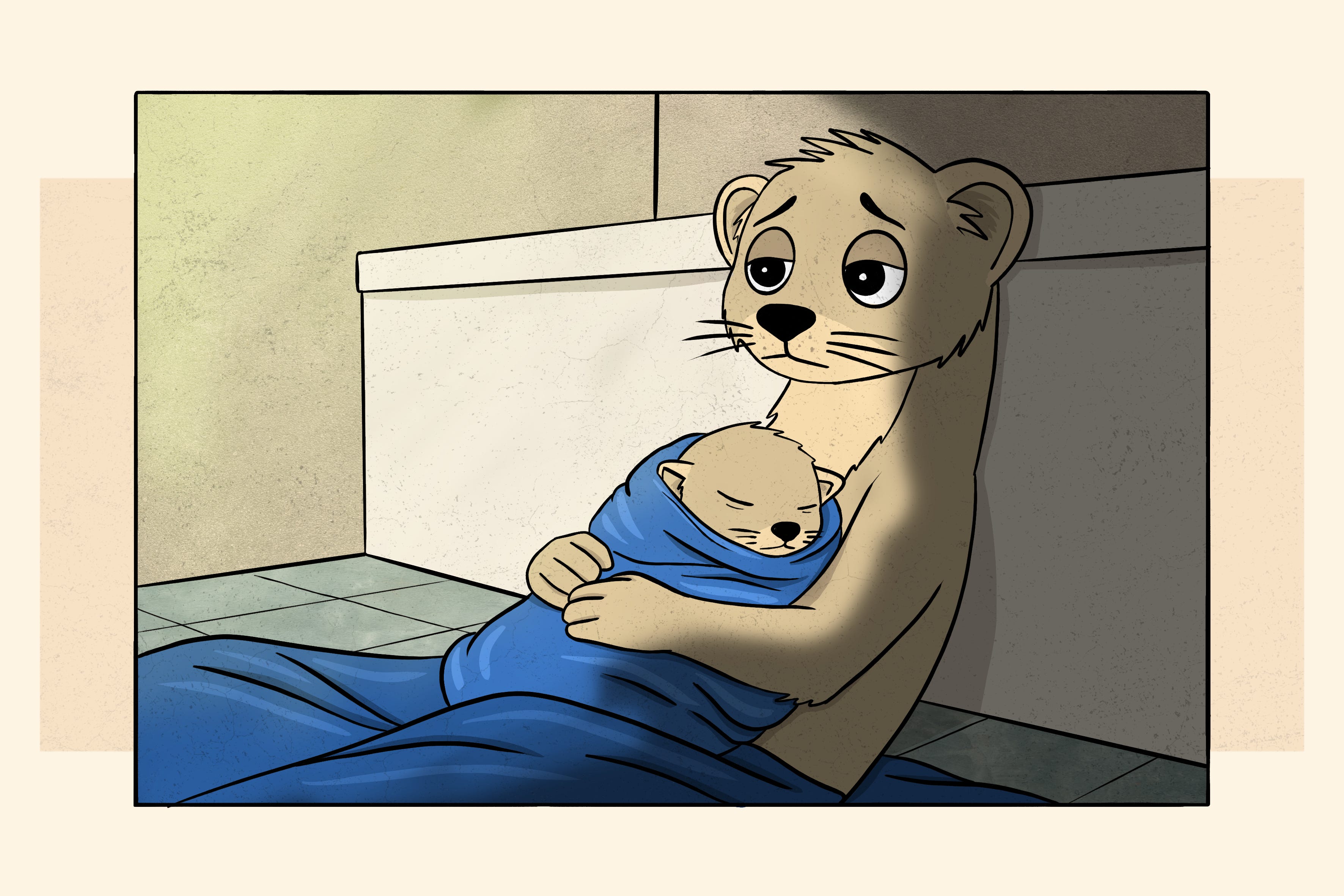
I was a midwife. I handled emergencies for a living. I had ADHD and I had managed. Calendar reminders for the calendar reminders. A quiet system built over years.
Then I thought I was falling apart. What I didn’t know (what nobody told me) was that I was experiencing something specific, predictable, and neurobiological. The women in my MSc research described it before I even had language for it.
This isn’t just exhaustion
Postpartum is hard for everyone. But for people with ADHD, there’s a particular cliff edge that most of us don’t see until we’ve already gone over it.
During pregnancy, rising oestrogen levels give dopamine a quiet boost. Many of us feel (without necessarily understanding why) more capable. More organised. Some people get diagnosed for the first time in pregnancy precisely because the contrast is so striking.
Then, when you give birth, oestrogen drops sharply. Dopamine regulation, already a weak point in the ADHD brain, takes a hit at exactly the moment you need it most. Sleep deprivation compounds this: sleep is when dopamine receptors restore themselves. You’re not getting sleep. You’re feeding every two hours. Your brain is running on a deficit while trying to learn an entirely new role as a parent with zero margin for error.
And the compensatory strategies you’d quietly built over a lifetime? They required cognitive bandwidth you no longer have.
What the women in my research told me
For my MSc, I interviewed postnatal women with ADHD about their executive functioning experiences. I used Interpretative Phenomenological Analysis, a method designed to get as close as possible to how people actually make sense of their own lives. I wasn’t expecting the consistency of what I heard.
One participant described pregnancy as manageable:
“forgetful and distracted, similar to my usual state”
but the postnatal period as something else entirely:
