

It's Saturday morning, and this week's to-do list is still on the fridge. Eleven things on it. Four are crossed off.
Your eye goes straight to the seven that aren't. The dentist. The closet. The email you've opened five times. Those seven feel loud, and they get to decide how the week went.
The four barely register. Called the pharmacy. Answered the message from March. Sat through the boring meeting. Made dinner from actual ingredients on a night you were going to order in. A crossed-off line stops asking for attention, so your brain slides right past it, and the week gets scored on what's missing.
That costs more than a mood. Effort you spent gets filed as nothing, and starting is the expensive part for this brain, so a week scored that way makes Monday's first start harder than it needs to be.
The seven are real, and some of them are still due. The four need counting too, in writing, somewhere you can see them.
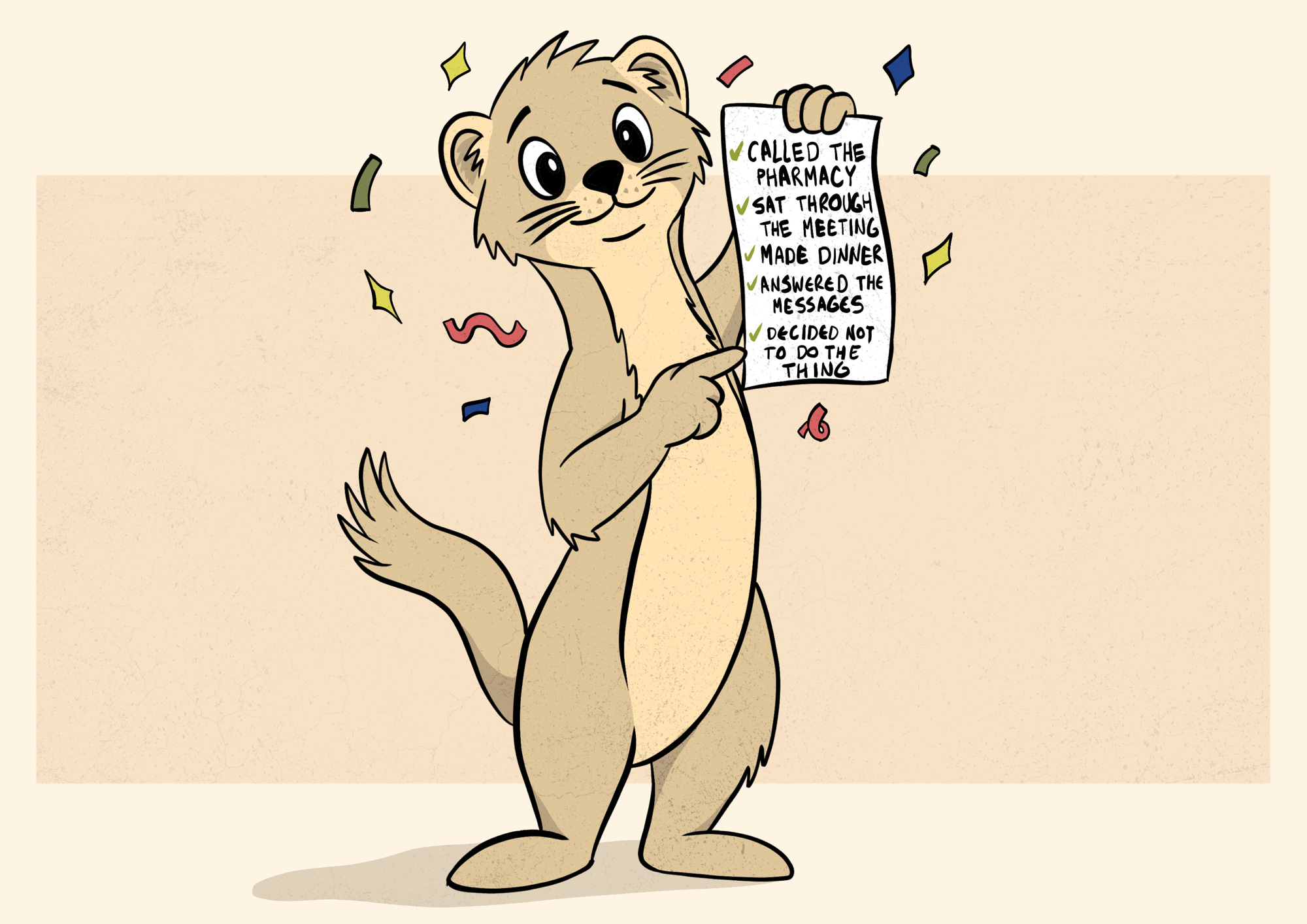
Today's tool does that, and we didn't invent it. It came from a reader, and we liked it enough to make it free for everybody.
A reader inspired the build
In March 2025, under one of the most-read issues we've ever published, a reader left this:
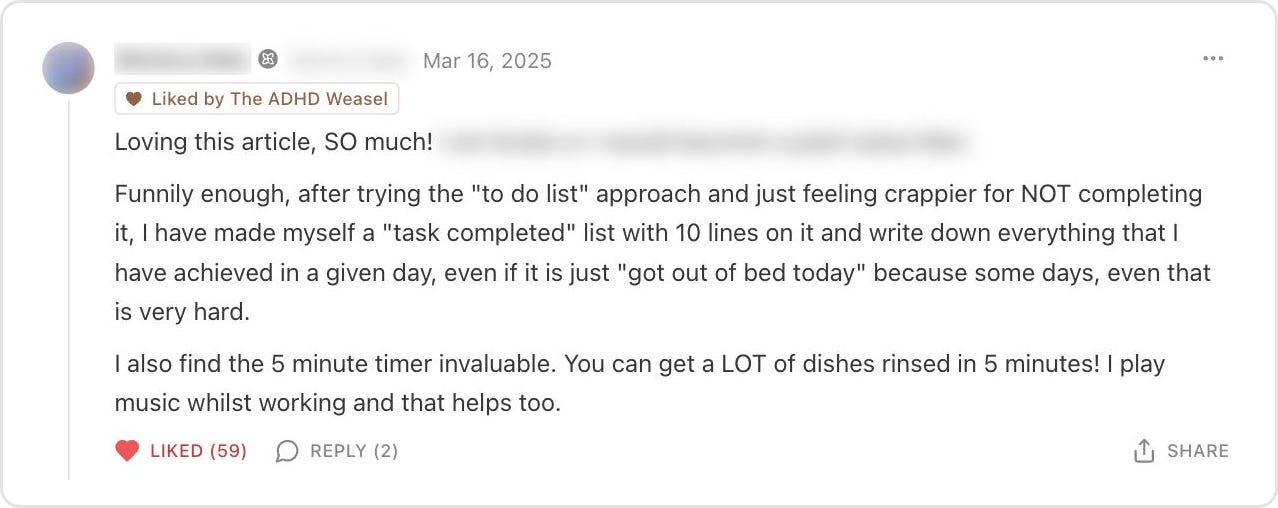
She stopped keeping a to-do list and kept a done list instead. Another reader replied that the author Gretchen Rubin calls it a Ta-Da list, and the name stuck. Fifty-nine of you liked her comment, more than anything else on that page.
A to-do list scores your day against the plan, which was written for a more optimistic week, while a Ta-Da list scores it against zero, and your day beats zero every time.
The pad is free, for everyone
October is ADHD Awareness Month, and this is our contribution: awareness of what you've done.
The Ta-Da Pad is a free tool: a date, a few lines that grow as you add to them, and a weasel at the bottom reminding you that it counts. Use it on your phone, or print a stack.
It works best as a ritual. A minute at the end of each day, or a longer look back every Saturday morning with your coffee. Either way, the wins get written down before shame, or the sense that everyone else is further ahead, gets to tell the story of your week.
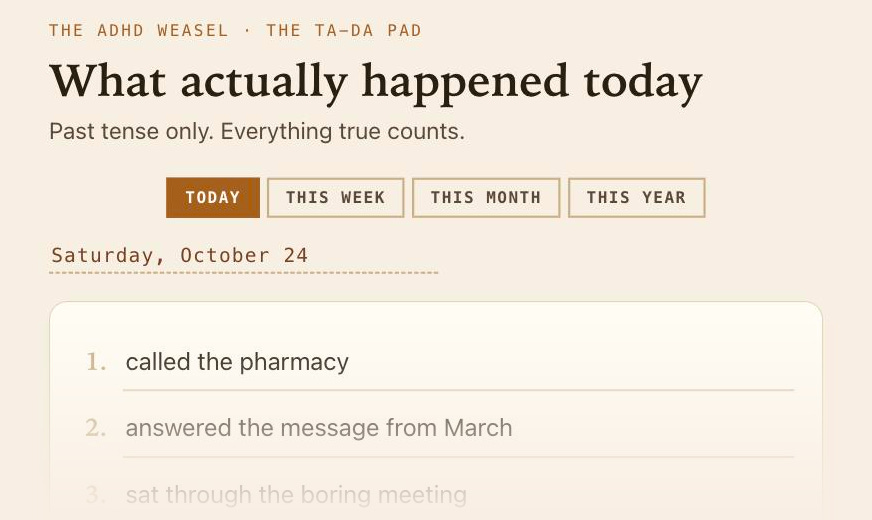
How to run it
It's simple, and two details make it work.
