You've Been Waiting For Summer. Now What?
Why our ADHD brains struggle when the anchors drift away
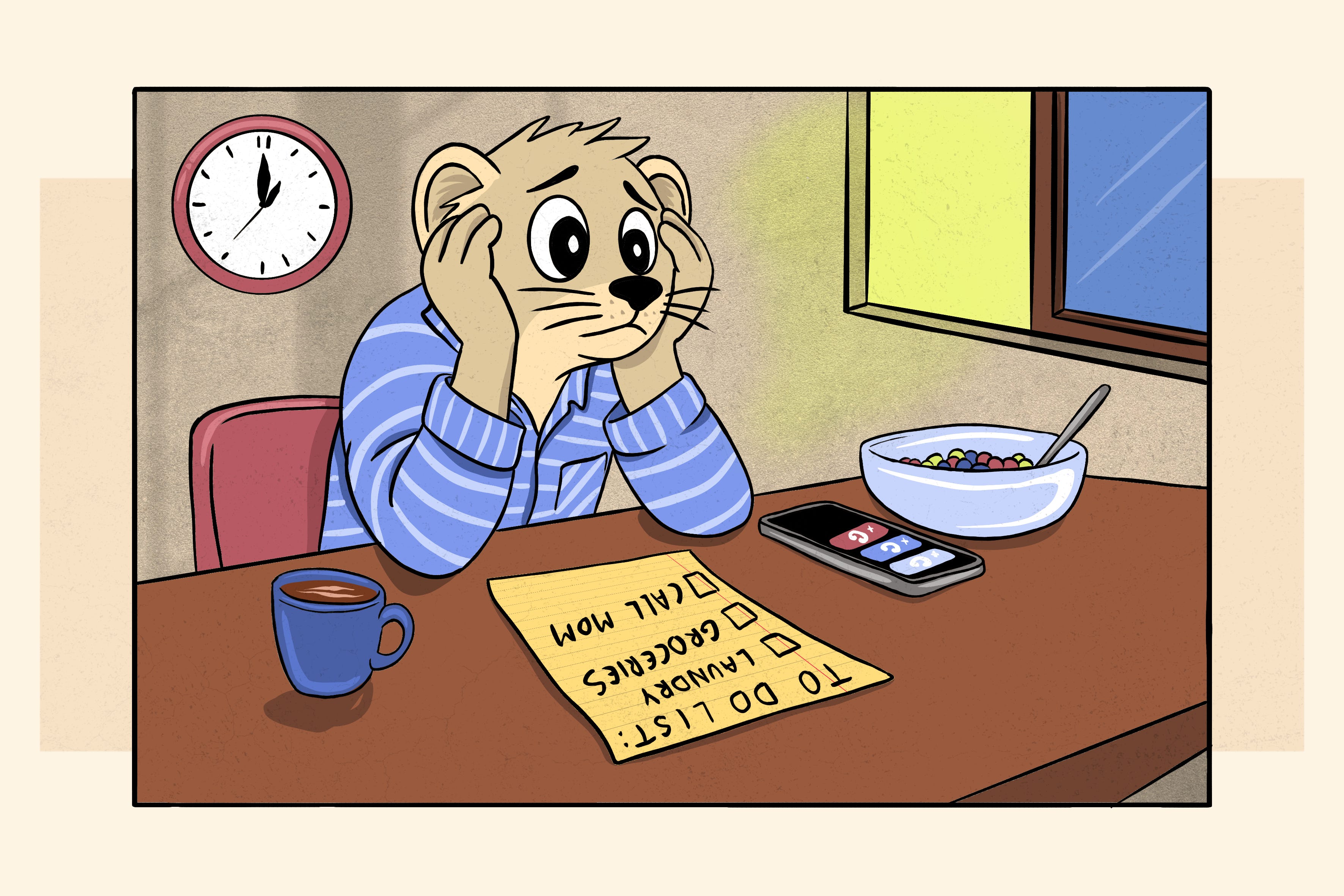
You’re standing in the kitchen with a coffee that went cold an hour ago, trying to remember what you came in here for.
The geraniums you bought on Saturday are still on the porch in their plastic tray. The dentist’s office closed at noon and you meant to call before then. Your walking partner left for the lake on Sunday and won’t be back until July. Book club is on pause until September.
None of it felt like a big deal in the moment. Each one is just one thing.
But you waited all year for these months. And somehow the days are starting to slip past.
This week’s worksheet, Rebuild Your Summer Anchors, walks you through which small things quietly hold the week together, which ones are about to disappear, and how to pick the few worth replacing now, before the rest of summer slips by the same way.
Your brain on borrowed structure
For decades, our brains leaned on external cues to function. The alarm went off. The meeting started at 9. The commute carved out the morning. Lunch happened because someone said let’s grab something. The end of the workday told you the day was over.
None of that was your executive function working. That was the environment doing the heavy lifting. Our brains have a harder time guiding behavior from the inside. The internal functions that keep a day on track without outside help, things like self-talk, self-regulation of motivation, and the ability to break tasks apart and reassemble them, are the exact ones our brains struggle with. The weaknesses in planning and self-monitoring are central to ADHD.
When work ended, most of that scaffolding went with it. You built new anchors to replace it. A walking partner three mornings a week. The Tuesday class. Book club on Thursdays. The standing Sunday lunch. They weren’t a schedule but they were enough.
Then summer arrives and those anchors quietly scatter. The walking partner heads to the lake. The class pauses until September. Book club takes the summer off.
And you’re left relying on the exact system that’s impaired.
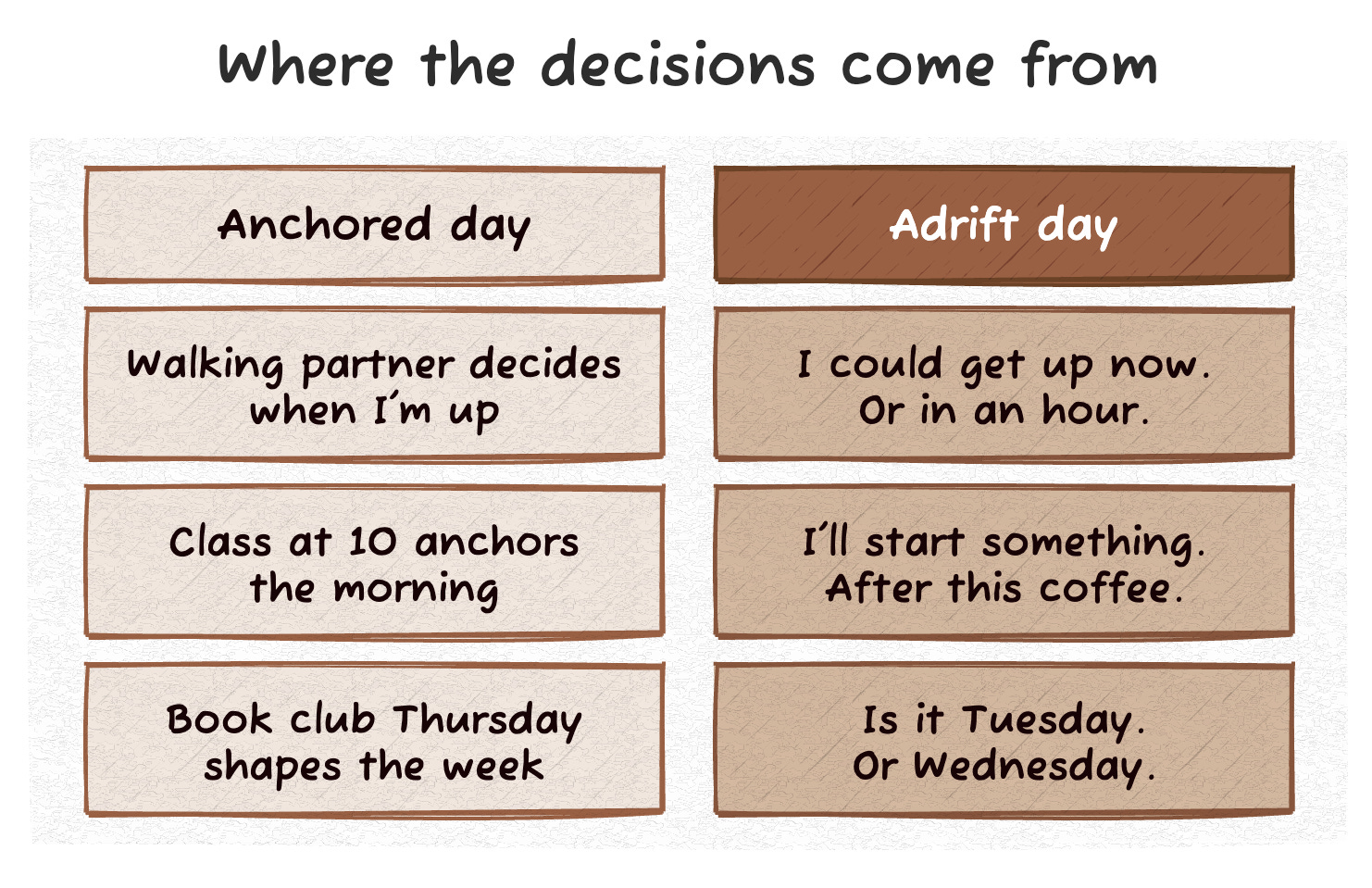
What should I do first. When should I start. How long should this take. Should I call my sister back today or tomorrow. What about the garden. What about that thing I said I’d do last week.
Our brains experience cognitive effort as harder than neurotypical brains do. Each of those micro-decisions carries a higher cost for us. By noon on an unstructured day, we’ve spent our cognitive budget on logistics that an anchored day would have handled for us. The exhaustion of a day where "nothing got done" is really the exhaustion of making a hundred tiny decisions your old routine used to make for you.
From our readers
“Every week it reminds me of what I’m missing and helps me deal with the guilt. Your morning article really helped me because it’s something I’ve been struggling with.”
- Marian, Weasel member
Things to try
🥄 = one spoon (couch-friendly), 🥄🥄 = two spoons (small push), 🥄🥄🥄 = three spoons (good brain day). Pick the one that matches where you are today.
1. Three anchors, not a schedule 🥄
Pick three times: wake, midday, and wind-down. Attach one small action to each.
Coffee at 8. A walk at 1. Phone charges in another room at 10pm.
You’re placing three stakes in the ground so the day has shape. Enough structure to stop the free-fall. Everything between the anchors can be loose.
The morning anchor is the most important. If you only build one, build that one.
2. The bedtime alarm 🥄🥄
Set a recurring alarm for 45 minutes before the time you want to be in bed. This one is for winding down.
Most ADHD brains run on a delayed internal clock, with melatonin arriving about 90 minutes later than neurotypical brains. Without a forced wake time, bedtime drifts later every night. And without a cue to start winding down, you chase stimulation until exhaustion makes the choice for you.
The alarm gives your brain the shutdown cue it can’t generate on its own. When it goes off: screens dim, lights dim, and the next 45 minutes belong to winding down.
Protecting bedtime is how you protect the morning.
3. The accountability text 🥄🥄🥄
Find one person and agree to text each other one priority every morning. Not a to-do list. One thing. “Today I’m finally calling the dermatologist.” “Today I’m getting the geraniums in the ground.”
External accountability replaces the anchors that drifted away. One text gives your brain an audience, and your brain performs differently when someone is watching. Ten seconds to send. The structure it creates lasts all day.
(The recurring importance of accountability for ADHDers is why we’ve started weekly body doubling calls on Saturdays for Weasel members. For 45 minutes, we all make progress on pesky tasks we’ve been procrastinating on. Learn more here).
This Week’s Apply It Worksheet
This week's worksheet, Rebuild Your Summer Anchors, walks you through naming which small anchors are drifting, picking the strategy that fits where you are this week, and turning it into a specific plan for tomorrow morning. Pen and paper, or fill it in on your phone.
👫 Partner perspective
One line for someone who doesn’t have ADHD:
"The small things that shaped my week have quietly scattered for the summer. The walking partner, the class on Tuesday, the book club. My brain was leaning on those more than I realized. I don't need you to fix my schedule or check on me. I need you to know that when I look like I'm doing nothing, I'm usually working harder than it looks, and the days where I get less done are the days where I had the most decisions to make on my own."
💬 Discussion prompt
Thinking back to last summer, what was the first thing to go: your sleep, your mornings, your meals, or something else entirely.
Thanks Lauren for last week’s comment. Each week, one comment wins a $25 USD Amazon gift card.
How did you enjoy our newsletter today?
If this read helped you, pass it on: a like, comment, restack, or share helps more late diagnosed ADHDers feel less alone :)


This article hits the nail on the head for not only summer but retirement. Even if I have anchors in place, that wake-up panic/ brain scrambling is so real!