

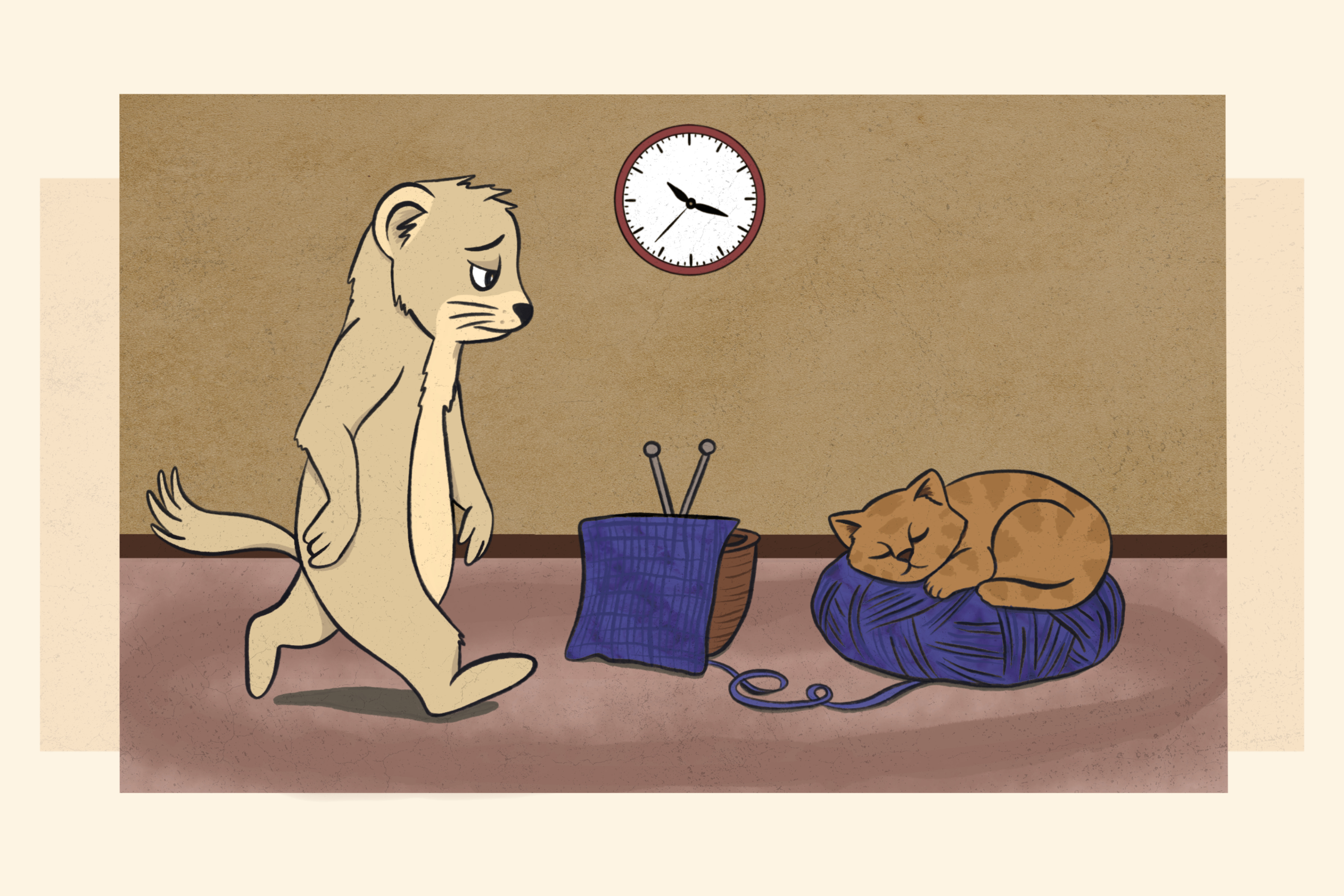
Your knitting project has been sitting in the corner of your living room collecting dust. Your cat occasionally goes over to bat the yarn, but other than that it hasn’t been touched in weeks (maybe months). You love knitting; it’s relaxing, you get into a flow, and you’d love to actually be able to give your sister this hat before winter ends. But you can’t get yourself to sit down and start, no matter how much you actually want to do it.
Sarah Lovell (she/her) is an executive function and ADHD coach for overthinkers and recovering perfectionists who are tired of feeling stuck and are ready to work with their brains. Sarah’s background in social work grounds her work in compassionate practices, using self-talk and self-care as the foundations for executive functioning. She hosts the From Stuck to Started podcast, where she shares realistic, actionable strategies in 20 minutes or less. She also created the ADHD Action Plan, a free private podcast where you discover how to create your own formula to get unstuck.
In this guest post, Sarah breaks down why it’s so hard to get started (even on things you want to do!) and how to make sustainable changes in a way that feels good.
So, how do you know if you’re procrastinating or if you’re actually stuck?
Procrastinating sounds like: “I don’t want to do the thing” and looks like: avoidance, kicking the can down the road, picking anything else to productively procrastinate.
Stuck sounds like: “I really want to do the thing and just can’t get myself to start” and looks like: a mental swirl thinking about the task, and ruminating on it for longer than it would actually take to do the task.
If you keep saying that you’re procrastinating on your knitting project, texting your best friend back, or getting up to go pee, the word procrastinating carries a heaviness to it. Procrastinating is full of shame, guilt, and “shoulds.” The word stuck feels different. It acknowledges that you WANT to do the thing, but you’re literally stuck.
Here’s the 3-part formula I teach clients to get unstuck. You can personalize this formula to fit for you and your brain (because there isn’t a one-size-fits-all solution). You can also adjust this formula to fit different situations because different stuckness requires different tools from your toolbox. The 3rd part of this is often overlooked, so make sure to pay special attention here.
Part 1: Notice & Reframe Your Self-Talk
First, the words you use matter. You need to notice what your brain is telling you about the situation:
“I should just be able to start.”
“I can’t believe it’s taking me this long to finish knitting this hat.”
“I never finish projects.”
Your brain is trying to bully you into taking action. Brains often autopilot to negative thoughts first, but these mental shortcuts aren’t actually helpful.
You can practice shifting your automatic thoughts by noticing the thought (or naming it) and reframing it.
For example:
“I should just be able to start.” → “Starting projects is actually hard, but once I get started I usually get into a flow.”
“I can’t believe it’s taking me this long to finish knitting this hat.” → “This was a new pattern for me so it makes sense it’s taking longer than my other projects.”
“I never finish projects.” → “I like to jump between projects. I come back to them when I’m feeling inspired.”
Doesn’t that feel so much better? It takes practice to notice and reframe your thoughts, so be patient as you practice this new skill.
Part 2: Use Systems & Strategies that Support the Reason You’re Stuck
People often skip over self-talk and try to jump right into strategies, but self-talk is the foundation of executive functioning. Self-talk supports your ability to problem solve and take action.
