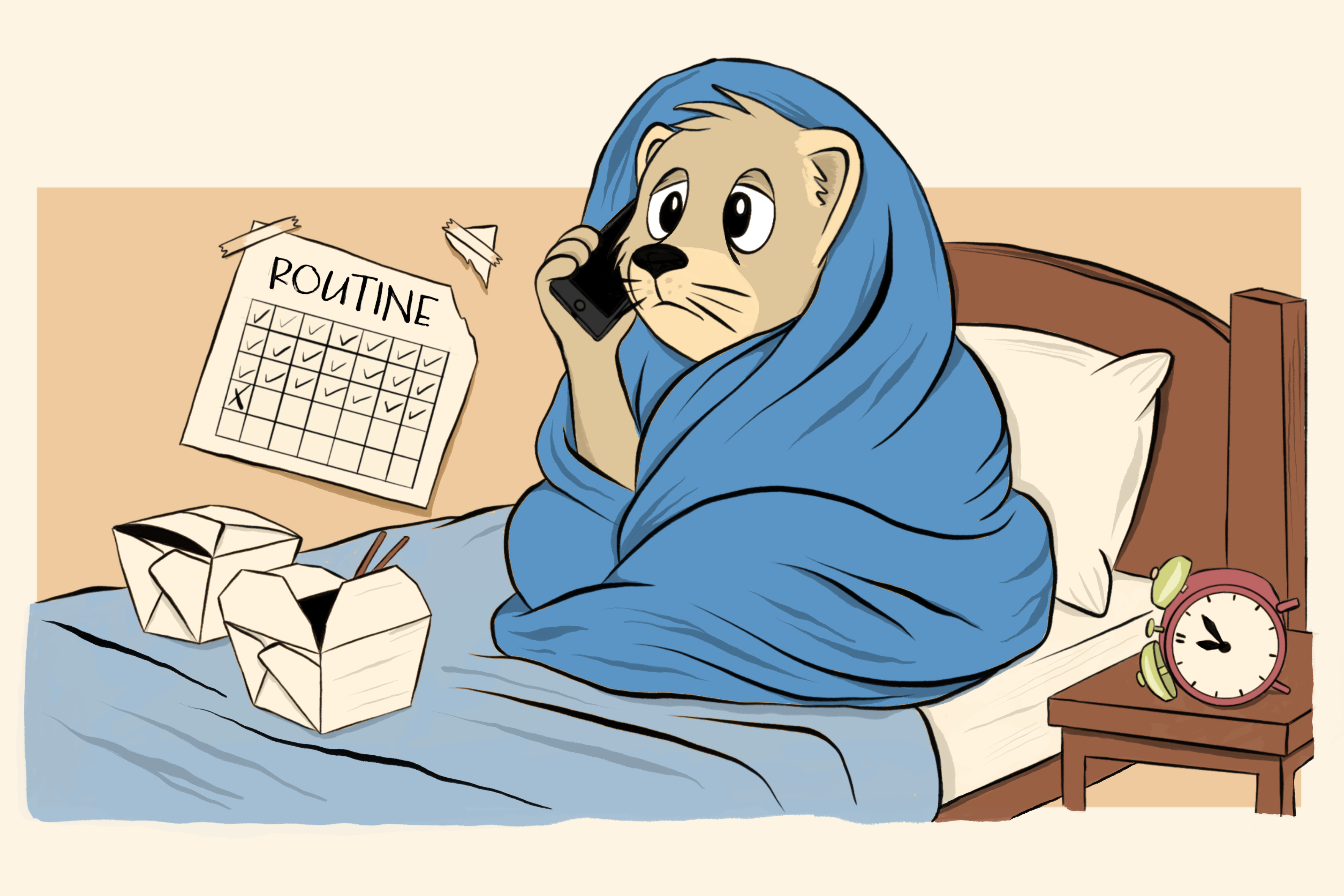
The routine’s been going strong for three weeks. You’re finally sleeping before midnight. Actually eating breakfast. Meeting your deadlines. For the first time in months, maybe years, you feel like you’ve got this.
Then a random Friday hits. You stay up until 3 AM scrolling. Sleep through Saturday morning. Order takeout three nights running. By Tuesday, you’re back in bed at noon, calling in sick, wondering why you always do this to yourself.
This is self-sabotage.
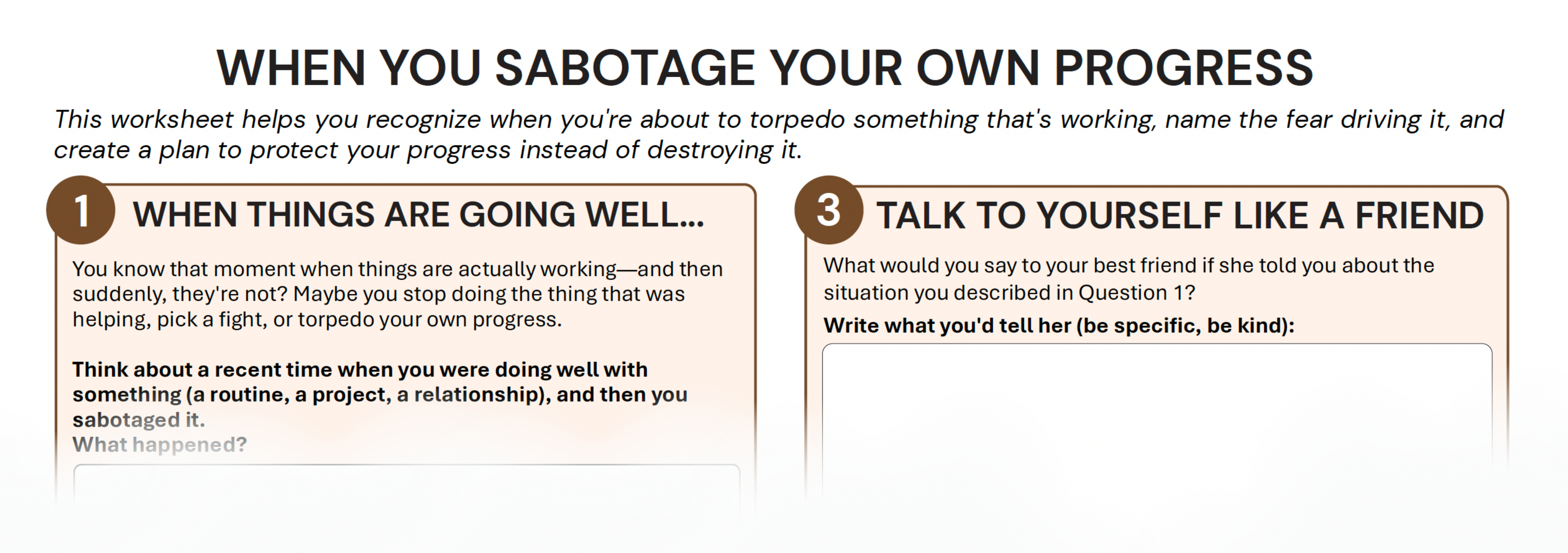
Before we dive in: there’s a worksheet below that helps you identify your specific self-sabotage patterns and the fears driving them. You might find it useful.
Failing on your terms feels safer
When your brain floods you with catastrophic certainty about what’s coming, inaction starts to feel like protection. We’ve spent years proving ourselves right about being “not good enough” or “never getting it right.” When we blow something up, it confirms what we already believed. And that predictable outcome feels safer than the unknown of actually trying.
If YOU destroy it first, at least you know what’s coming.
Success is terrifying because it means exposure. You’ll have to do it again. People will expect more. And what if you can’t deliver? What if last time was luck and this time everyone sees through you?
So you create the failure yourself. Procrastinate until the deadline passes. Pick a fight before the big meeting. Ghost the opportunity you’ve worked toward for years. Abandon the routine that was finally working.
Because controlled failure feels safer than unpredictable success.
How ADHD plays a role
ADHD has three traditionally recognized core symptoms: inattention, hyperactivity, and impulsivity. Research now points to emotional dysregulation as a fourth core symptom, affecting 34-70% of adults with ADHD. Your emotional response to situations can be disproportionately intense, flooding you with anxiety, fear, or overwhelm.
In real life, this means we don’t process “mild concern about that presentation.” We process “absolute certainty this will be catastrophic.” So you don’t show up. Or you undermine it. At least then you controlled what happened.
Self-sabotage becomes a way to avoid the uncertainty and potential emotional devastation of genuinely trying and failing. Better to fail on your terms than risk the flood of emotions that comes with real failure.
Maybe you spent decades thinking you were just lazy, flaky, or “too much.” Maybe you only recently discovered ADHD explains why life felt so hard. Either way, these patterns connect to deep fears: that success is undeserved, that achievement will bring overwhelming responsibilities, that doing well might threaten your relationships. For our brains, these aren’t abstract worries. They feel immediate and overwhelming.
Dive into our ‘Apply It’ worksheet (Paid Subscriber Perk)
This worksheet helps you catch yourself before you sabotage your own progress. It walks you through naming the specific fear driving it (not just “I’m scared”), then creates a concrete plan to protect what’s working instead of destroying it.