

The tab has been open since Tuesday. Flights for Thanksgiving, the dates the whole family already agreed on in the group chat, prices that climb a little every day you don’t click. The booking page is open. All it needs is the passport from the drawer, four names typed in, four seats picked, and the card details. Fifteen minutes, if the passport is where you think it is.
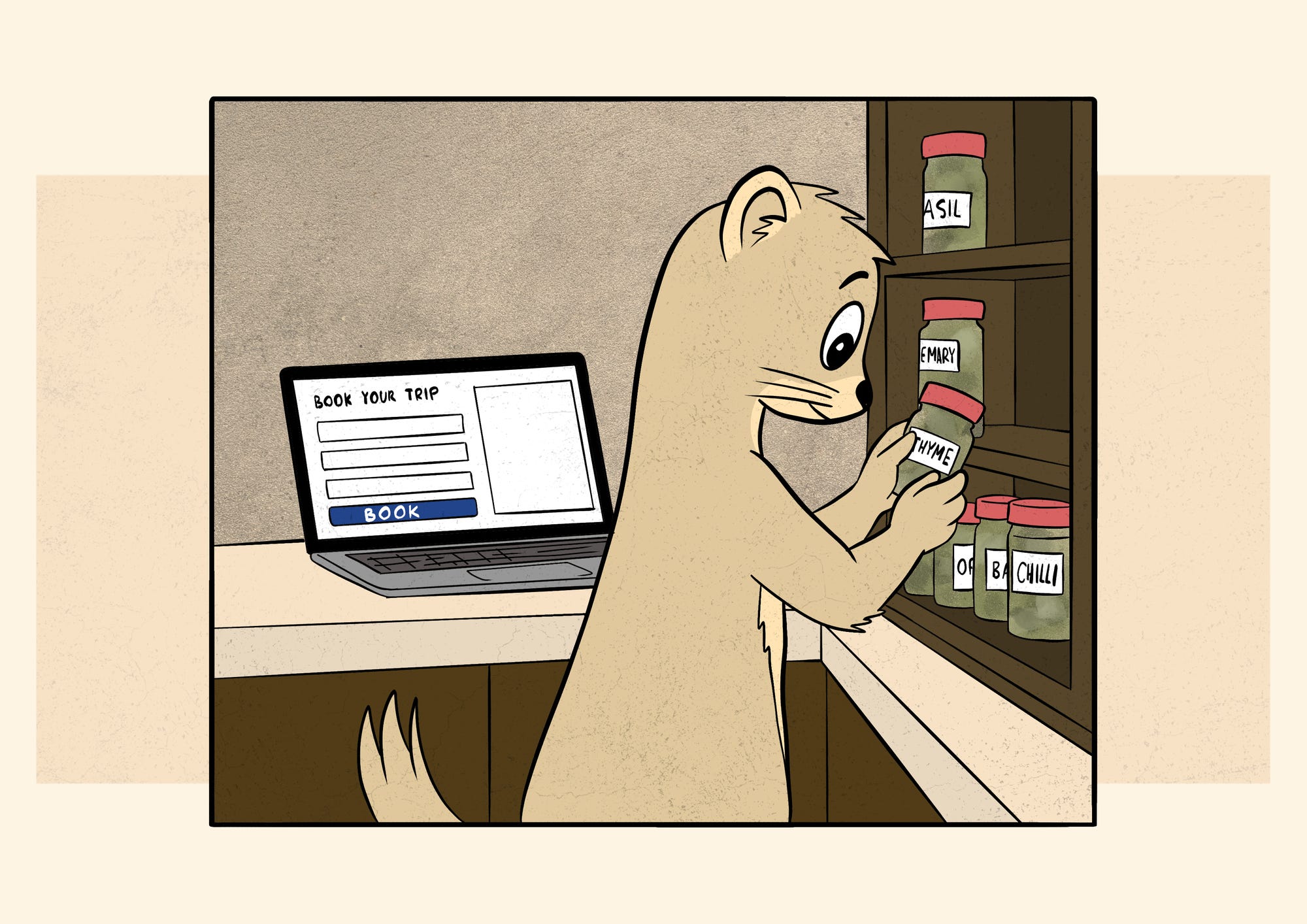
It's Saturday morning, and you set aside a clean hour to finally do it. Somewhere between the coffee and the passport drawer, the spice rack caught your eye, and now you're forty minutes into reorganizing it. No one asked you to do this. It has needed doing since 2024, and you're doing it beautifully, every jar wiped, every label facing out.
On the counter behind you, the laptop screen dims over the flights. Basil, rosemary, thyme.
You've done this before
You know the catalog, because it's yours. The fridge shelf that got scrubbed the morning of the tax deadline. The sock drawer, sorted by color, the weekend of the difficult email. The ninety minutes spent researching a better to-do app instead of doing the to-dos. The photo library from 2014, urgent out of nowhere.
The substitute is always real work, something you can finish in an afternoon with nobody grading it.
Around six this evening comes the part that hurts. The flights still unbooked, the prices a day higher, the kitchen gleaming, and you calling yourself lazy at the end of a day you spent getting real things done. Both halves are true at the same time: the work was real, and it was a decoy.
Underneath all that tidying, booking those flights carries a feeling you don't want. Maybe it's the prices you waited too long on, maybe the low hum of getting it wrong in front of the whole family, maybe only the weight of a thing that's been open since Tuesday. Your brain met that feeling and did the quick thing: it went shopping for a better one. Researchers call this short-term mood repair, and it sits at the center of what gets called procrastination. Everyone does it, and with ADHD it happens more often, partly because this brain gives less weight to a payoff that's weeks away. The avoidance is an escape from the feeling attached to the task, relief now, paid for later. And the spice rack sells exactly the feeling you needed: progress you can see, and nobody around to judge it. You were buying relief with the only currency you had.
Which means the spice rack project had very little to do with spices. Your brain was protecting you from a feeling, at the cost of the thing that mattered. The protection works, and the bill still arrives at six, with your name on it.
