

It’s 9pm and you’re still staring at the same half-written email you’ve been trying to send since lunch. Shoulders pulled up around your ears, chest tight, jaw locked. The voice from when you were ten says what it always says: what’s wrong with me. You got the diagnosis years ago, you understand exactly what your brain is doing, and none of that has made tonight any easier.
Datrie Allman is a nervous system educator, theta meditation practitioner of 6+ years, and the creator of FulfilledSoul, where she teaches subconscious reprogramming through somatic healing and brainwave work. After healing her own chronic anxiety and digestive issues through nervous system regulation, she wrote Safe to Receive, a guide to releasing the old programming that keeps us stuck and becoming safe enough to let a new life in. Her work has reached millions across TikTok, YouTube, and Instagram.
Inside this guest post, Datrie breaks down why understanding your ADHD isn’t enough to release the shame underneath, and what your nervous system actually needs instead. Her partner Christian (ADHD diagnosed) used a 90-second morning practice to shift the belief at its root, and Datrie walks through exactly how he started.
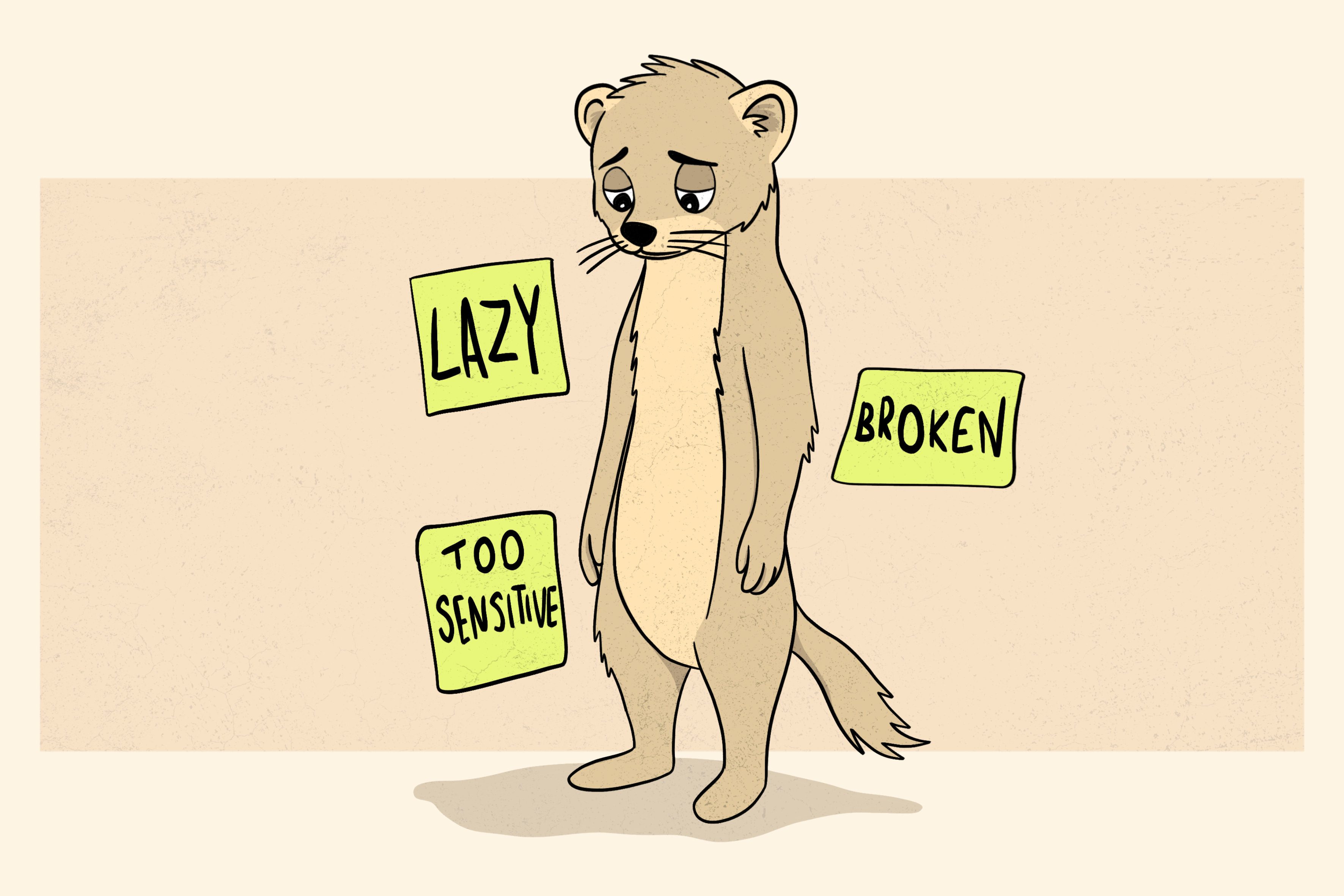
If you were diagnosed with ADHD as an adult, there’s a very high chance you spent years wondering what was wrong with you before anyone gave it a name. It might be forgotten tasks, or the paralysis before a simple email or text. Or an inner shame spiral after another “I’ll do it tomorrow” that turns into never getting it done.
By the time you finally got the diagnosis, you’d already spent decades telling yourself you were lazy, broken, or just not trying hard enough. I don’t have ADHD, but I know that loop intimately.
I had anxiety being birthed out of the womb, or so my mother would tell me. From as early as 7 years old I remember the anxious thoughts and the gut-wrenching feeling deep in my stomach. Thoughts like: “But what if something bad happens.”
When I got diagnosed with anticipatory anxiety, the label almost made it worse: “Why can’t I just calm down. Just breathe, just BE NORMAL for once.” The diagnosis led to more anxious thoughts that endlessly looped into each other. I spent years trapped in this cycle.
Studying neuroscience and the nervous system, I learned something that finally cracked the loop open. From ages 1 to 7, our brainwaves are in theta. This is the “sponge” state, where we absorb everything around us and form our worldviews about ourselves and the world.
What we witnessed most in our parents (their words, the feelings they projected at themselves and at us) got sponged into our little nervous systems. This formed our subconscious mind. After age 7, we shift out of theta into alpha, then beta as we get older.
My subconscious beliefs were rooted in anxiety:
Everyone is judging you
The world is not safe
You’re way too sensitive
For my partner Christian (ADHD diagnosed), his thoughts sounded more like:
I’m lazy
Why can’t I just do the thing
Everyone else can handle this
Different statements but the same mechanism: beliefs and identity statements installed before the conscious mind had any say.
A diagnosis brings understanding, yes. But understanding alone doesn’t reach the body, which is where the belief is actually stored.
After my diagnosis, I read every article I could find and traced every family member running the same script of anxiety. But awareness didn’t change the felt experience. Positive thinking only made it worse, every affirmation felt fake to my body, because I had never actually experienced those positive thoughts. My nervous system rejected them as a lie.
To release those beliefs, I had to get back into the state I picked them up in: theta brainwaves, a receptive, open-to-suggestion state of mind.
