

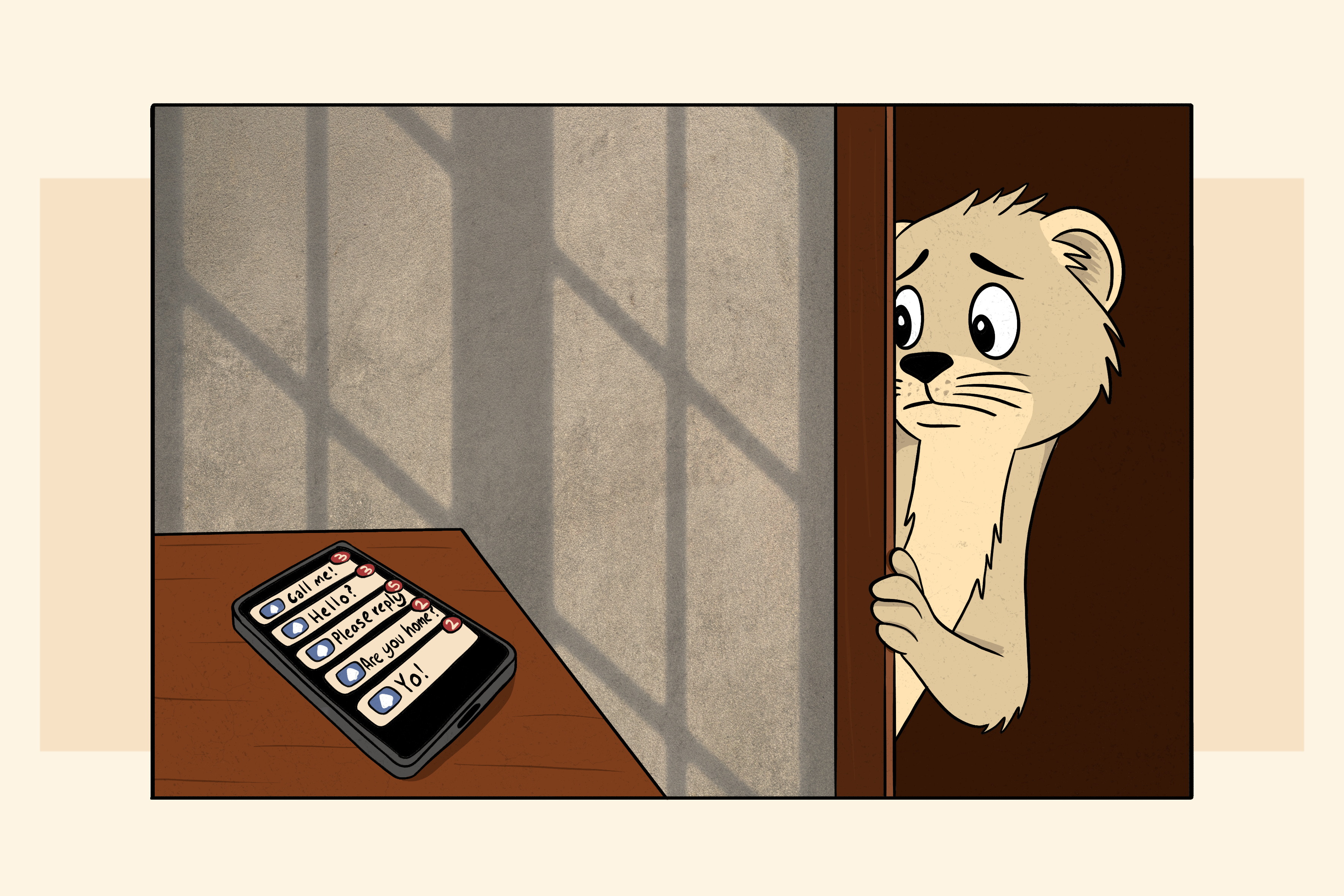
There’s a text on your phone from someone you love. You saw it three days ago. You meant to reply. You even started composing something in your head while you were in the shower.
That was Tuesday. Now it’s Friday. And the thought of opening that message makes your chest tight.
They probably think I don’t care. What kind of person just doesn’t reply.
This week's worksheet, Your Re-Entry Plan, helps you figure out what's keeping you from replying and draft a message short enough that your brain will let you send it. Takes 5 minutes, nothing to download. You’ll find it at the end of this newsletter.
The text you meant to send
Our brains have a system called prospective memory, the part responsible for holding onto an intention and executing it later. Adults with ADHD form fewer intentions, recall fewer of them, and follow through on even fewer. The intention to reply existed. The executive system that was supposed to carry it out went quiet the moment something else grabbed our attention. And replying to a text is the perfect storm for that failure. There’s no deadline. No external reminder. No reward signal strong enough to compete with whatever is happening right now.
Our brains have less dopamine activity in the areas responsible for motivation and reward. Low-urgency tasks have to work harder to register as “worth doing now.” A text from someone who loves you is, to your brain, one of the least urgent things in your inbox. It matters to you. Your brain just can’t feel the urgency.
So the reply doesn’t get sent. And that’s when the real damage starts.
A missed text becomes a two-day gap. A two-day gap becomes a week. And somewhere around day four, the math changes in your head: It’s been too long now. I can’t just reply like nothing happened. They’re going to be upset. I need to explain. But I don’t have the energy to explain. So I’ll do it tomorrow. Tomorrow becomes next week.
This part has nothing to do with memory and everything to do with shame. Shame triggers withdrawal as a protective response, and after a lifetime of missed deadlines and being called unreliable, our brains have learned that re-engaging means facing disappointment. Rejection sensitivity makes it worse: our brains show a stronger response to rejection cues than to positive social feedback. When you imagine replying after two weeks of silence, your brain doesn’t picture “I’m just glad to hear from you.” It pictures the worst version of their reaction.
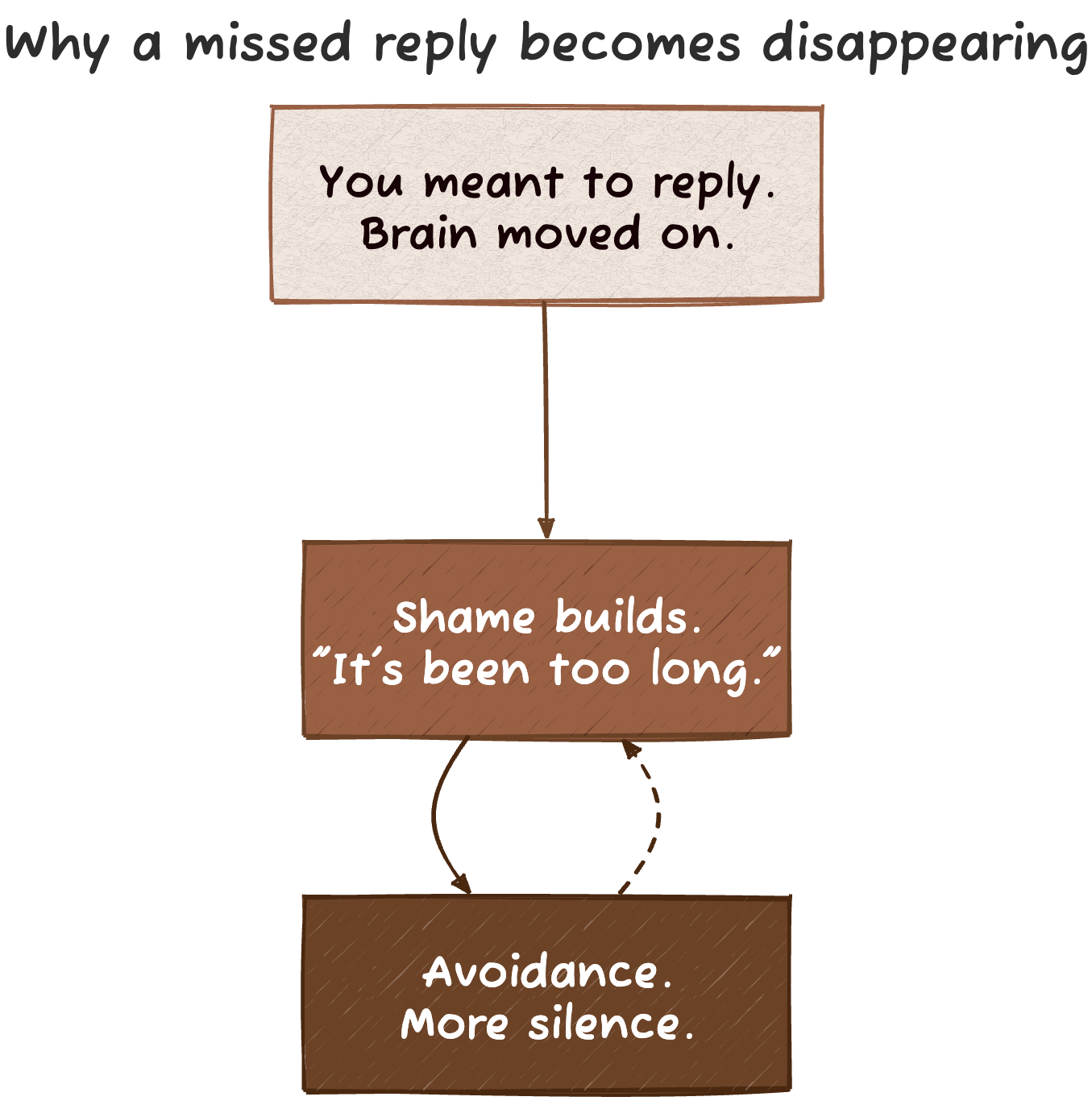
(We explored this shame-avoidance loop in depth in ADHD and the Shame Spiral.)
From our readers
“I often feel like people misunderstand my ADHD. The term is so overused and normalized that The ADHD Weasel’s work cuts through the noise and understands the realities of ADHD.”
- Matt, paid subscriber
Things to try
Each strategy is tagged by how many spoons it takes: 🥄 one spoon (couch-friendly), 🥄🥄 two spoons (small push), 🥄🥄🥄 three spoons (good brain day). Pick the one that matches your brain today.
1. Send the one-sentence reply 🥄
