

Quick update: you told us 3x newsletters a week was a little overwhelming, and we’d been noticing Monday and Wednesday were starting to feel like the same post in two different sizes. So we’re sunsetting the Monday format and putting that time into making Wednesday and Saturday better, along with body doubling calls (and more)! Also, a great time to upgrade to a Weasel membership (selfish plug).
You nailed it. The meeting went well. You had ideas, you were articulate, you contributed things people wrote down.
You walked out feeling competent for the first time in a while.
Then you sat down to write the follow-up email. And nothing came.
What did I even say. What were the action items. Why can I remember the vibe but not a single detail.
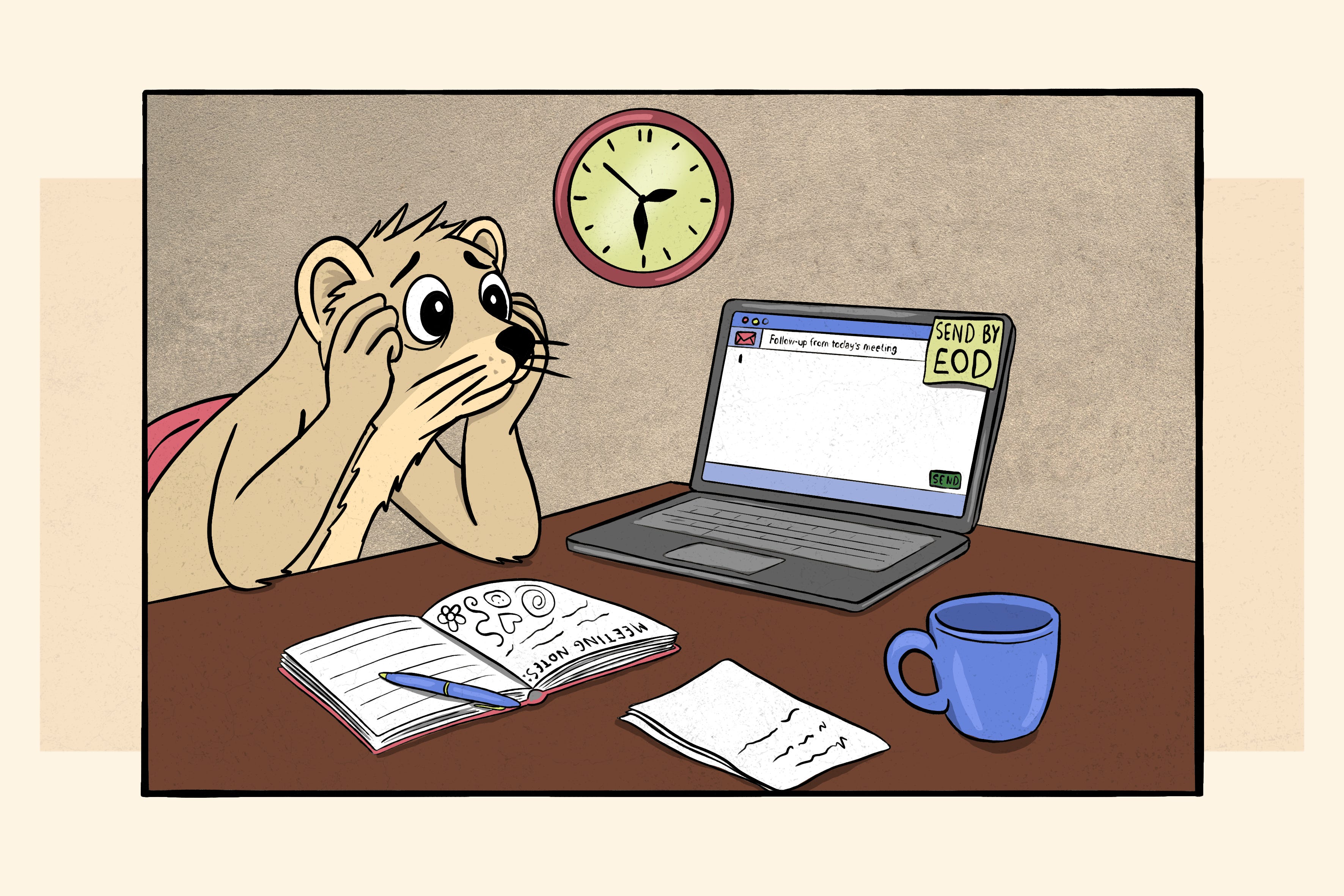
That gap between who you were in the meeting and who you are staring at a blank email comes down to context. And the science behind it explains more than just emails.
We’ve put together a worksheet this week called Your Post-Meeting Protocol that helps you figure out where your follow-through breaks down and build a reusable capture system for the meetings you have every week. Takes 5 minutes, nothing to download. You’ll find it at the end of this newsletter.
Your brain on structure
Meetings are rich environments. Someone else sets the agenda. Other people’s faces and voices keep your attention anchored. The conversation moves forward whether you are ready or not, and that momentum carries you with it. Our brains perform better when the structure comes from outside us rather than from our own executive function. The room does the organizing. You just have to show up and respond.
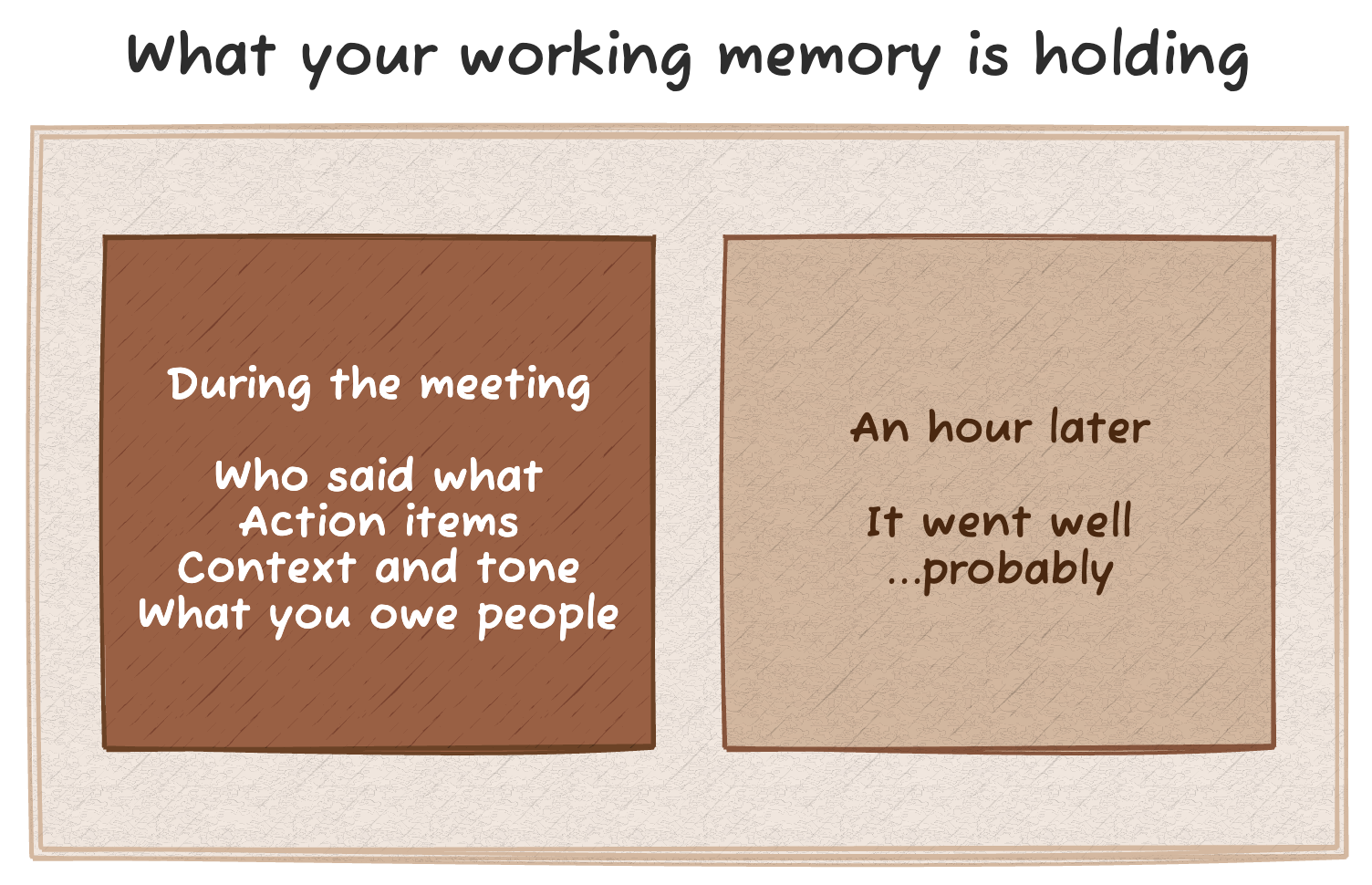
The follow-up email strips all of that away. You have to reconstruct what happened from memory, organize it into something coherent, and type it out for someone who was not there. Speaking is one cognitive step: think it, say it. Writing is at least three: remember it, organize it, transcribe it. Each of those steps runs on working memory, the system ADHD affects most. On structured assessments, adults with ADHD performed the same as everyone else. On open-ended tasks with no external framework, the gaps showed up. The meeting provided the structure. The email does not.
Once a task loses urgency, it loses value.
