

You’ve made it this far by building elaborate workarounds. Compensating. Overcompensating. Creating systems that kept you functional even when your brain fought you every step of the way.
And now those systems are failing. You’re forgetting appointments you’ve never missed. Losing track of conversations mid-sentence. The mental load finally exceeds your capacity to carry it.
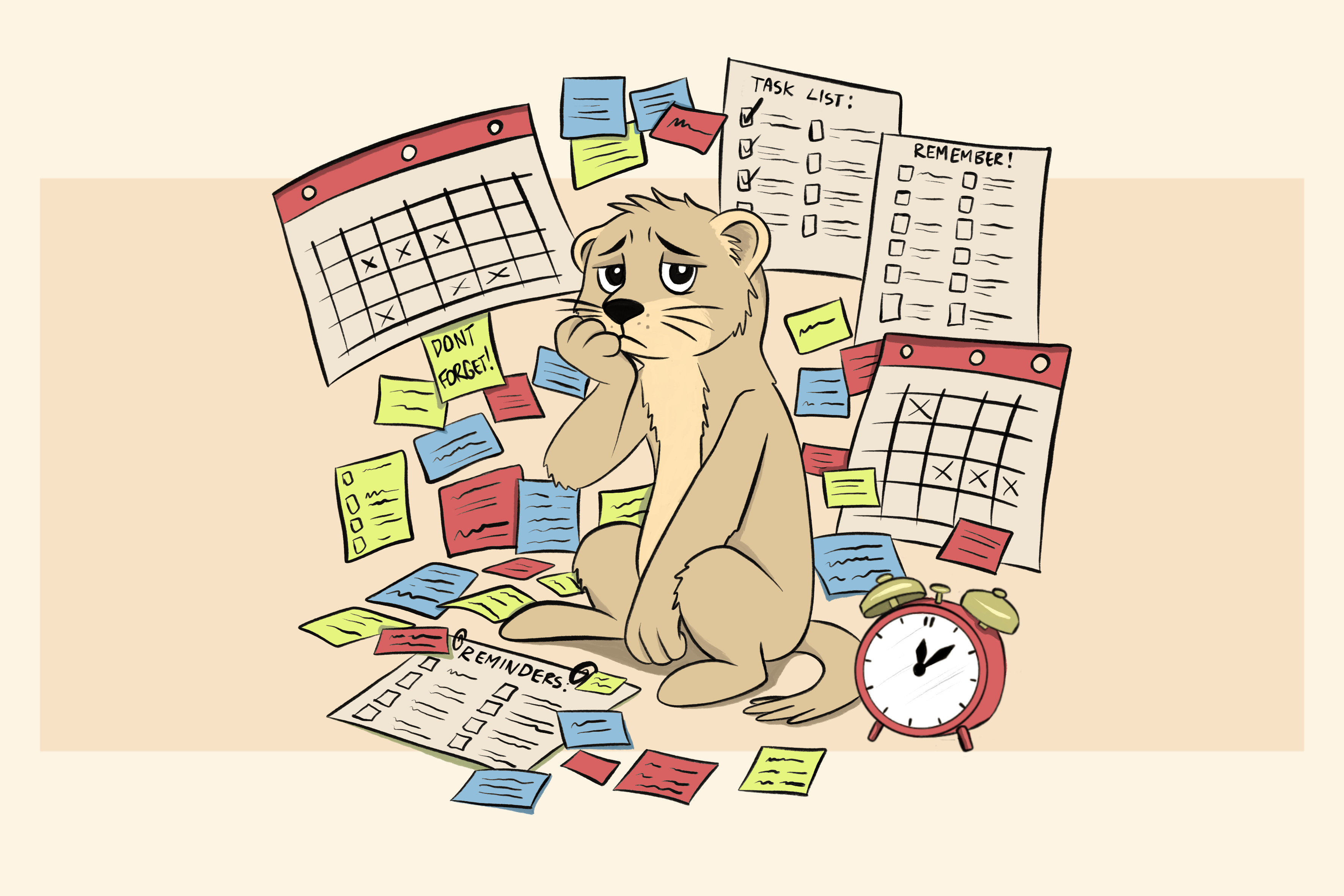
You’re not falling apart. Your masking is. This week’s Apply It worksheet helps you figure out which coping mechanisms are sustainable and which ones are quietly burning you out.
Why It’s Collapsing Now
Masking happens when someone with ADHD hides their symptoms to fit in and meet social expectations. For many of us, especially those assigned female at birth, this starts young. You learned early that fidgeting, interrupting, or “too many” questions weren’t acceptable. So you developed workarounds.
This looked like: staying up until 2 AM to finish projects, rewriting notes obsessively, rehearsing conversations before speaking, triple-checking everything, working twice as hard to achieve the same results as others.
You weren’t naturally organized. You built elaborate, energy-intensive compensation strategies. And they worked, until life got more complex, or your hormones shifted, or you simply ran out of reserves.
Life gets more complex. Maybe you’re managing a demanding career, your kids’ schedules, aging parents’ medical appointments, a household, a relationship, shifting hormones, and your own health concerns. Or maybe you hit this wall earlier, in medical school, during a high-pressure job, when you became a parent. The timing varies, but the pattern is the same: same brain, exponentially more demands.
Recent studies show that increasing cognitive load resulted in reduced performance, greater reaction time variability, and reduced brain network efficiency in people with ADHD compared to those without. Our ADHD brains must work significantly harder than neurotypical brains to achieve the same cognitive processing. We started with fewer resources. Tasks cost us more energy. And as life demands multiplied, the gap between what we could handle and what was required became impossible to bridge.
For those navigating perimenopause or menopause, changing hormone levels (particularly estrogen and progesterone) directly affect how the brain manages focus, sleep, mood, and energy, often intensifying ADHD symptoms and accelerating burnout.
From our Readers
“It hit home in so many ways and I am tired of being held hostage by my ADHD. I am hoping the worksheets et al will help tone down my reactions.”
- Stacey, paid subscriber
Dive into our ‘Apply It’ worksheet (Paid Subscriber Perk)
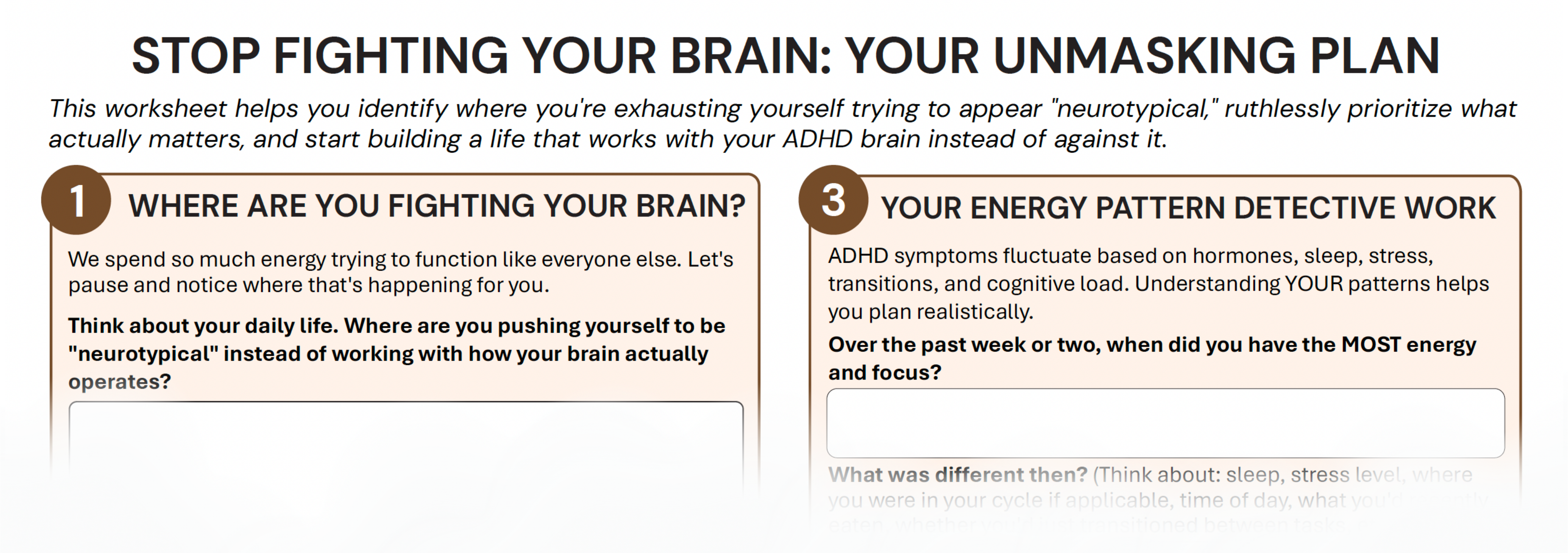
This week’s Apply It worksheet helps you identify where you’re exhausting yourself trying to appear “neurotypical,” ruthlessly prioritize what actually matters, and start building a life that works with your ADHD. Five questions designed to help you stop fighting and start adapting.
Building a Life That Works With Your ADHD
Your old coping mechanisms weren’t sustainable. They required too much energy and gave back too little. Here’s what actually helps when masking stops working:
1. Stop aiming for neurotypical
Your brain is different. Build a life that works with it. This might mean accepting you won’t keep a pristine home, or that you need body doubling to complete tasks, or that written instructions work better than verbal ones.
The goal is to function in ways that don’t exhaust you. If you work better standing up, stand. If you need to pace while on calls, pace. If sticky notes everywhere is what keeps you on track, cover every surface. There’s no prize for doing things the “normal” way if it burns you out.
