

It's 1:42am and the laptop is the only light in the room. The cart has three things. The cordless vacuum, $139 with $219 crossed out, went in at 1:12, after a video of somebody's floor. The weighted blanket went in because the page said people who bought the vacuum also bought it. The earbuds are two-for-one, so one pair is free. You don't remember adding them.
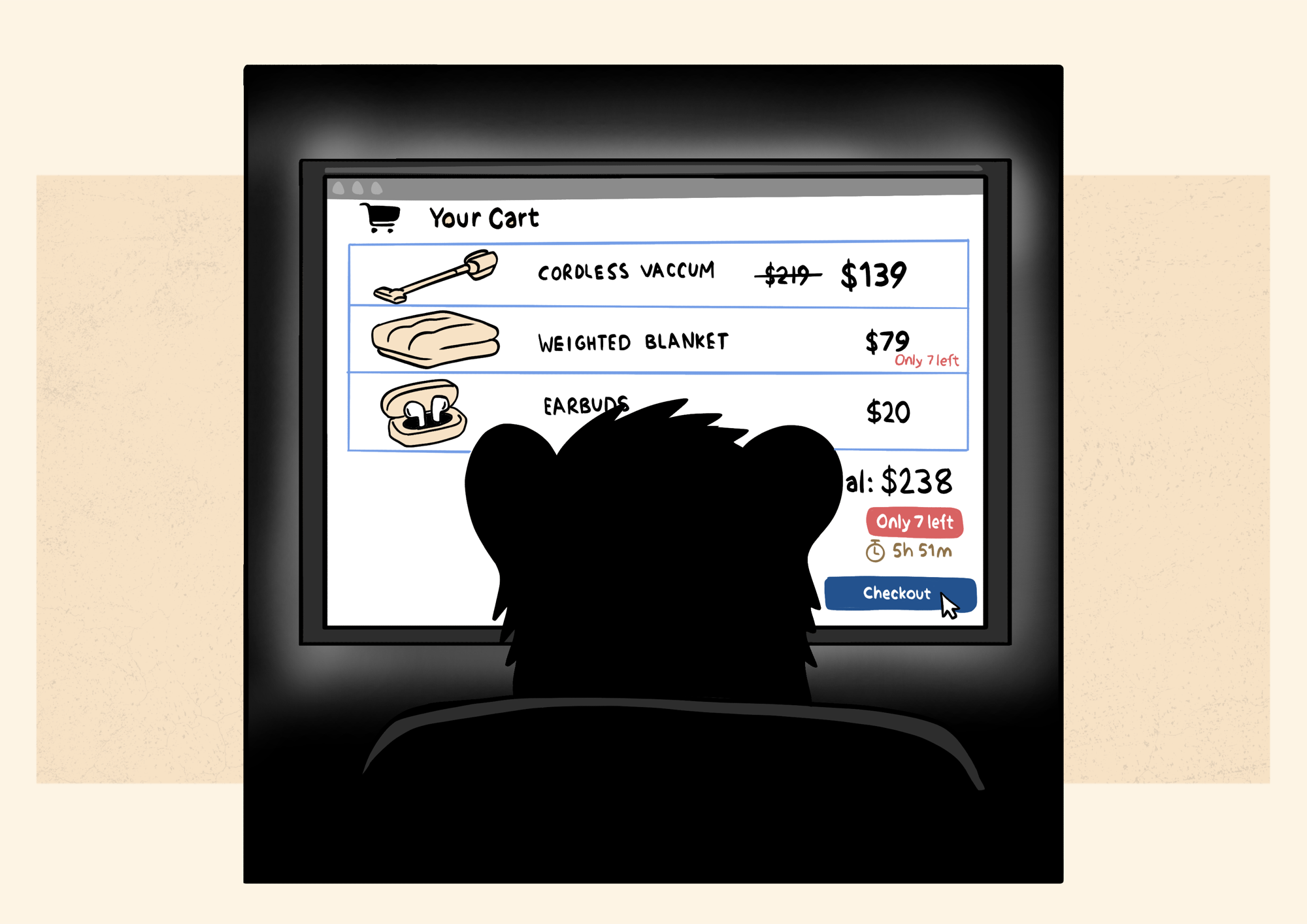
Each one seemed like a good idea for about nine seconds, which is how long it took to click. Under the total, a timer reads "ends in 5h 51m," and a red badge says "only 7 left." The badge is for the weighted blanket, a thing you had never thought about before 1:12 and now stand to lose to seven strangers.
The cursor is on the button. Somewhere in the house there's a note with the thing you meant to buy in July, and it isn't in the cart.
The same thing happens in stores, under a "today only" sign at 4:57 on a Saturday, with the box already in the basket. Black Friday is nine days away in the US, the UK, Canada and Australia, and the early-deal emails have started landing.
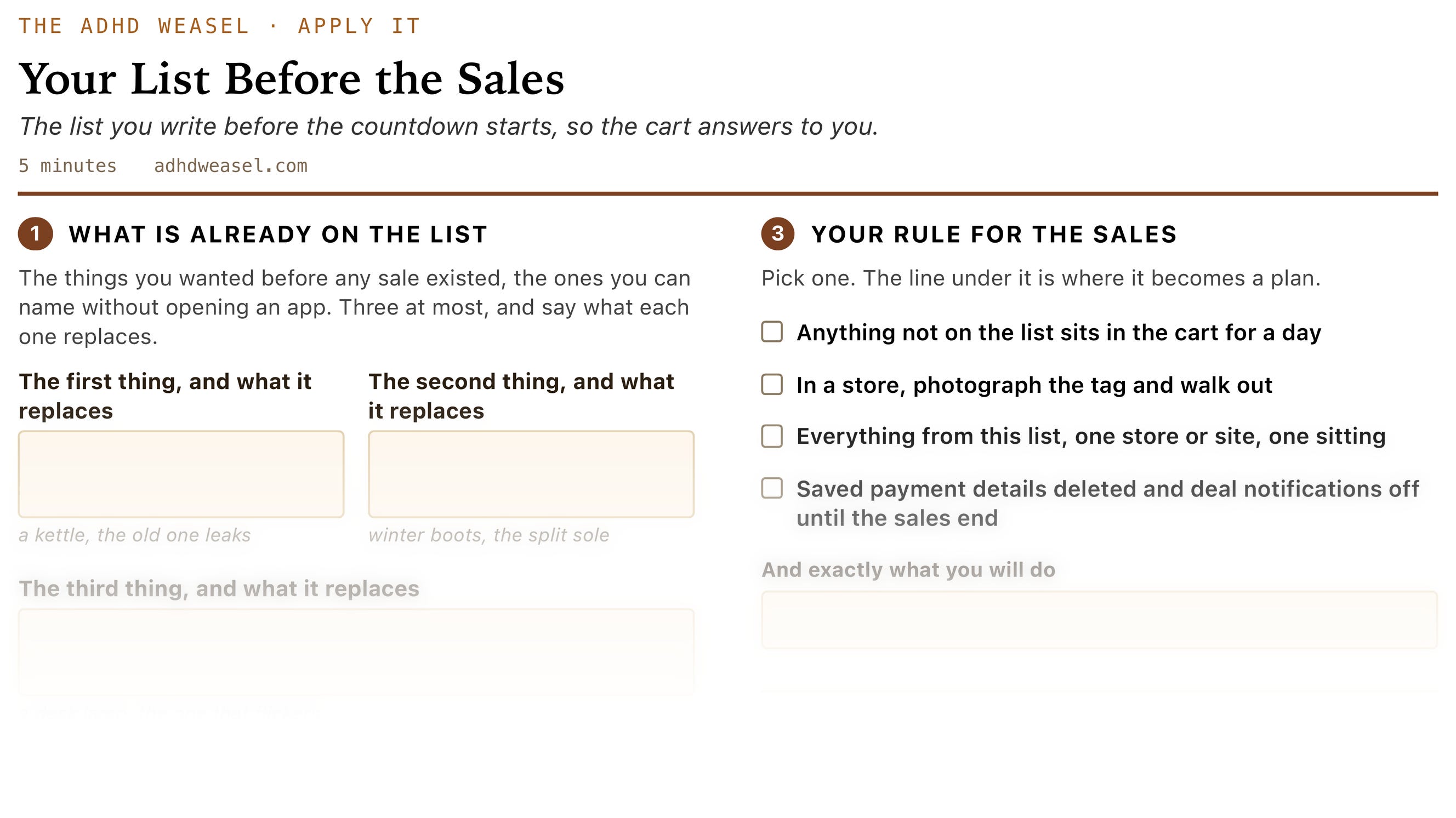
There's a 5-minute worksheet at the end of this newsletter called Your List Before the Sales. It sorts the sales before they start: the things you already wanted, the most you'd pay for each on an ordinary week, and one rule for everything else. Every deal between now and Cyber Monday gets checked against it. Takes 5 minutes.
The question the sale is asking
Every sale asks whether you want a sooner option or a later one. All brains price a reward lower the later it arrives, and the data says ours prices it lower still.
Researchers measure that pricing with one question on a card: $40 today, or $100 in a month. They deal it again and again, changing the amounts and the wait, and the point where someone switches to the smaller, sooner amount shows how much lower they price the later one.
In 2016 two researchers pooled the studies that had put versions of that card in front of people with and without ADHD. The groups with ADHD, adults included, picked the $40 more often than the groups without, by a clear margin.
In another study, adults with an ADHD diagnosis scored well above a comparison group on impulse buying, which is not a huge surprise to anyone who has looked at their own order history. The link between ADHD symptoms and impulse buying ran through one thing: the ability to wait for a bigger reward. A weighted blanket, it turns out, does nothing for that kind of waiting.
Day to day, that kind of buying can be a box at the door you don't remember ordering, or a charge on the statement you have to search your email to place.
A checkout page puts the same card in front of you, with a timer under the sooner option. The later option is the money still in the account when the statement lands on January 3, and the thing on the note it was meant for. Our brains price that later one lower from the start, before any timer loads.
The picture below is the same idea in three rows. Look at the later side of the last card, the one the checkout page deals you. The cart never shows you that side, the money still there on January 3.
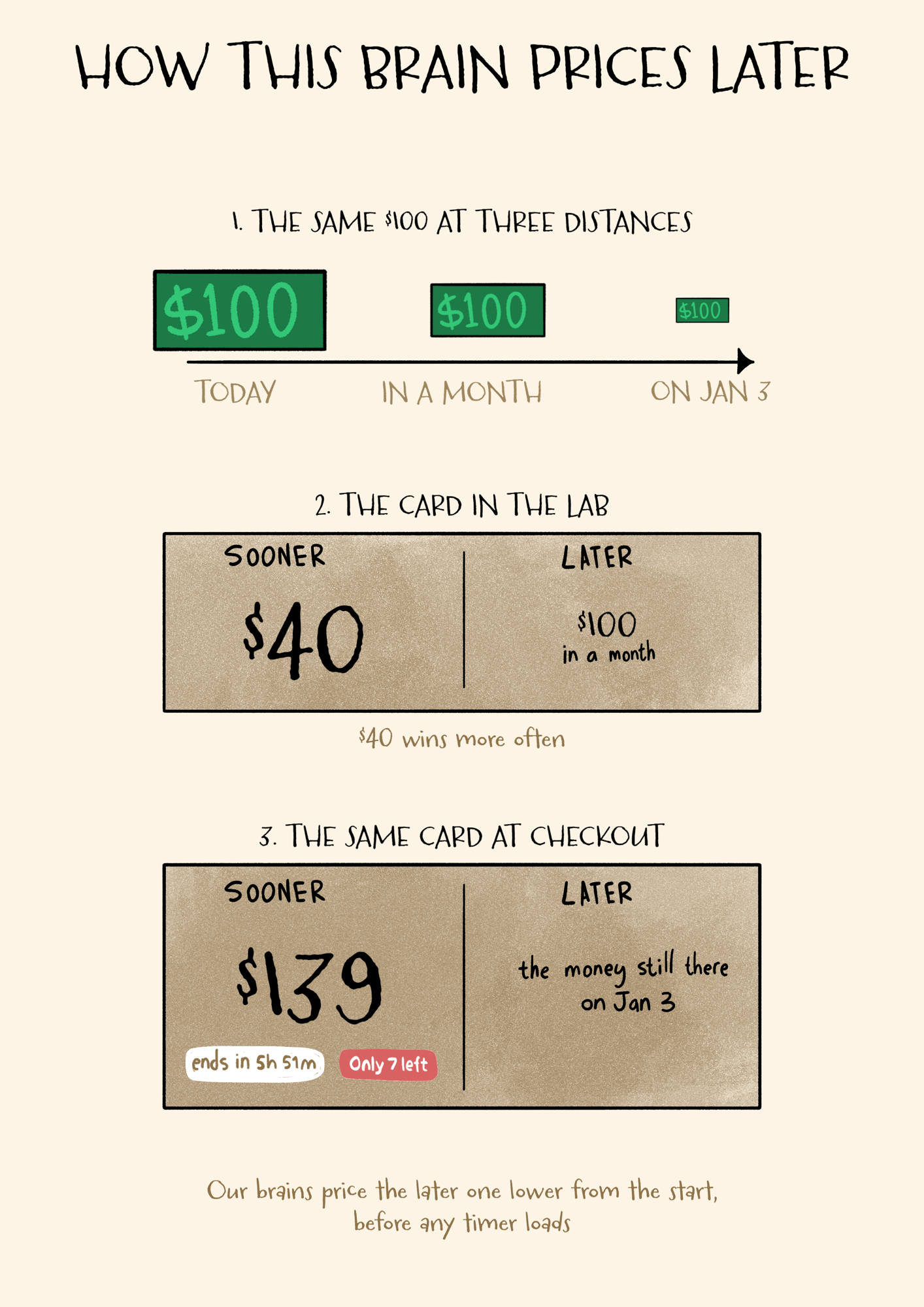
The timer and the badge in that third row are built for every shopper. In one meta-analysis of shoppers, none of them recruited for ADHD, a deadline on an offer raised stated intention to buy by a small-to-medium amount. The researchers' explanation is the fear of missing the deal.
The sooner option pulls hardest while it's on the screen, so you write the list today. It holds up to three things you wanted before any sale existed, a price limit for each, one rule for everything else, and the day the bill lands.
If the thing on the note is a kettle because the old one leaks, it goes on the first line with $45 beside it, the most you'd pay on an ordinary week. When the sales start, you buy the kettle at $45 or less, whatever the timer says. The vacuum isn't on the list, so it goes through your rule.
Things to try
🥄 Take the sooner option off the screen
The rest of this issue is for members: the science, the three things to try this week, and the worksheet. Membership opens every Wednesday and Saturday issue in full, every worksheet since April 2025, and the archive back to February 2025: Become a member.