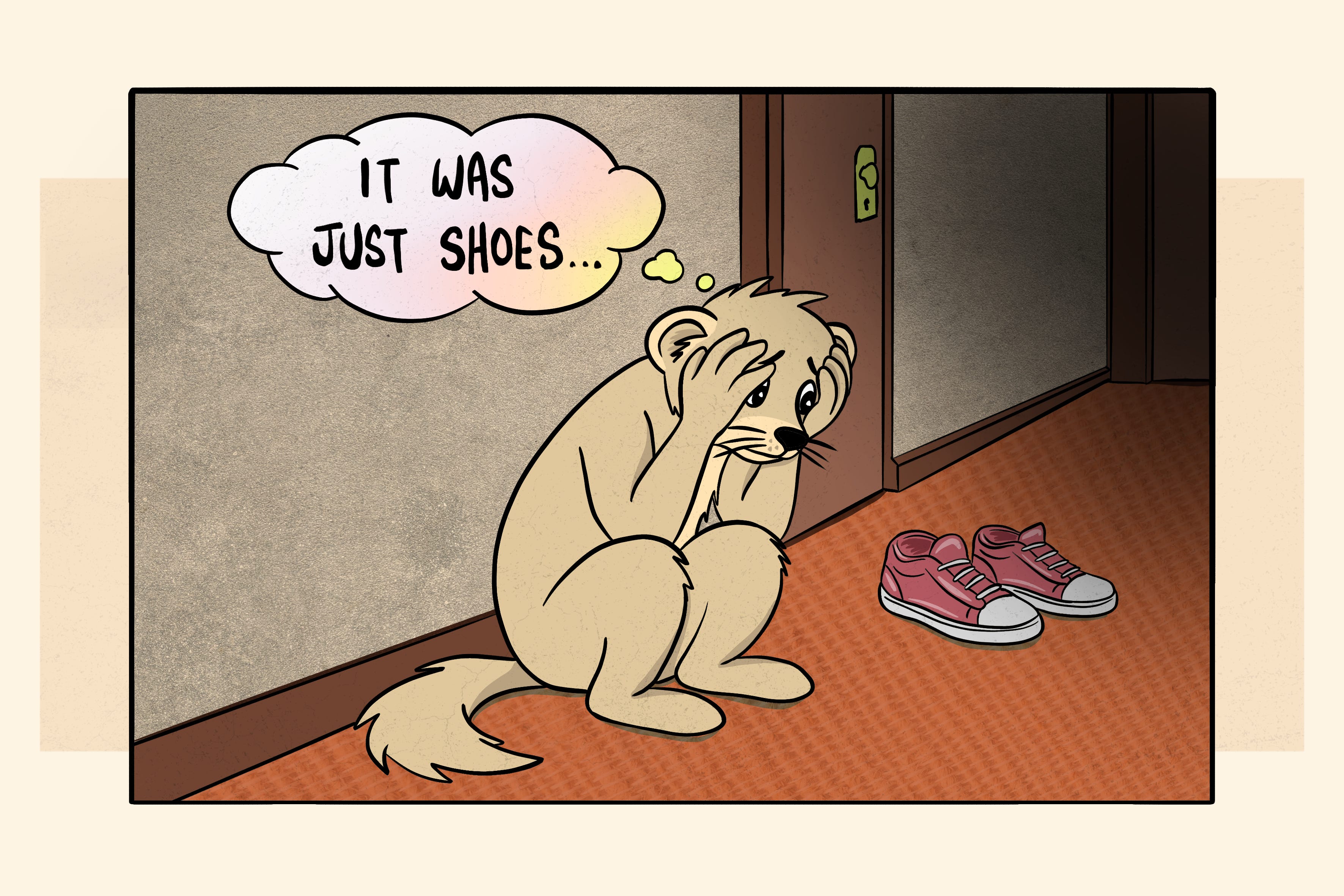
Your partner leaves their shoes in the hallway again. You’ve mentioned it four times. Five, actually. You open your mouth and what comes out is a level of fury that doesn’t match footwear.
By the time you hear your own voice, the damage is done. Your partner’s face changes. The silence fills the room. And now a second wave hits, worse than the first: Why did I do that. It was just shoes. What is wrong with me. Even after all these years together.
We’ve put together a worksheet this week called When Your Reaction Is Bigger Than the Moment that helps you map your emotional flood pattern and build a way to catch it before the damage lands. You’ll find it at the end of this newsletter.
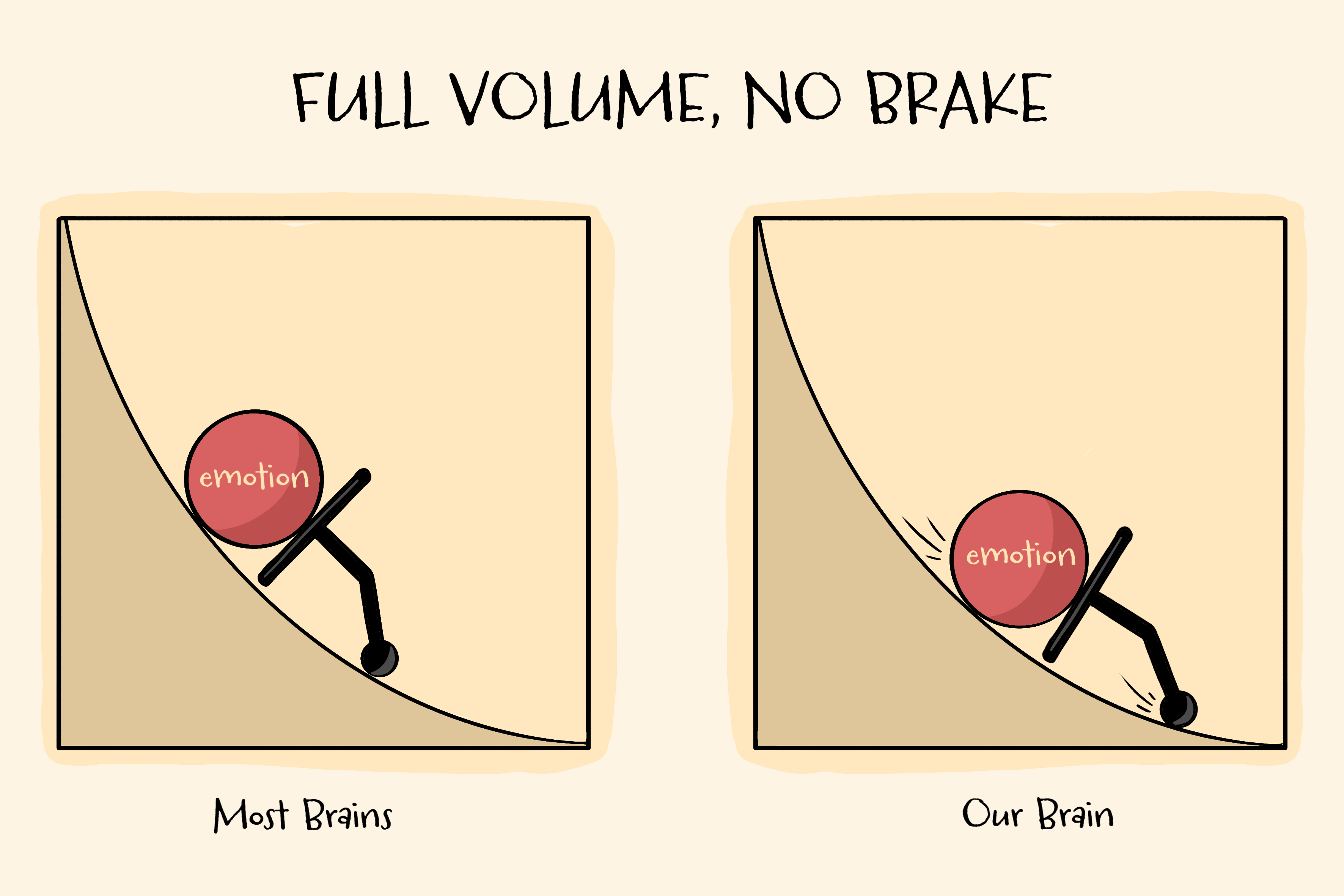
Your emotions arrive at full volume
When something sets off an emotion, the signal travels two routes. One route fires the feeling, fast and full. The other runs through the part of the brain that weighs context and is supposed to rein the feeling back in.
In most brains, that second route has enough pull to tone things down before the feeling becomes words. In ours, it can’t recruit enough power to do it. The emotion arrives at full strength, before anything has reined it in.
A neurotypical brain might feel a flash of annoyance about the shoes and put it in proportion: they forgot, it’s minor, move on. Our brains don’t get that buffer. The feeling lands first, full volume, and the part that would steady it can’t get enough traction.