

You know that moment when someone asks “What sounds good for dinner?” and your brain just... stops? Like someone unplugged it mid-thought.
Earlier that same day, you coordinated three schedules, made critical work decisions, and handled a family crisis without breaking a sweat. But now you’re staring at your partner like they asked you to solve calculus while standing on one foot.
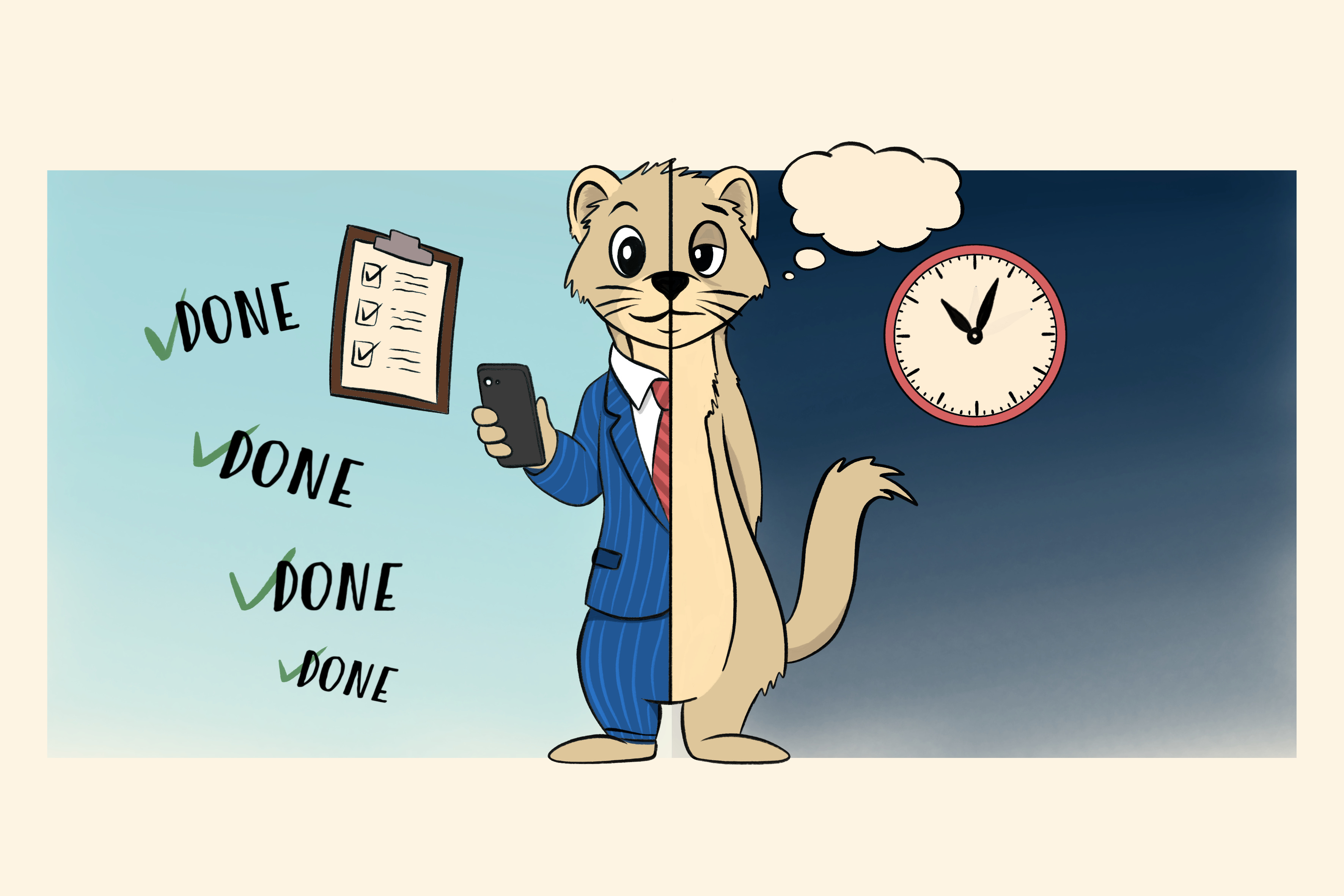
This pattern isn't random, and it's not weakness. Your brain is doing something specific when it refuses to make one more decision. This week's Apply It worksheet helps you identify when your decision-making energy crashes and build strategies that work around it.
Join readers who finally understand they’re not broken. Get the clarity, validation, and practical tools that help you make progress. Get 20% off your first year - offer ends Jan 18.
What’s Actually Happening in Your Brain
When you have ADHD, your prefrontal cortex shows structural deviations and altered activation patterns, meaning your brain must work harder to accomplish the same cognitive processing. Every decision you make, big or small, drains your mental tank.
Research has found a link between low dopamine levels and ADHD. While low dopamine alone may not directly cause ADHD, it contributes significantly to its symptoms, affecting how quickly you experience cognitive depletion. That unstoppable feeling at 8 AM? That’s a full tank. By evening, you’re running on fumes.
Functional MRI studies show that during decision tasks, individuals with ADHD exhibit increased activation across multiple brain regions compared to neurotypical controls. Your brain is working harder to make the same choices. What to wear. Which email to answer first. Whether to take a break now or later. Should you call your mom before or after lunch. Each tiny decision chips away at your cognitive reserves until there’s nothing left.
Decision fatigue deteriorates decision quality after making numerous choices throughout the day. Since we already expend more cognitive energy on everyday tasks, we’re particularly susceptible to it. We start the day with less gas than neurotypical people, and we burn through it faster. No wonder you can’t pick dinner.
If you’re in perimenopause or menopause, this gets even more complex. Hormonal fluctuations can intensify ADHD symptoms, making decision fatigue hit earlier and harder than it used to.
Why “Simple” Choices Become Impossible
The decisions that break you aren’t always the important ones. You can coordinate your aging parent’s medical care, handle complex work problems, even manage a family crisis. But choosing between leftover pasta and a frozen burrito? Brain shutdown.
Deficits in working memory have been widely documented in ADHD studies. When you’re already mentally exhausted, even remembering what’s in the fridge feels impossible, let alone deciding what sounds good.
When our brains are tired, they look for shortcuts. One shortcut is to become reckless and act impulsively instead of expending energy to think through consequences. Another shortcut is to conserve energy and do nothing. That’s why you either order takeout for the fourth time this week (impulse) or just... don’t eat (avoidance).
From Our Readers:
“You have some of the best writing on ADHD l’ve ever come across! I’m a teacher with ADHD, my husband has it, and our son too. My husband often brushes aside the attention-related material I read, but your writing really resonates with him too. “
- Melissa, paid subscriber
Dive into our ‘Apply It’ worksheet (Paid Subscriber Perk)
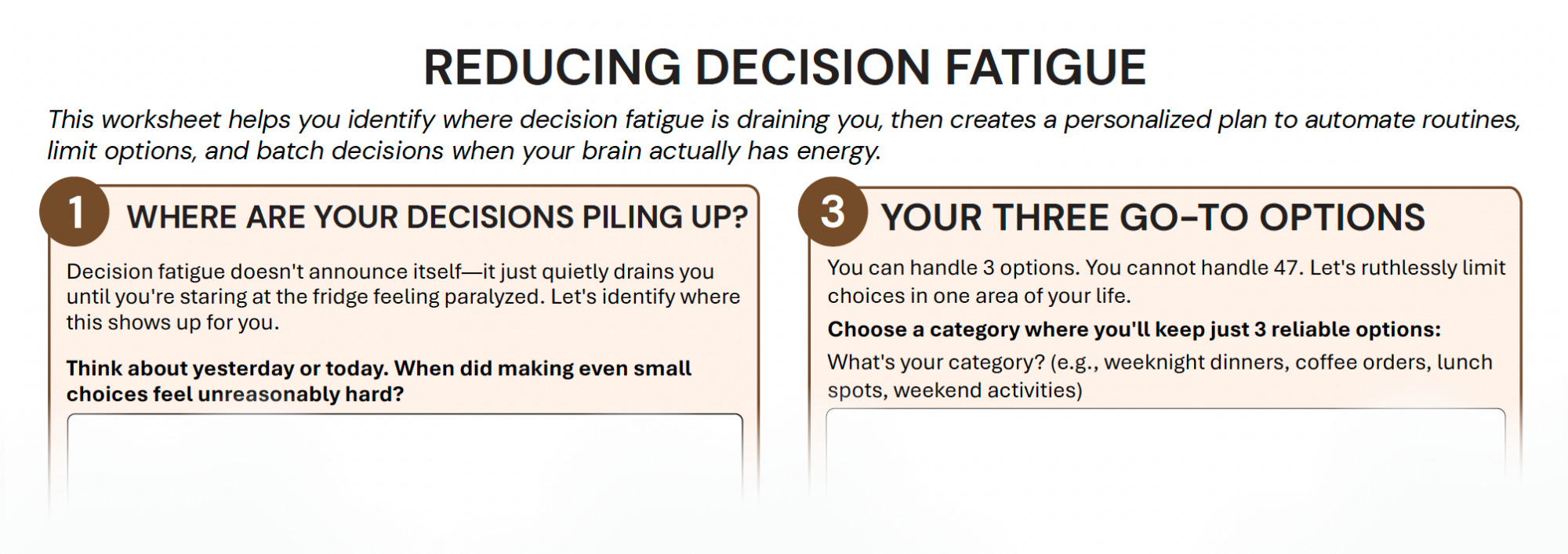
This week’s Apply It worksheet helps you identify where decision fatigue is hitting you hardest and build a strategy to protect your energy. You’ll map out your routines, narrow down your go-to options, and schedule your batch decision time for when your brain actually works. Five questions designed to reduce the decisions you’re making every single day.
Strategies That Help Reduce Daily Decisions
1. Automate the low-stakes stuff
Creating routines is a way to automate decisions, particularly during low-energy times. By doing the same tasks in the same order, you reduce the cognitive load.
Eat the same breakfast every day. Create a “uniform” of versatile pieces that work together. Establish a default dinner rotation: Monday is pasta, Tuesday is tacos, Wednesday is eggs. If you’re managing multiple households or caring for aging parents, apply this same principle to recurring appointments: same day, same time, same order.
