

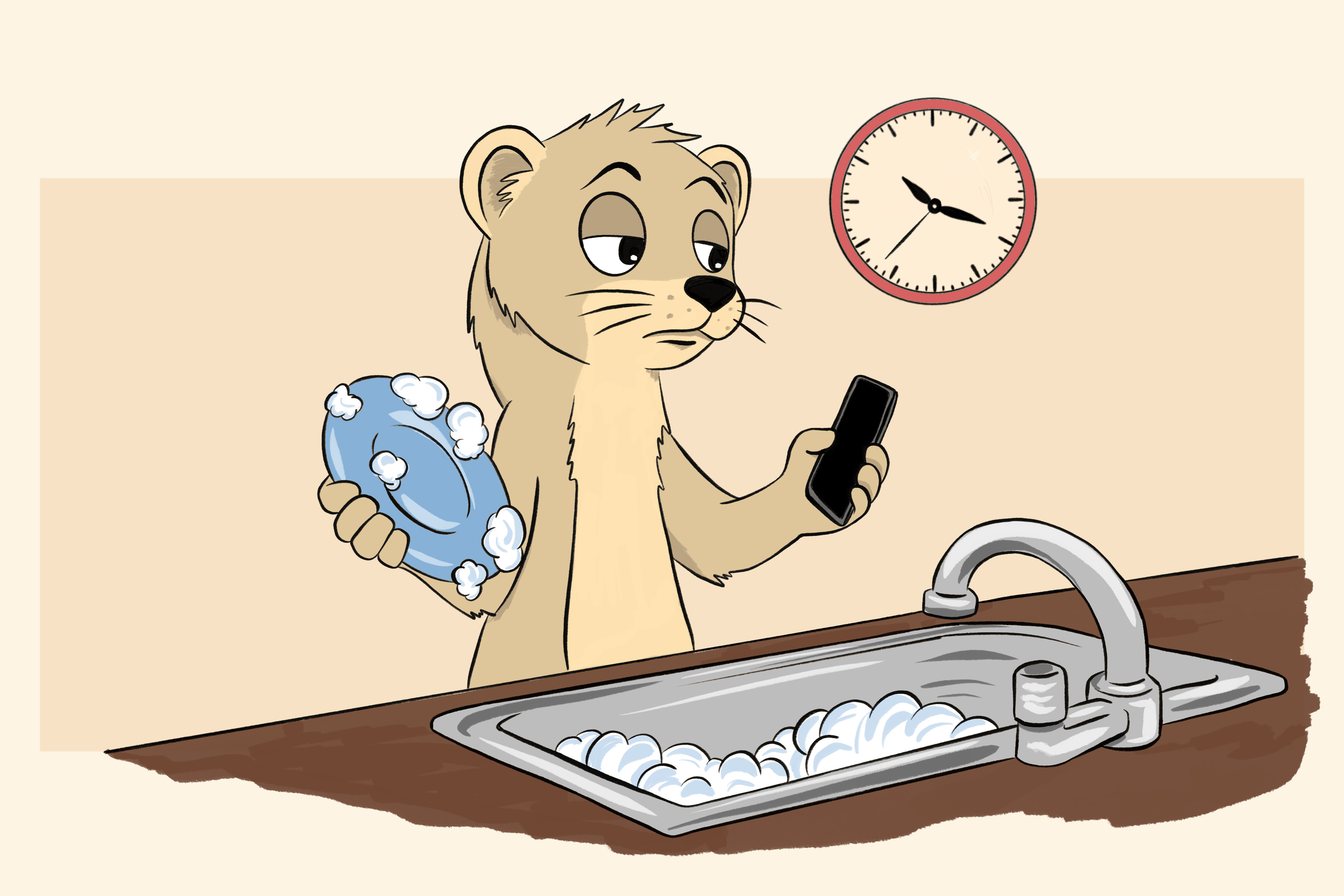
You’re standing in your kitchen staring at the sink. The dishes have been there for two days, and you’ve walked past them at least a dozen times. Each time, you think “I’ll do them in a minute,” and each time, your body just... doesn’t move.
When you finally force yourself to begin, you get halfway through washing a plate before your phone buzzes. You glance at it, respond to one text, and suddenly you’re scrolling. Forty minutes later, the sink is still full and the shame spiral starts: Why can’t I just do this one simple thing? Everyone else manages. What’s wrong with me?
There's a reason this happens, and it's not about willpower or caring enough. Your brain is doing something specific when it refuses to start mundane tasks. This week's Apply It worksheet helps you work with that instead of fighting it.
Why Chores Feel Impossible
Household chores require executive function skills: planning, self-regulating, remembering instructions, and switching between tasks. Research shows that over 90% of parents believe ADHD impacts their ability to complete household chores. And as life gets more complex with careers, kids, and aging parents, the demands multiply.
The parts of the brain involving executive functions tend to be smaller, less developed, or less active in people with ADHD. When you estimate “this will take 10 minutes,” and it actually takes 45, your brain feels betrayed.
When you start washing dishes and get distracted, that’s not a character flaw. Your ADHD brain constantly seeks more stimulating activities because there’s a dysfunction in the dopamine pathway. Dopamine plays a role in motivation, pleasure, and learning. Without enough of it, you’re stuck in what feels like a motivation drought.
Chores require sustained attention on low-dopamine tasks. For our brains, boredom isn’t just boring. It’s painful. Not metaphorical pain, actual neurological discomfort tied to how your brain regulates dopamine.
From Our Readers:
“I am a clinical psychologist who works in ADHD and Autism. I do my best to keep up with peer reviewed research and the most recent writings, but I find your tips some of the most concise, palatable, and actionable ones available - and they work, for me and my clients!”
- Kat, paid subscriber
Dive into our ‘Apply It’ worksheet (Paid Subscriber Perk)
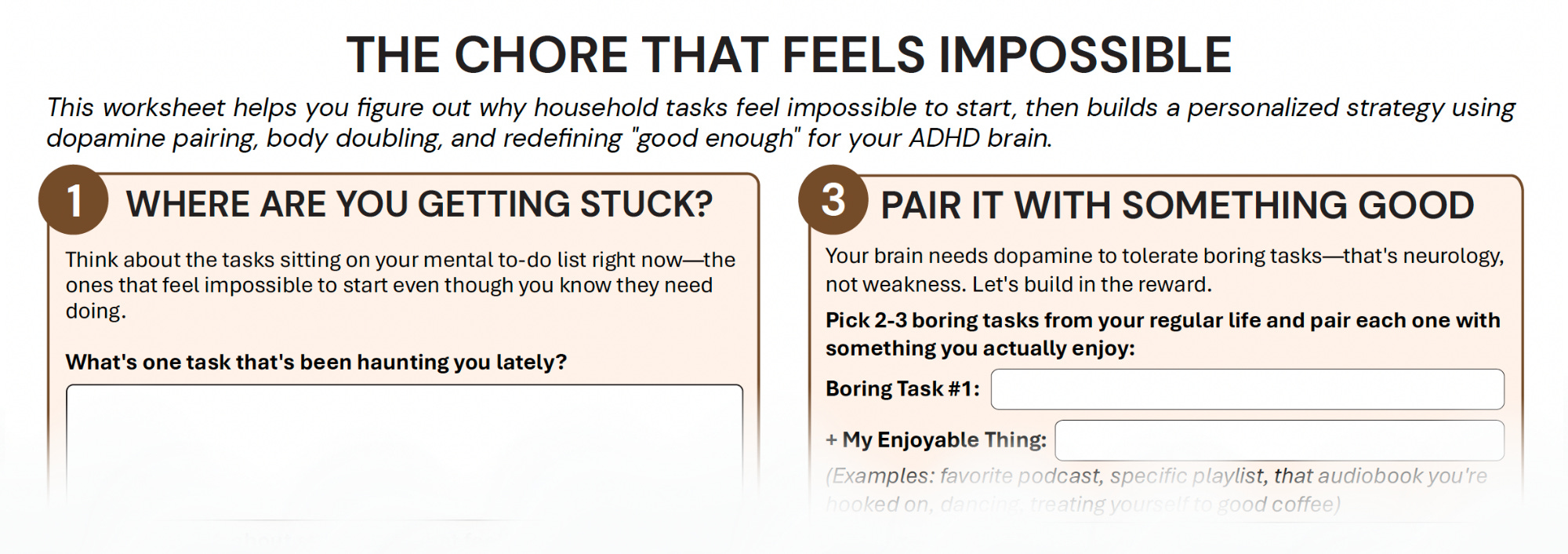
This week’s worksheet walks you through breaking down the chore that’s been haunting you, pairing boring tasks with things you actually enjoy, and redefining what “good enough” looks like for your brain. No more all-or-nothing thinking. No more shame spirals over dishes that aren’t put away. That’s the goal, anyway.
What Actually Helps
Forget “just make a schedule” or “try harder.” You’ve heard that for decades, and if willpower alone worked, you wouldn’t be reading this. Here are some strategies that might help:
1. Make it smaller than small
Don’t think “clean the kitchen.” Think “wash three plates.” Choose the smallest possible action related to your task. Instead of “clean the kitchen,” try “put one mug in the sink.” Research on task initiation shows starting tasks requires dopamine, and our brains struggle to produce enough of it for things that feel boring, unclear, or overwhelming.
