
You were eleven and the report card said you weren’t living up to your potential. Or it said you were bright but disorganized. Or that you distracted the others, or seemed anxious, or daydreamed through the afternoons. Whichever one it was, somebody read it out at the table and you nodded, because it sounded true and you had no way to argue with it.
Maybe there was a subject you were good at, one you would have read about at midnight without being asked, while everything else went unopened in your bag. Nobody put those two facts next to each other, because nobody in that room had the word for it, including the teacher who wrote it and your parents and you. So everyone reached for what was available, and every single one of them was about your character.
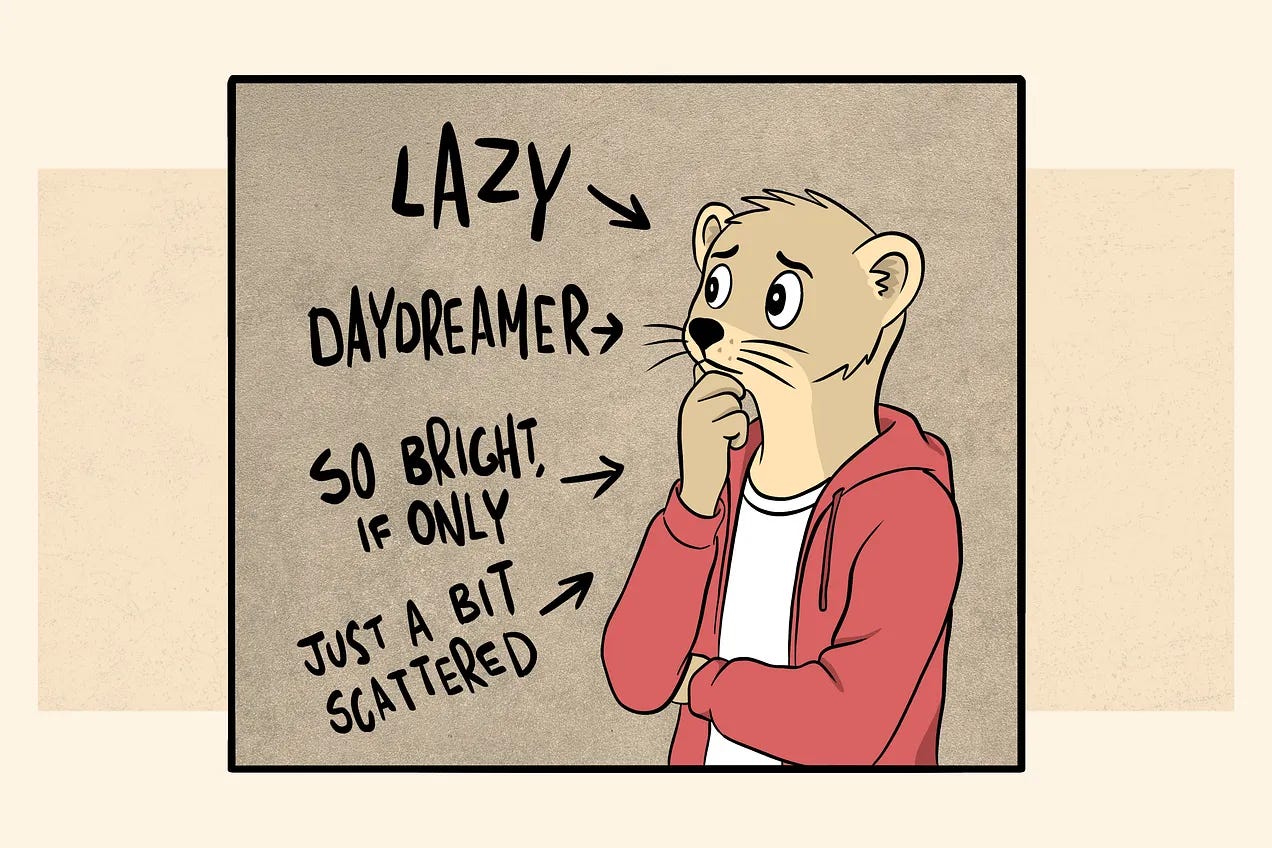
It didn’t stop when you left that table. At nineteen a tutor told you that you had the ability and needed the discipline. At twenty-six a manager wrote scattered in a review, kindly, the way somebody mentions the weather. By then you had built your own scaffolding around it, the alarms and the lists and arriving forty minutes early for everything, and nobody read any of that as a workaround, because nobody had told you there was anything to work around.
The words that were available
Lazy. Careless. Scattered. Daydreamer. Distracting the others. Head in the clouds. Not applying yourself. So bright, if only.
None of those describe a brain. All of them describe a person who has chosen something, and the choice they describe is always the same one: that you could have done it properly and didn’t bother. That’s the sentence underneath every one of them, and you heard it for thirty years before anyone offered you a different one.
