

It’s 2:15pm. The folder of receipts for the library book sale is open on the kitchen table where you left it after lunch. You told Marian you’d have the totals ready by Thursday.
You’ve read the first page twice. The numbers go in and slide right back out, and the part of your brain that turns intention into action left somewhere around 1:45pm.
This morning you were sharp. You did your walk, returned the books, picked up the prescription, felt like yourself. You saved this for the afternoon because the afternoon was wide open. It’s here now, you’re retired with nothing but time, and you still can’t make yourself start the one thing you promised.
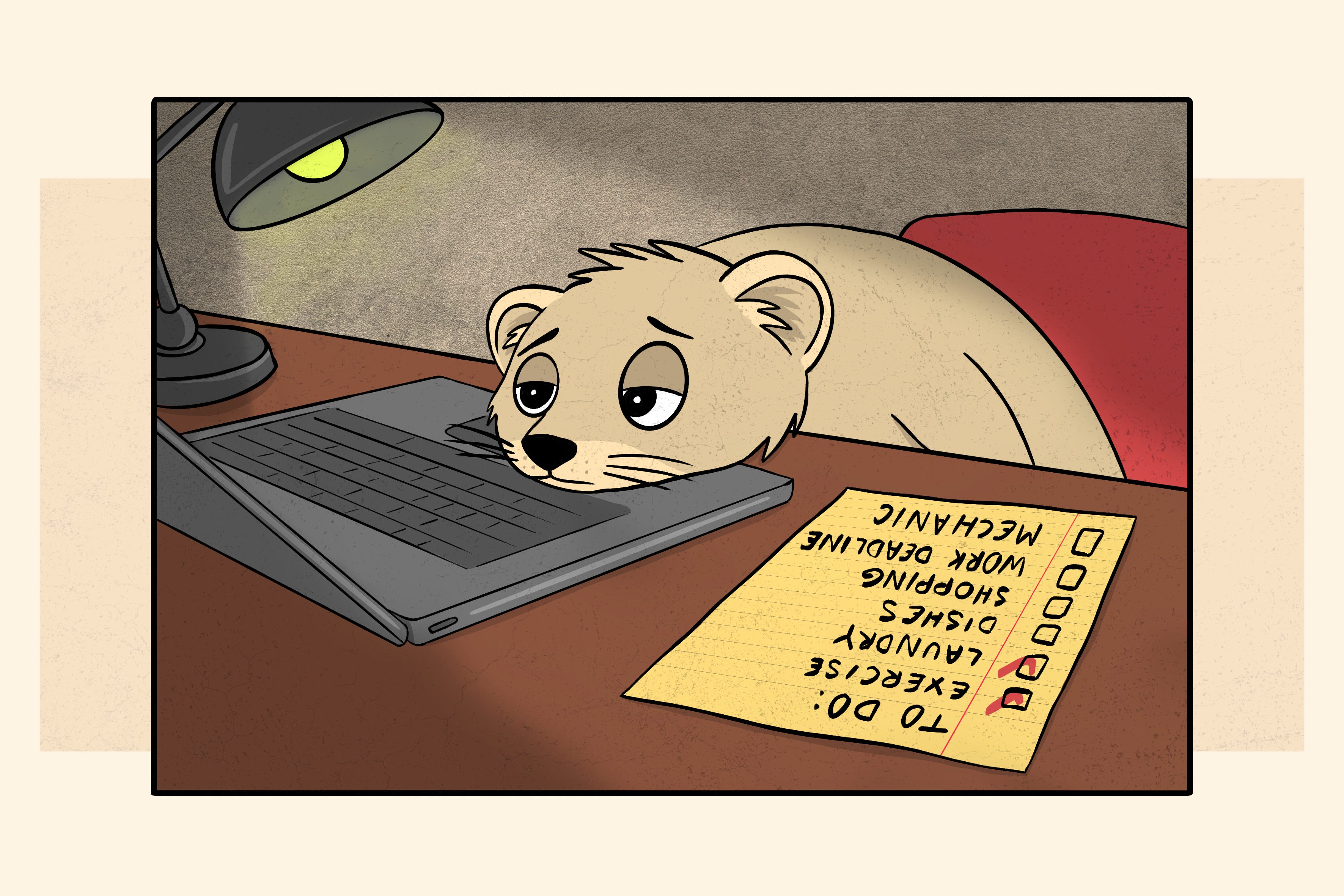
We’ve put together a worksheet this week called Working With Your 2 PM Brain that helps you see your afternoon crash for the predictable pattern it is, instead of a daily personal failing. Takes 5 minutes, nothing to download. You’ll find it at the end of this newsletter.
Your brain at 2 PM
Everyone gets an afternoon dip. But for our brains, the dip is a cliff.
The post-lunch slump isn’t caused by your sandwich. The afternoon dip is a circadian event, a programmed drop in alertness your internal clock runs every day. It has nothing to do with your stomach. Most brains ride it out. Ours struggle to.
It starts with the clock. Your body runs an internal clock that orchestrates the chemicals that keep you alert and motivated. In ADHD, that clock is wired differently. It doesn’t hold its 24-hour rhythm as steadily, so everything it controls downstream runs on a different schedule than most people’s.
Two of those downstream chemicals matter most at 2 PM: cortisol and dopamine.
Cortisol is the hormone that keeps you alert and functional. In ADHD, its rhythm runs late and never quite holds steady, so the alertness most brains count on through the afternoon is out of sync for us. By the time 2 PM hits, the system meant to keep us going is already off-track.
Dopamine is on the same clock. The same circadian system controls how dopamine is made and cleared. When the clock pulls cortisol down at 2 PM, dopamine drops with it. The same receipts you’d have breezed through at 10 AM sit unreadable at 2 PM. The task didn’t change, the brain behind it did.
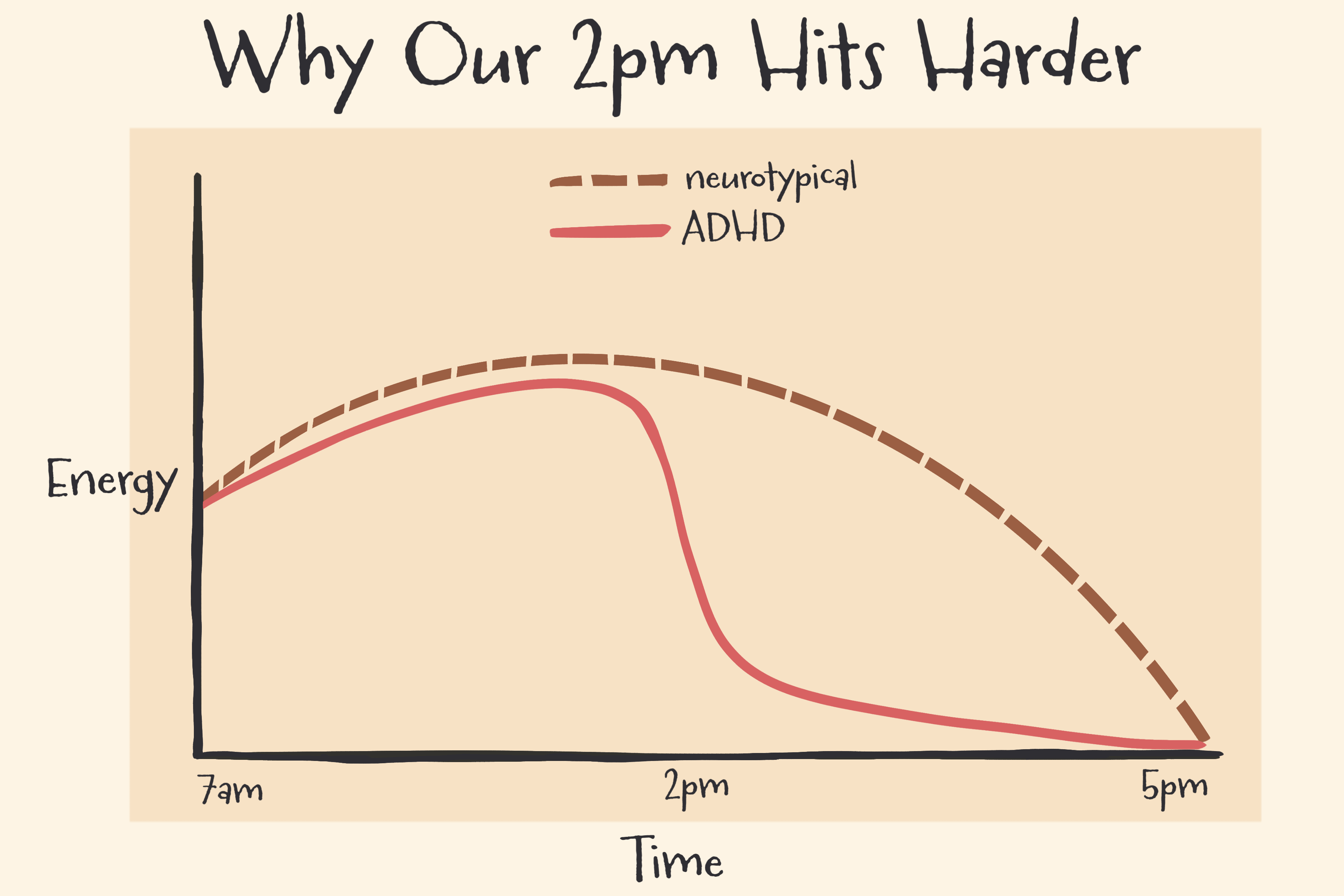
The 2 PM crash comes down to one clock running two chemicals on the same schedule. Ours is wired to bottom them out together.
(We explored the other end of this clock in Still Awake at Midnight (Again), the same circadian wiring that delays our sleep is front-loading our crash.)
From our members
“I now understand that so many things in my life that have always seemed dissimilar to other people’s actions and characteristics are really ADHD traits.”
- Linda, Weasel member
Things to try
1. The B-team afternoon 🥄
Work with the crash instead of fighting it. Split your to-do list into A-team tasks (the phone calls you keep avoiding, paperwork, anything with real decisions in it) and B-team tasks (watering the plants, folding laundry, sorting the mail, errands you can run on autopilot). Move every A-team task to before noon. The afternoon gets the B-team, the stuff that still needs doing but doesn’t need the focus your brain can’t reach at 2 PM.
All that changes is the order you do things in.
